When Your Home Feels Too Loud: Small Visual Changes That Help
You walk in and your shoulders don't drop.
The day was long. Or it wasn't, and you still can't name what's wrong. The lights are on. You're home. Everything is technically fine, and yet something in you is still scanning, still waiting for something to resolve that hasn't resolved.
Your space talks to your nervous system in a language that bypasses your thinking brain entirely. Before you've consciously noticed the dishes or the pile on the chair, your body has already decided whether this is a safe place to exhale. When your home feels too loud, it isn't always about actual sound. It's often about what your eyes are being asked to process.
The small visual changes that follow are not a redesign. They're ways to give your nervous system somewhere to land.
What Visual Noise Actually Is
Visual noise refers to the sum of competing visual signals in a space: mismatched objects, crowded surfaces, unresolved arrangements, and layered patterns that your nervous system has to continually process, even when you're not consciously thinking about them.
Researchers at Princeton University's Neuroscience Institute found that visual clutter directly competes for cognitive attention, keeping the brain in a persistent low-grade alertness state even during supposed rest. This is why you can sit down at the end of the day in a cluttered room and feel like you haven't quite stopped working. Your eyes are still doing the job of making sense of everything in front of them.
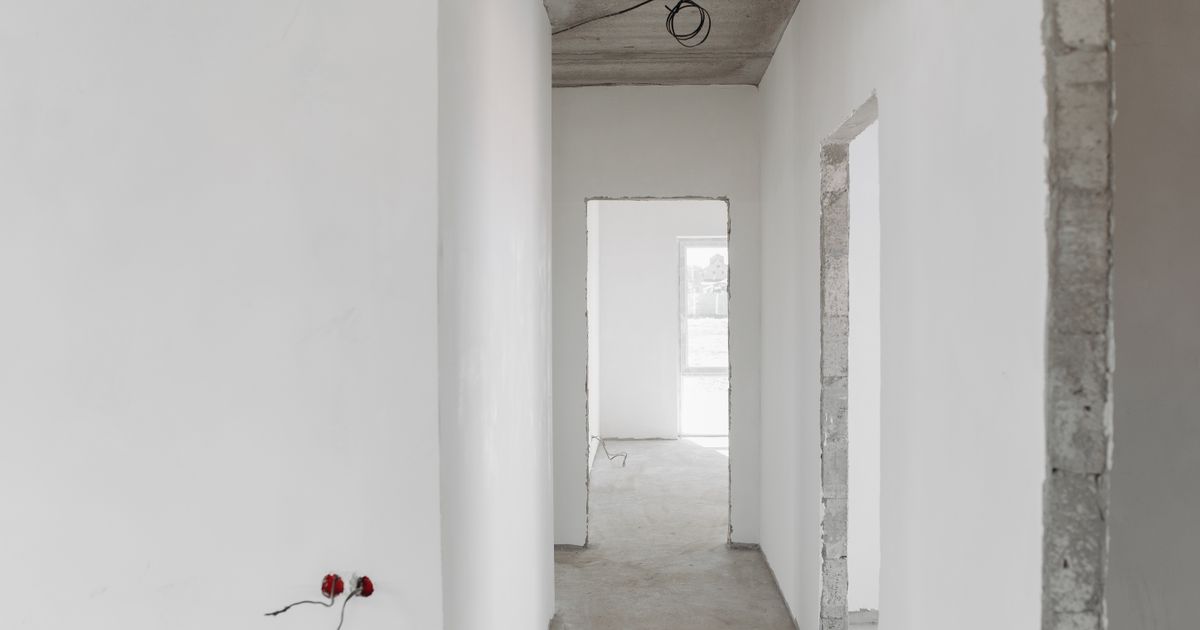
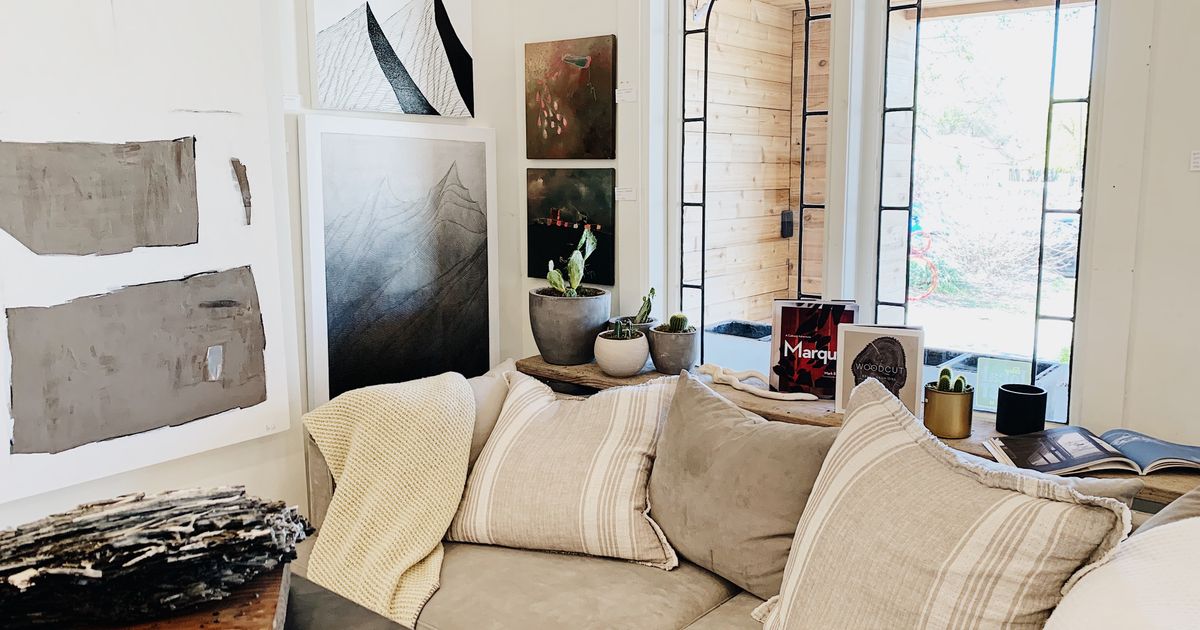
A room doesn't have to be messy to be visually loud. It can be full of beautiful things and still feel exhausting, if nothing in it holds still and your eye has no place to settle.
Why Your Home Feels Louder Right Now
Sometimes the space itself has changed gradually. You moved in, added things, layered things, and at some point the balance shifted without you noticing.
But sometimes the space is the same and you are different.
A study from UCLA's Center on Everyday Lives of Families found that women who described their homes as "cluttered" had higher and more persistent cortisol levels throughout the entire day, compared to women who described their homes as "restorative." The effect wasn't limited to the moments these women were in those spaces. It extended across the whole day.
The threshold for what your home can hold shifts depending on what else you're carrying. After a hard season, the same space that felt manageable can start to feel like too much. That isn't you becoming more sensitive. That is you becoming more honest about what you need from the room you come home to.
If you want a place to start, The One-Wall Reset walks you through it one wall at a time.
Small Visual Changes That Actually Help
The goal here isn't to redecorate. It's to give your nervous system somewhere to land.
Some of what follows takes ten minutes. Some of it requires nothing more than moving one thing.
Start with a single surface
When a room feels overwhelming, the impulse is to fix everything at once. Try the opposite. Choose one surface, a windowsill, a bedside table, or the coffee table, and clear it completely. Then put back only one or two things that have earned their place there.
The rest of the room becomes easier to be in, not because you changed it, but because your eye now has somewhere it can rest without evaluating everything else. One resolved surface gives you permission to stop scanning.
Reduce what's competing for your attention
Every object in a space is making a small claim on your attention. A stack of books you mean to read. A candle that hasn't been lit in three months. A frame that's slightly crooked. Individually, each one is nothing. Together they create a low-level hum that your brain processes continuously.
This isn't about minimalism as an aesthetic preference. It's about giving your nervous system fewer things to decide about. Moving three things into a drawer can change the feeling of a whole room. The complete guide to minimalist wall art goes deeper into how visual simplicity affects the brain's experience of a space.
Add one clear anchor point
A visually quiet room still needs something for the eye to settle on. This is the difference between bare and calm.
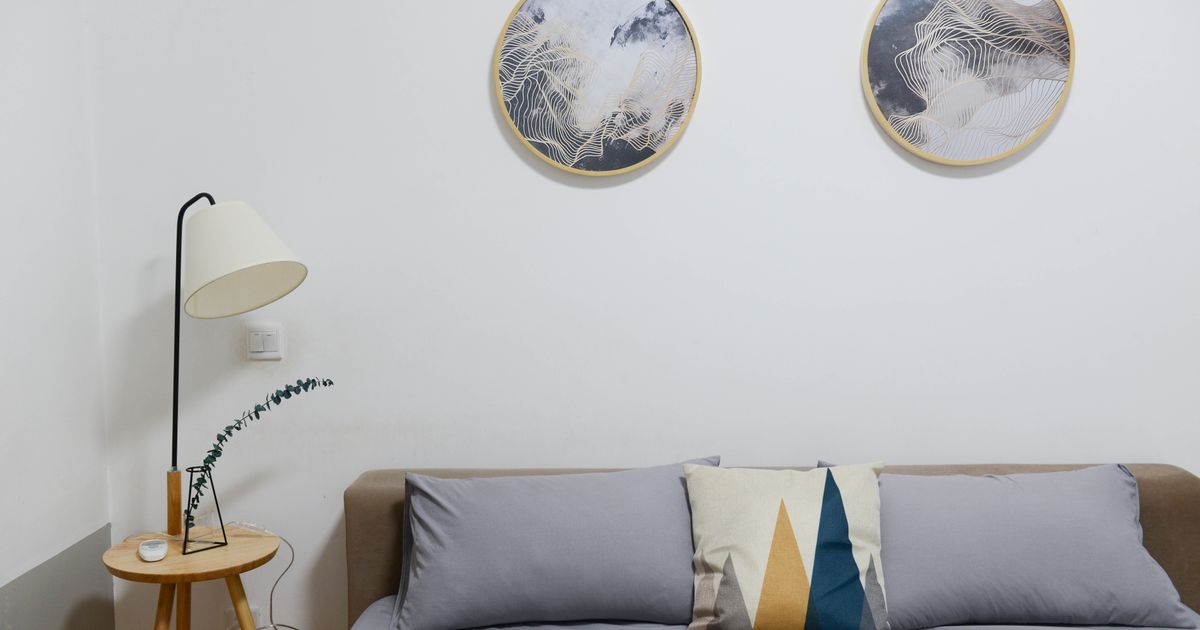
An anchor point is a single visual element with weight and intention: a piece of art, a plant with a clean form, and a lamp with a warm glow. It gives your eye a destination. Instead of scanning the whole room continuously, your gaze can find this one thing and stop.
This is one reason art placement matters more than most people expect. A print hung with intention doesn't just fill a wall. It gives your nervous system a place to land. The post on what grounding actually means and how your home can support it explores how visual anchors connect to nervous system regulation in the body.
Adjust your lighting before anything else
If your room feels loud and you haven't thought about the lighting yet, start there.
Bright overhead light, especially cool or fluorescent light, activates rather than settles. It's the visual equivalent of a raised voice in a quiet room. Switching to warmer, lower light, a lamp instead of overhead fixtures, or 2700K bulbs instead of 5000K, changes the character of a space faster than almost any other single intervention.
This doesn't require an investment. If you own a floor lamp that has been living unplugged in a corner, plug it in tonight and turn off the overhead. Notice what changes.
Bring in something that holds a specific feeling
Sometimes a room feels too loud not because there's too much in it, but because nothing in it is saying the right thing.
This is where a thoughtfully chosen piece of art can do something a storage solution cannot. Not because it's beautiful, though it can be, but because it holds a specific emotional frequency. Something quiet and true. Something that gives permission rather than expectation. Something that doesn't require you to perform in front of it.
The Grounding Collection was built for exactly this. Prints in warm earth tones with geometric forms that are stable and still, designed for the seasons when you need the room to hold you more than it asks of you. A print doesn't have to do a lot. It just has to be present, and specific, and not require anything back.
For a quieter approach to bringing warmth into a space without adding visual weight, minimalist cozy decor for anxious minds offers some grounding starting points.
What the Space Is Already Telling You
When your home feels too loud, that's information. Your nervous system is letting you know that the space hasn't caught up with what you need from it right now.
You don't need to fix the whole room. One surface cleared, one light adjusted, and one thing on the wall that holds still and holds something true can shift the register of a space more than a full renovation.
The therapeutic home design guide covers the broader research behind what makes a space feel like a safe place to exhale, if you want to go deeper into the principles behind these small changes.
And if you've been using the Haven & Hold: Daily Wellness app to anchor your days, the prints are the physical version of what you're already practicing. The same words. The same steadiness. Something that lives on the wall instead of the screen.
Your home already knows what kind of quiet you're looking for. Let it hold you back.
Frequently Asked Questions
What does it mean when your home feels visually overwhelming?
Visual overwhelm at home happens when your nervous system is processing more competing signals, from cluttered surfaces, unresolved arrangements, and busy visual elements, than it has the capacity to hold. This creates a low-grade alertness state that interferes with rest and recovery. Targeted, small changes can shift this without requiring a full redesign.
How do I reduce visual noise in a small apartment?
Focus on one area at a time rather than addressing the whole space. Start by clearing a single surface completely, then return only the items that have genuine purpose or meaning in your day. Warm lighting, closed storage for everyday objects, and one intentional anchor piece on the main wall make a meaningful difference in a small space.
Can wall art actually help when a room feels too loud?
Yes, but it depends on what you put on the wall. A piece with visual weight and clarity, a simple form, a quiet palette, and specific intention, gives the eye somewhere to land and creates a felt sense of rest. Art that is too busy or too demanding adds to the noise rather than reducing it, so one well-chosen piece does more than several pieces competing for attention.
Is visual overwhelm the same as sensory overload?
Sensory overload is the broader experience of your nervous system reaching capacity from any sensory channel, including sound, light, and touch. Visual overwhelm in a home environment is one form of sensory input that can contribute to that experience. For people who are already stretched thin or going through a hard season, the visual demands of a home can tip the balance faster than they would otherwise.
Do I need to redesign my whole home to feel a difference?
No. The changes that matter most are often small and targeted. Clearing one surface, adjusting one light source, and adding one anchor piece to a primary wall can shift the emotional register of a space considerably. Starting small lets you feel the impact of each change before adding more, which helps you build a space calibrated to what you actually need.

Written by Haven & Hold