The Case for One Unfinished Corner | Haven & Hold
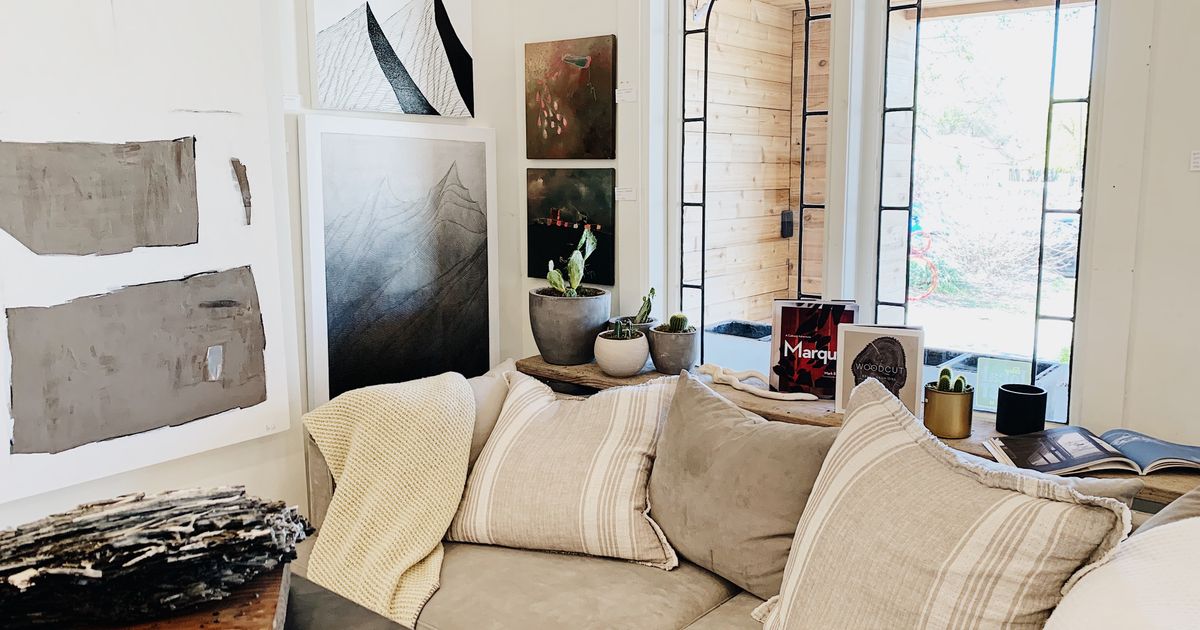
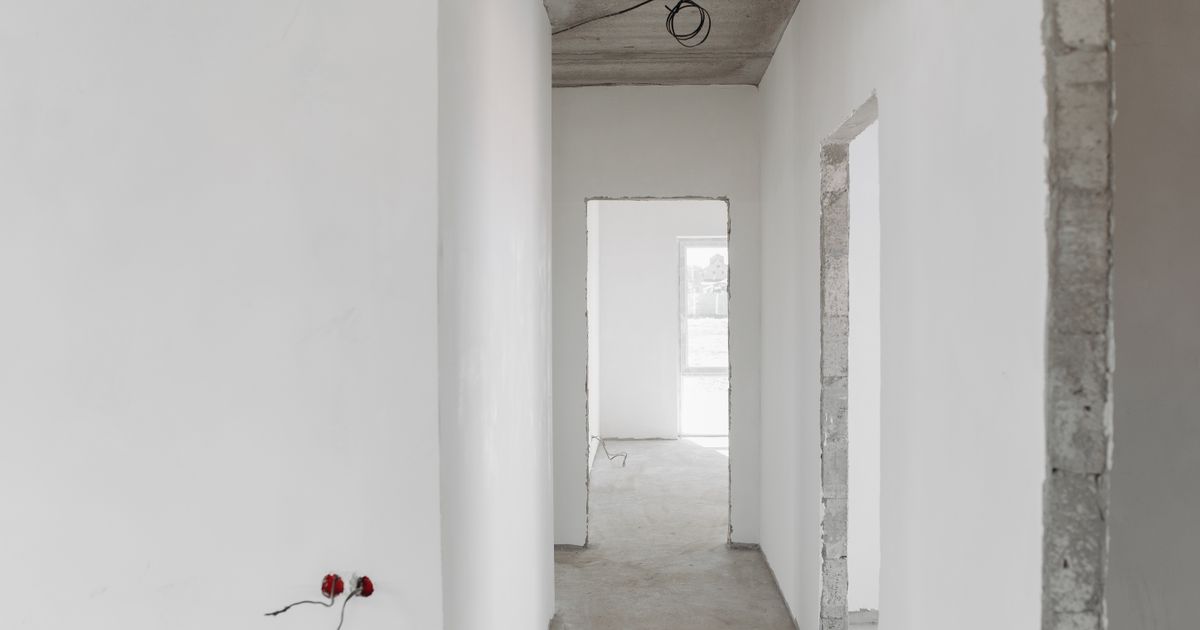
You know the corner. The nail is still there from something you started and set down. The chair beside it has been "for reading" for almost a year. The wall holds a faint awareness of being left out of whatever plan you had, and you hold a matching awareness of having left it.
This post is not about finishing it.
It is about reconsidering whether finished is the right measure.
What an Unfinished Corner Actually Is
Wabi-sabi is the Japanese aesthetic philosophy of finding beauty in imperfection, incompleteness, and the natural passage of time, which means treating what is cracked, asymmetrical, or still unresolved as part of what makes a space feel genuinely inhabited. Not damage. Not negligence. Incompleteness, held as honest. The cracked glaze, the asymmetrical arrangement, the handmade bowl that sits slightly crooked on the shelf and is beautiful because of the hand that shaped it. Wabi-sabi teaches that the attempt to remove all imperfection from a space removes something essential from it.
Your corner lives in wabi-sabi territory, even if that is not how it feels on a weekday morning.
The nail without a picture is not a problem waiting to be solved. It is a decision that has not been made yet. And there is nothing wrong with a decision that has not been made yet.
How we name something changes how it feels to live with it. An unfinished corner described as "a failure I need to fix" keeps a quiet stress running in the background of every day. An unfinished corner described as "a space still holding possibility" feels different to walk past. The corner itself has not changed. The weight you assign it has.
The Research Behind the Guilt
There is a real, documented connection between unfinished home environments and stress. But it is not the connection most people assume.
A 2010 study by researchers Darby Saxbe and Rena Repetti at UCLA, published in Personality and Social Psychology Bulletin, found that women who described their homes as cluttered or stressful showed elevated cortisol levels at two separate measurement points during the day compared to women who described their homes as restful. The key finding: the stress response was tied to perception, specifically to the gap between the home they had and the home they felt they should have, not to the objective state of the home itself.
The unfinished corner is not stressing you out. The story you are telling about it is.
There is also a psychological phenomenon called the Zeigarnik effect, named after Soviet psychologist Bluma Zeigarnik, who observed in the 1920s that unfinished tasks were recalled by participants roughly twice as often as completed ones, and therefore persist in working memory more actively. This explains why the corner stays in your mind even when you are nowhere near it. Your brain is holding an open loop. The solution to an open loop is not always to close it immediately. Sometimes it is to consciously park it: to tell yourself "I know this is here, and I am not handling it right now." That single decision removes the corner from active processing without requiring you to touch a single thing in it.
If you want to make one small, low-pressure shift in a space you have been circling around, the Five-Minute Room Reset is a free guide built for exactly that beginning.
The Practice of Leaving Something Alone
There is a difference between an unfinished corner you are avoiding and one you have consciously chosen to leave alone. This is the whole distinction.
Avoidance keeps the low-level guilt running. Intention quiets it. The shift between the two does not require the corner to change. It requires you to change how you are holding it.
A few things that help:
Name it as a holding space. Not a mistake you are postponing, but a place where something is resting until it is ready. The blank wall above the reading chair is not a failure. It is a wall you are not rushing.
Stop explaining it to guests. You do not need to say "I know, I keep meaning to deal with that." You can let it be what it is. Most guests notice the parts of your home that feel alive and inhabited before they notice the parts still in process.
Let it reflect where you actually are. If you are in a season of change, an unfinished corner makes sense. If your attention belongs elsewhere, an unfinished corner makes sense. Your home is allowed to reflect your real life, not the edited version you imagine presenting.
This is what decorating as a form of tending yourself actually looks like. Not getting every room resolved before you are allowed to rest in it. Giving yourself permission to live in your space as it is, while you are as you are, while both are still becoming. You can read more about this approach in On Decorating as a Form of Self-Tending.
The free Haven & Hold app offers a small daily practice for exactly this quality of attention to your space. One check-in, one mantra, one grounding moment before the day starts. It is available now for iOS: Haven & Hold: Daily Wellness.
When You Are Ready to Do Something With It
This is not an argument for leaving every corner in your home untouched indefinitely. It is an argument for one. One corner, held as breathing room, while you figure out the rest. The rest of your home can receive as much care and attention as you have the energy to give it.
When the unfinished corner eventually calls for something, here is how to approach it without recreating the paralysis.
Start with one decision, not the whole plan. Choosing the perfect art for an entire room is exhausting. Choosing one print that says something true for right now is a different task entirely. The Complete Guide to Minimalist Wall Art can help you clarify what you are actually looking for before you start searching.
Consider what the corner needs to do. Some corners need steadiness and ground. Some need a quality of open, unhurried reception. Some need something that says "you are allowed to be here, as you are." The Wholeness Collection exists for that last territory: the acceptance of what is, including what is still incomplete. "All of you fits here" means the finished parts and the unfinished ones both.
Let it be an experiment. You can hang something and move it in three months. You can try a lamp and replace it with a print. Homes are allowed to be revised. The goal is one decision that feels honest for right now, and seeing how it feels to live with it for a while.
If the anxiety around "never feeling done" runs deeper in how you experience your home, there is steadier ground waiting in Your Home Is Allowed to Be a Work in Progress.
Your corner will still be there when you are ready. It has been patient. That is part of what makes it yours.
Frequently Asked Questions
Does leaving a corner unfinished make the whole room look neglected?
No. An unfinished corner and a neglected corner are different things. A corner with one intentional element, a lamp, a plant, or genuinely nothing at all, reads as considered. The difference between "still in process" and "neglected" is usually care in the surrounding space, not a fully resolved corner.
How do I stop feeling guilty about the parts of my home that are not finished?
The guilt tends to come from treating incompleteness as personal failure, rather than as the natural state of any living space. Research from UCLA found that the stress response connected to unfinished home projects was tied to the perception of the gap between reality and the imagined ideal, not to the actual state of the room. Naming the corner as a holding space instead of a problem shifts how it feels to walk past it.
Is it okay to leave a wall completely blank?
Yes. A blank wall is a legitimate, considered choice. It is not a placeholder and it is not something you owe your home or your guests. If nothing has felt right yet, blank is honest, and honesty in a home carries real weight. The Complete Guide to Minimalist Wall Art is there when you want a framework for what you are actually looking for.
What is a good first step when I finally want to do something with an unfinished corner?
Start smaller than you think you need to. One object, not a full corner plan. A floor lamp, a small print, or a plant. Let it live there for two weeks before deciding if it belongs. You will know faster than you expect.
What if my unfinished corner is mostly clutter I am avoiding rather than intentional space?
That is a different flavor of unfinished, and it deserves honest attention. A corner that holds avoidance feels different from one that holds possibility. The first step is usually clearing it completely rather than filling it with something new. Starting from empty gives you an honest beginning. A Gentle Room Reset for After a Hard Week offers a low-pressure structure for exactly that start.
Can one print actually change how a corner feels?
Yes, when it says something true. The difference between a generic motivational quote and a mantra that actually holds you is felt immediately. A print that speaks to where you are right now, not where you think you should be, makes a corner feel inhabited rather than just decorated.

Written by Haven & Hold