Therapy Office Wall Art That Helps Clients Feel Safe
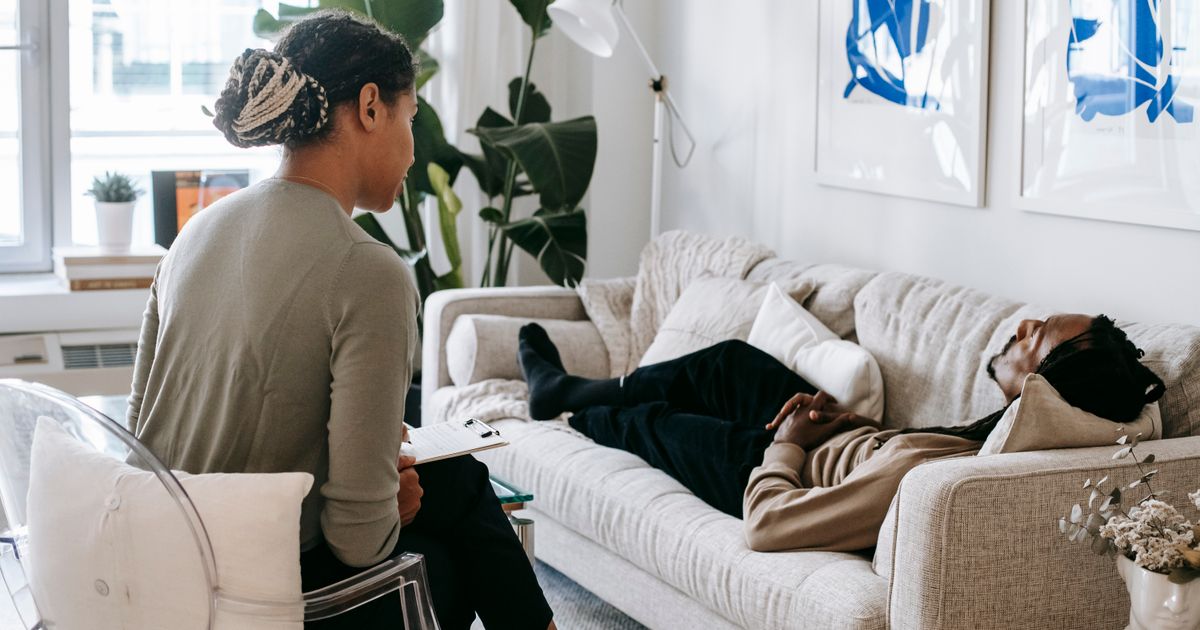
You've thought carefully about the chairs. Whether they're the right distance apart, angled just enough so that eye contact feels like a choice rather than a requirement. You've thought about the lighting, the tissue box, whether the sound machine by the door is loud enough to make the conversation inside feel private.
The wall they see when they walk in, though. What does that say?
Before your client speaks their first careful word, before they find the thread of whatever they came to hold, their nervous system has already scanned the room. The process takes less than a second. The body reads for safety before the mind has caught up. The wall across from the door, the one they see as they step inside and find their seat, is part of that reading.
A holding environment, a concept introduced by British pediatrician and psychoanalyst D.W. Winnicott, is the set of conditions that allow a person to feel safe enough to do difficult inner work. We usually talk about the holding environment in terms of the therapeutic relationship. But the room participates too. The chairs, the light, and what is on the wall.
What the Room Communicates Before Anyone Speaks
Roger Ulrich's landmark 1984 study in Science found that hospital patients whose windows looked out onto natural scenery used fewer pain medications, left the hospital earlier, and reported significantly lower anxiety than patients whose windows faced a brick wall. The only variable was what their eyes could rest on.
That finding has shaped four decades of research on healing environments. Environmental psychologists Rachel Kaplan and Stephen Kaplan, in their 1989 work on attention restoration theory, identified a quality called "soft fascination" in certain visual environments: scenes that hold gentle interest without demanding focused attention allow the brain to shift from high-alert cognitive processing toward a more regulated, restorative state. Natural imagery, open compositions, and quiet geometric forms all carry this quality. Institutional walls, cluttered surfaces, and high-contrast imagery do not.
Before your client sits down, their nervous system has already registered whether this room feels safe or on alert. The art on your wall participates in that registration.
This is something many therapists already understand intuitively when they make decisions about seating, color, and light. The wall art belongs in that same conversation, and it often goes unconsidered.
For a wider look at how physical spaces shape psychological safety, Containment Theory: Why Some Rooms Feel Like a Hug explores what physical containment does to the way people feel held in a space, and why some rooms seem to do the therapeutic work before a therapist says anything.
What Most Therapy Office Art Gets Wrong
There's a particular category of wall art made specifically for clinical spaces. You've seen it. Illustrated trees with roots as deep as the branches are tall. Soft-serif quotes: "You are stronger than you think." "This too shall pass." "You've got this."
These prints come from a caring impulse. But consider what happens when a client settles into the chair before their hardest session of the month and reads "You are stronger than you think." The sentence, however well-meant, is a performance note. It tells them what to feel before anything has been said. It asks something of them while they are still trying to decide whether to breathe.
Your clients, especially the ones doing the hardest work, often already feel they've been told what to feel. Their anger has been reframed as fear, their grief has been redirected toward growth, their exhaustion has been labeled as resistance. The therapist's office wall is one of the few places they get a moment of visual quiet before someone invites them to do more.
The art that helps a client exhale is art that asks nothing of them. It doesn't prescribe. It doesn't assess. It simply holds the space.
If you want a place to start, the Therapy Office Checklist walks through the visual decisions that most affect how clients settle, one element at a time.
What Grounding Visual Language Looks Like
Stable geometric forms register differently in the body than dynamic or chaotic ones. Triangles resting on their base, clean horizon lines, and open negative space all communicate the same thing to the nervous system: there is ground here. You don't have to hold yourself up.
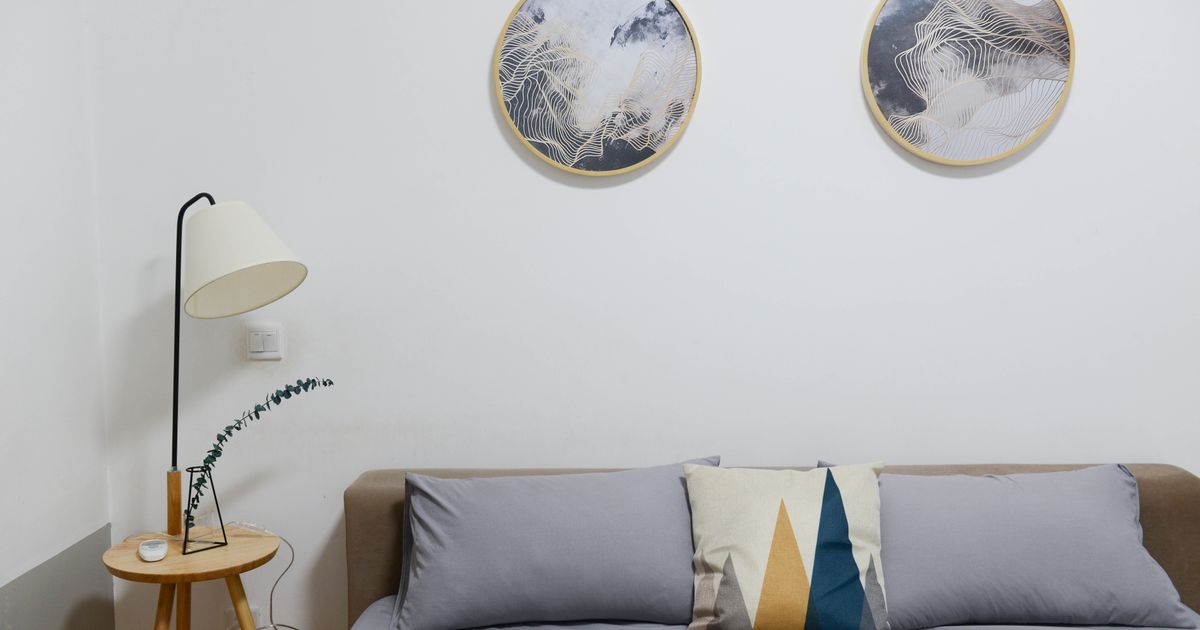
This is why the Grounding collection uses triangles and horizon-like compositions, and why its palette stays within warm, muted territory. Sandy browns, soft off-whites, and deep charcoal reduce visual stimulation without creating coldness. A room with a warm neutral palette invites the nervous system to lower its vigilance. Bright, saturated colors tend to do the opposite: they hold attention rather than releasing it.
Minimal composition is functional, not merely aesthetic. Clutter increases cognitive load. Research in environmental psychology has consistently found that visual complexity in waiting and treatment environments raises perceived stress, even when people are not consciously aware of it. A wall that is too busy to rest on gives the nervous system one more thing to process. The wall that says one quiet thing, with space around it, is doing more than the wall that says many things at once.
This is what restraint signals in a therapeutic space: care, not emptiness. The wall that says less can mean more.
You can see this visual language across the full Grounding Collection, from the quote prints to the Sanctuary Botanical companion pieces.
The Wall They See When They Walk In
Not every wall in your office carries the same weight. The one that matters most is the wall facing the door, or the wall a client sees as they cross the threshold and find their seat. This is the wall the nervous system scans first.
Eye level for a seated person, roughly 57 to 60 inches from the floor, is the placement that reads as most natural and least institutional. A single print at eye level on the primary wall communicates intention without effort. The client doesn't have to look for it or away from it. It exists in their field of vision as they settle.
For standard therapy office dimensions, a 16x20 or 18x24 inch print works well as a focal piece. It's large enough to register as a considered choice without dominating the room. It gives the space a visual anchor without crowding it. For smaller or cozier offices, a 12x16 carries equal presence when placed correctly.
One placement to reconsider: directly behind your own chair. A print there draws the client's gaze toward the therapist rather than offering a neutral resting point. The wall they look at when they need to look away from you is often the more important one.
Wall Art for Therapy Offices: The Definitive Guide covers placement, sizing, and frame options across different office configurations in more detail, including guidance for multi-room practices and waiting areas.
One Print, One Intention
There's a case for gallery walls in therapy offices. Multiple prints can create warmth, break up a large blank wall, and give clients somewhere to look during the quiet stretches. In waiting rooms especially, a considered arrangement can do a lot of the settling work before the session begins.
But for the focal wall of a session room, there is something particular about a single print chosen with care. One print communicates deliberateness. It says that something was thought about before the client arrived. It says that this space was prepared for them.
"You are held here" works in a therapy office for reasons that are different from why it works in a bedroom. In a bedroom, it's permission to rest. In a session room, it makes a relational statement: this room holds what you bring into it. There is containment here. You don't have to hold yourself up alone while you decide whether to speak.
That kind of quiet reassurance, offered by the wall before a word is spoken, can change how a client breathes in those first few minutes.
You are held here is available framed or unframed, in sizes from 8x10 to 24x36, with three frame finish options. Prints start at $35 unframed. For a multi-room practice ordering three or more prints, the welcome code WELCOME15 takes 15% off your first order.
For more on how therapists use specific prints as clinical anchors, 5 Ways Therapists Can Use Quote Art as a Clinical Tool walks through the ways these prints function not just as decor, but as part of the session itself, offering something for the client to look at, return to, and carry with them.
The free Haven & Hold Daily Wellness app is available for clients who want a daily grounding practice between sessions. Some therapists recommend it as a between-session anchor, using the same mantras that appear on the office wall.
If you're working through your office space and want help thinking about what each visual element is doing before a session starts, the Haven & Hold quiz can help you find prints matched to the emotional territory you want your space to hold.
Frequently Asked Questions
What kind of wall art helps therapy clients feel safe before a session?
Art that holds space without asking anything of the client works best. Stable geometric forms, warm neutral color palettes, and minimal compositions reduce visual stimulation rather than increase it. A single well-chosen print tends to communicate more deliberateness than a busy wall. Motivational slogans and instructional text create performance pressure before the session begins, which most clients in hard work don't need.
Does wall art actually affect how clients feel before a therapy session?
Yes. Roger Ulrich's foundational research showed that visual environment affects stress physiology, mood, and perceived safety in clinical settings, even before any clinical interaction. Attention restoration research by Rachel and Stephen Kaplan found that certain types of visual environments allow the brain to shift from high-alert processing toward a more regulated state. The art on your wall is part of your therapeutic frame, even when no one is looking at it directly.
Where should I hang art in a therapy session room?
The most effective placement is on the wall facing the entrance, or the wall perpendicular to the door that a client sees as they cross the threshold and find their seat. Eye level for a seated person, roughly 57 to 60 inches from the floor, is the placement that reads as most natural. Avoid hanging art directly behind your own chair, as it draws the client's focus toward the therapist rather than offering a neutral visual resting point.
What size print works best for a therapy office wall?
A 16x20 or 18x24 inch print works well as a focal piece in most therapy offices. It's large enough to anchor the room without dominating it. For smaller or cozier spaces, a 12x16 can carry equal presence when placed correctly at eye level. Size matters less than placement and intentionality.
Is one print better than a gallery wall in a therapy session room?
For the primary focal wall of a session room, a single intentional print tends to serve the therapeutic frame better. One print signals deliberateness and gives the client one quiet visual anchor rather than multiple things to process. Gallery arrangements work well in waiting rooms, where a client has more time and less internal pressure during the viewing.
What should the words on a therapy office print say?
The words should make a relational statement rather than a directional one. Phrases that describe the room or the relationship, such as "You are held here" or "Within these walls," work because they communicate containment without instruction. Avoid phrases that tell someone what to feel, what they're capable of, or what they should do. The best therapy office print holds space without filling it with expectation.

Written by Haven & Hold