How to Choose Wall Art for a Quiet, Specific Taste
You know your taste. Quiet, minimal, nothing that shouts at you from across the room. The clearest path through the choosing: start with how you need the room to feel, then find art that holds that feeling. Color palette, style, and size all follow from there.
Choosing art when you care this much is harder than choosing when you don't. You've spent longer than you'd like to admit scrolling through options, clicking on something that seemed promising, zooming in, imagining it above your bed, and quietly closing the tab. Plenty of it looked fine. None of it said anything real.
That gap between fine-looking and true is the whole problem. And it's not a taste problem. It's a question problem.
What "Quiet Taste" Actually Means (and Why Choosing Still Feels Hard)
Visual quietude, as researchers in environmental psychology define it, refers to the quality of an aesthetic environment that makes low demands on the nervous system: fewer competing elements, more open space, and less that asks for your attention. For people who naturally gravitate toward this kind of space, the standard decorating advice to "just pick something you love" lands as unhelpfully thin.
When your instinct is restraint, every choice carries more weight. A loud print is more than a visual mistake. It accumulates. It asks something of you every time you walk past it.
A 2010 study published in Personality and Social Psychology Bulletin, conducted by researchers Darby Saxbe and Rena Repetti at UCLA, found that women who used more language associated with clutter and unfinished projects when describing their homes had measurably higher cortisol levels throughout the day compared to women who described their homes as restful. The walls around you participate in your nervous system's daily accounting. They are not neutral.
People with quiet taste tend to know this intuitively. The blank wall isn't laziness. It's a refusal to put something up that costs you more than it gives. Which means the question is never whether to care. It's how to channel that care toward something real.
The Question That Changes Everything
Most decorating guides lead with aesthetics: start with your color palette, your existing furniture, or the room's general feel. Those aren't wrong starting points, but they're secondary questions. The first question is what you need to feel when you're in this room.
Your home holds more than furniture. It holds seasons of life. The room you come home to after a hard week is doing emotional work whether you've asked it to or not. The question is whether you want that work to be intentional.
A useful framework for this, and one that guides every collection here:
Grounding is for stability, safety, and the feeling of having solid ground beneath you. When everything outside is uncertain, you need a room that doesn't ask you to keep processing. Stable forms: horizons, triangles, and the quiet geometry of things that don't tip over.
Wholeness is for acceptance and integration, for spaces that hold all of you, including the parts you haven't made peace with yet. Complete forms: circles, the closed loop of an enso, and shapes that say nothing is missing.
Growth is for the in-between seasons, for rooms that hold what you're becoming when you're not yet sure what that is. Emerging forms: lotus, spiral, and the upward reach of things that keep going.
Before you look at a single print, it's worth spending a few minutes with this. The complete guide to choosing, framing, and hanging wall art walks through the practical side in depth.
If you'd like a simple reference you can keep handy while measuring and ordering, the Sizing and Framing Card covers the key decisions on one page.
Matching Art to the Emotional Work You're Already Doing
Environmental psychologists Rachel and Stephen Kaplan, whose Attention Restoration Theory has been replicated across decades of research, found that environments with coherent visual structure and low cognitive demand restore directed attention and reduce mental fatigue. The art that holds you is not the art that's most beautiful in the abstract. It's the art that was chosen for your actual life.
Here is how that plays out across three kinds of rooms.
When the room needs to hold you steady
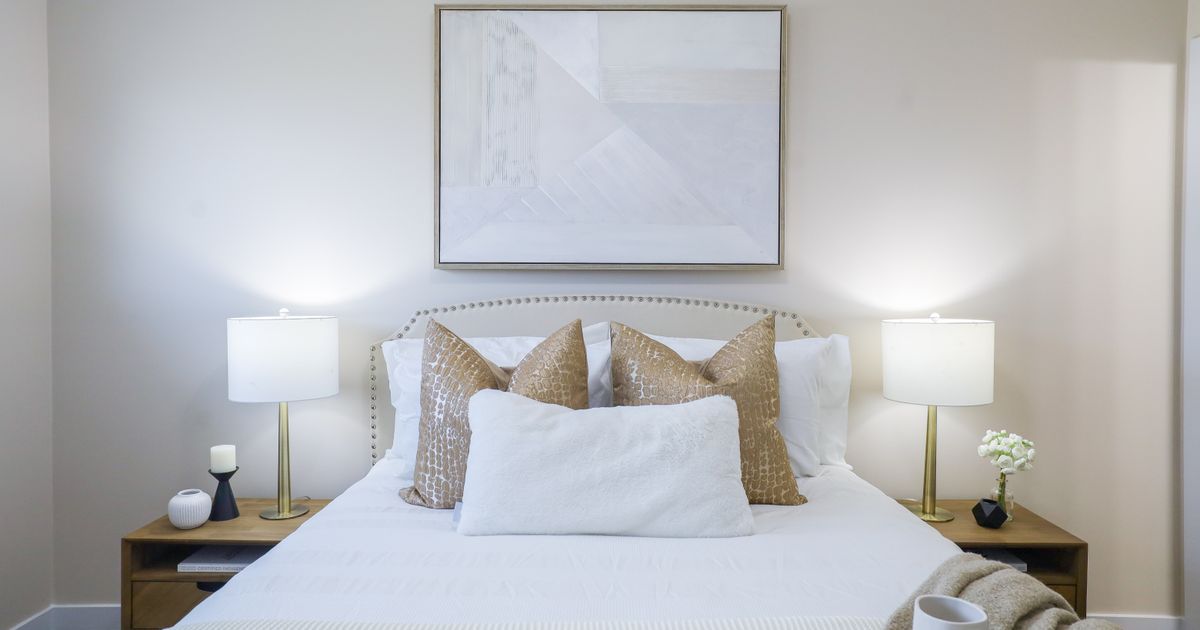
If the space in question is your bedroom, your reading nook, or anywhere you return to when you're depleted, it needs to offer steadiness rather than stimulation. Art that works here doesn't ask anything of you. Horizontal lines, simple geometric forms, low visual complexity, and words that don't instruct.
The Grounding Collection was built for this. Prints like "You are held here" and "Safe harbor" use stable triangular and horizontal forms against muted backgrounds. They say one thing, and they say it quietly. That is the point.
When the room needs to hold all of you
If you're in a season of learning to be gentler with yourself, or rebuilding after something that changed you, you need art that doesn't flinch and doesn't fix. Art that makes room.
The Wholeness Collection uses circular forms because circles hold without requiring anything to be corrected. "Space for all of you" and "Soften here" work in living rooms, therapy offices, and anywhere you spend quiet time with yourself.
When the room needs to hold what you're becoming
If you're in motion, between versions of yourself, putting something together that hasn't existed before, your space needs to acknowledge that without rushing you. Art for in-between times should feel like company, not a finish line.
The Growth Collection carries that. "Still becoming" and "Held in transition" are prints for the process, not the arrival. They belong in home offices, creative spaces, and anywhere you're doing the quiet work of figuring something out.
The Practical Questions: Size, Placement, and How Much Is Enough
Once you know what the room needs to hold, the practical decisions become clearer. A few principles worth knowing:
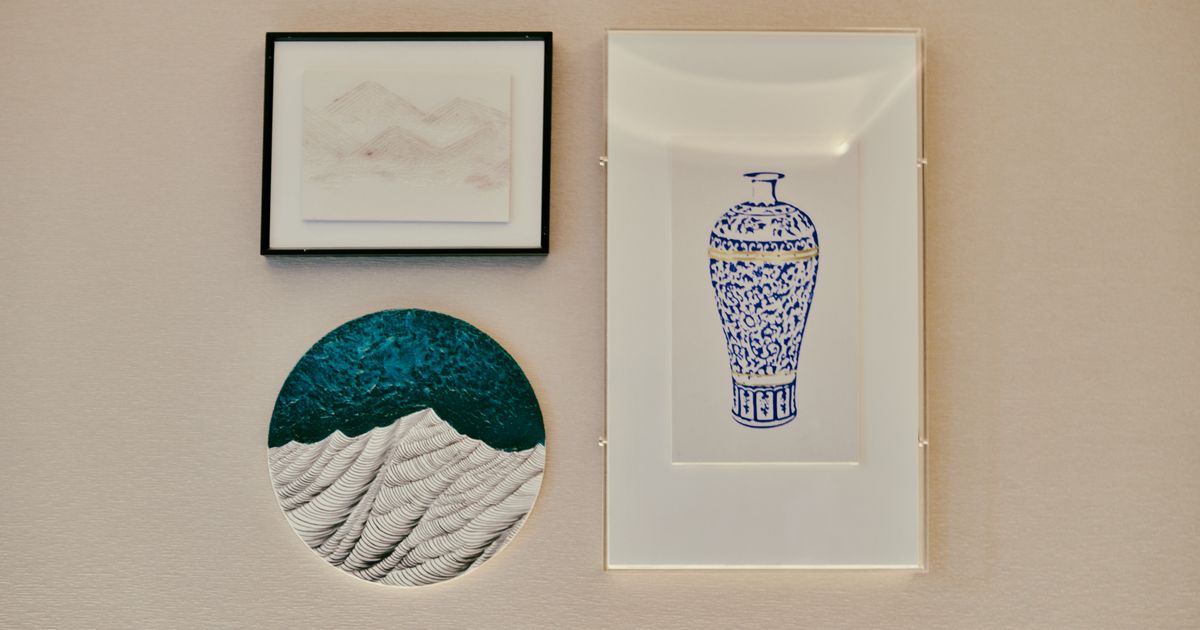
One strong piece usually beats three okay ones. If you're drawn to restraint, resist the pull to fill the wall. One print, well-placed and sized correctly, does more than a gallery wall assembled from obligation.
Sizing matters more than most guides say. A print that's too small disappears into the wall. A print that's too large crowds the room's breathing room. For most walls above a sofa or bed, the art should span approximately two-thirds of the furniture's width. A room-by-room sizing guide can help you work out the specifics before you order.
Hang at eye level. The center of a piece should sit approximately 57 to 60 inches from the floor. The most common placement error is hanging art too high, which makes it feel disconnected from the room.
For quiet rooms, choose frames that recede. Natural oak, white, and black matte finishes let the print lead without adding visual noise. If the room carries warm tones (wood furniture, linen, and warm whites), natural oak works well. For cooler or more neutral rooms, white or black frames let the print do the work.
The Blank Wall and What It's Actually Protecting
Most blank walls in thoughtful homes are not evidence of neglect. They're evidence of care. You left the wall blank because you'd rather wait for right than settle for fine.
That instinct is trustworthy.
The trouble comes when waiting for right slides into never deciding. When the bar becomes so high that nothing clears it, the wall stays blank not out of discernment but out of a particular kind of stuckness. The stakes feel too high and choosing feels like risk.
On decorating as a form of tending to yourself explores this more directly. The act of choosing something for your wall is an act of care for yourself, and it doesn't require certainty. It requires honesty about what you need the space to hold.
If you're not sure where to start, the quiz takes about two minutes and maps your current season to the collection most likely to fit.
Frequently Asked Questions
How do I know which collection is right for my room?
Start with what you need the room to feel like when you're in it. If you need stability and the sense of being held steady, the Grounding Collection is the place to start. If you need a space that accepts all of you without asking you to fix anything, the Wholeness Collection fits that. If you're in a period of change and need your space to hold the process without rushing the outcome, the Growth Collection is what you're looking for.
Do I need art in every room?
No. Quiet homes often have rooms with nothing on the walls, and that absence is a choice, not a failure. The rooms that benefit most from intentional art are the ones where you spend time with yourself: your bedroom, wherever you read or sit quietly, and wherever you decompress at the end of the day.
What if I buy something and it doesn't feel right once it's on the wall?
Give it a few days before deciding. Art chosen for a real emotional reason often needs time to settle into a space. If after a week it still feels off, look at placement first, because height and horizontal position make a large difference. A print that feels wrong in the room is usually misplaced before it's truly wrong.
How do I build a cohesive collection without buying everything at once?
Start with one piece that addresses what the room most needs right now. Live with it and let it show you what the wall wants next. Collections built slowly and with intention are almost always more coherent than ones assembled all at once.
Is framed or unframed better for a minimalist space?
Both work, depending on the room. Unframed prints on archival matte board or mounted with simple hardware can feel deliberate and contemporary. Framed prints add weight and permanence, which suits some rooms better. The question is whether you want the print to feel like it belongs to the wall or floats in front of it.
Your taste is an asset, not an obstacle. The specificity of what you need, even if you haven't named it yet, is pointing you somewhere real. The walls in your home are allowed to hold something that matters to you. You don't have to wait until you've figured everything out to begin.
You might also enjoy

Written by Haven & Hold