Decorating When Exhausted: A Guide for People Running on Fumes
You already know what the list looks like when it belongs entirely to someone else. The appointments, the medications, the phone calls, the meals. The way your name has slowly become a verb that other people use. And then you come home, close the door, and stand in a space that has nothing on the walls and nothing left to give.
This post is not a plan. It is not a list of things you should do before the weekend. It is only this: you are allowed to have a space that takes care of you. You do not have to earn that.
When Giving Is the Only Gear You Know
Caretaker burnout refers to the physical, emotional, and mental exhaustion that develops when someone has been in the continuous work of providing care, usually while their own needs quietly recede. It is not a weakness. It is not a character flaw. It is what happens when the reserves run out before anyone thinks to refill them, including you.
And it shows up in the space around you in ways that are easy to overlook. The wall you have been meaning to do something about for two years. The boxes still sitting in the corner from when you moved in, because unpacking your own things kept getting bumped down the list by something more urgent. The lamp that needs a bulb.
These things do not feel pressing when other things are pressing. They are not supposed to. But they accumulate into something specific: a home that functions, but does not hold you. A space where you exist but cannot quite settle.
That is the thing nobody says out loud about caring for other people over a long stretch of time. The space you come home to is often the last thing to receive care. Not because you do not want it to feel good. Because you have been spending the care somewhere else.
Your walls are not blank because you failed to decorate. They are blank because you were somewhere else, which is a different thing entirely.
What the Research Says About Empty Walls and Full Schedules
The connection between your home environment and how you feel at the end of the day is not abstract. A 2010 study published in Personality and Social Psychology Bulletin, conducted by researchers at UCLA, found that women who used more stressful language to describe their homes had measurably higher cortisol levels throughout the day. Cortisol, the body's primary stress hormone, stayed elevated in environments described as cluttered or unfinished, and dropped in environments described as restful and restorative.
This is not about aesthetics. It is not about having a particular kind of home. It is about the fact that your nervous system is constantly reading the room you are in and deciding, in milliseconds, whether to relax or brace. A space that feels undone keeps the body in a low, steady state of vigilance. Not distress. Just the quiet hum of not quite landing anywhere.
The wall you keep meaning to do something about is not a decorating problem. It is an environment problem. And your body knows the difference, even when you do not have the words for it.
According to data from the National Alliance for Caregiving, more than 53 million Americans provide unpaid care to an adult or child, and the research on caregiver wellbeing consistently shows that personal space, personal time, and personal need are among the first things that quietly disappear when caregiving responsibilities expand. The empty wall is not failure. It is the record of where your attention has been.
If you want somewhere to begin before you begin, Words for Hard Seasons is a free resource that holds some of what exhaustion calls for and some of what the research points toward. No pressure. Just words for where you are.
The Blank Wall Is Not Waiting to Judge You
The blank wall has been patient. It does not hold a grudge for the years you gave to other things. It has simply been there, waiting to be asked what it wants to hold.
When you are running on fumes, the fear is that starting will require something you do not have. A vision. A Saturday. A sense of certainty about what you want your space to feel like. But the blank wall does not ask for any of that. It only asks for one decision.
The question you are actually asking, underneath the fatigue, is not: when will I finally have the energy to do this properly?
The question is: what would make this one wall feel like it sees me?
That is a smaller question. And it has a smaller answer.
One Wall. One Decision. That Is Enough.
The impulse, once the bandwidth finally returns, is to do everything at once. The gallery wall, the bedroom corner, the entryway, the reading nook. You have been putting this off long enough that finally having a little capacity feels like an obligation to catch up.
You do not have to catch up.
One wall.
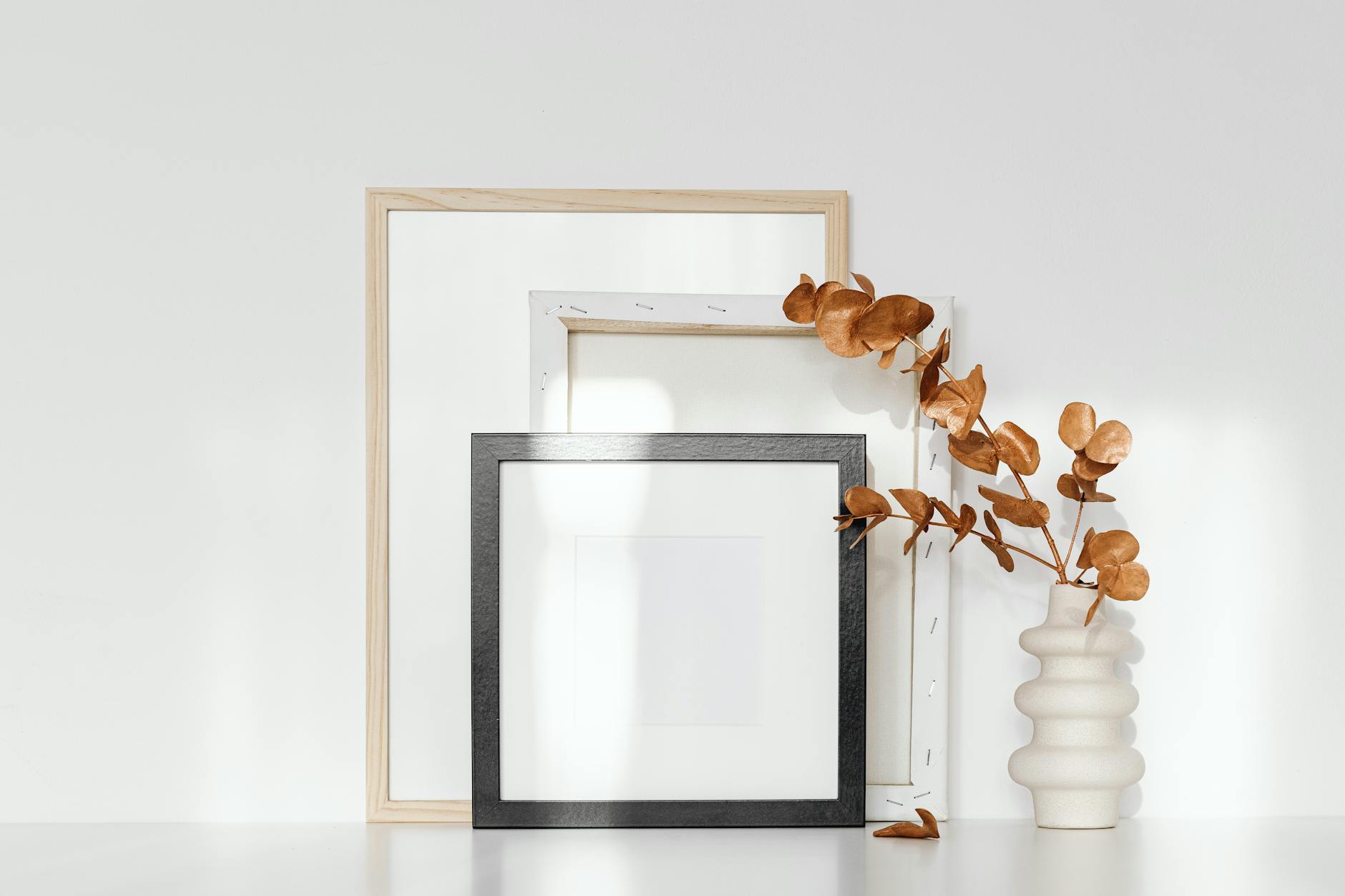
Start with the wall you look at most. The one across from where you sit in the evening, or the first thing that greets you when you open your eyes, or the space above the sofa where you spend the quiet hours. That wall. One decision on that wall.
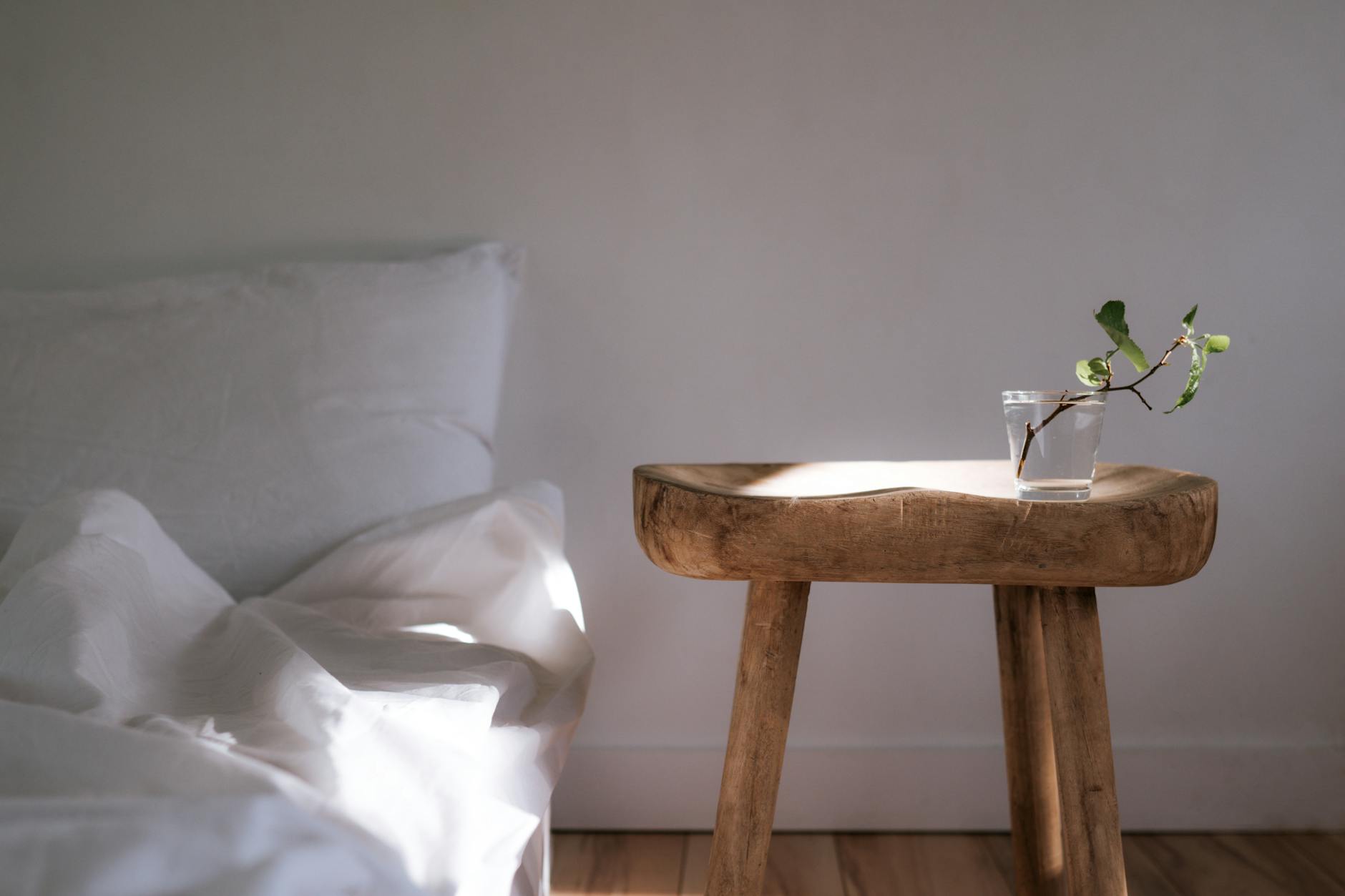
Biophilic design is the practice of incorporating natural elements and meaningful forms into a living environment to support psychological wellbeing. Research in this area shows that natural shapes, soft textures, and intentional objects help the nervous system shift from a state of low-grade alertness to genuine rest. You do not need a whole room transformed to feel that shift. You need one corner that signals: you can put it down here.
When You Are Ready, There Is Something Waiting
One thing worth knowing: the prints in the Wholeness Collection were made for exactly this kind of exhaustion. Not to fix it. Not to offer a silver lining. To acknowledge it. The collection lives in the territory of acceptance and self-compassion, which is where a person who has been giving from a diminishing reserve tends to live.
"Space for all of you" on the wall across from your bed. "Soften here" above the chair where you sit at the end of the day. Not advice. Not motivation. Just permission, printed on enhanced matte paper and hung at eye level so you see it when you forget.
When you are ready, the collection is there. There is no deadline. The wall will keep.
If you want a way to find the right piece for where you are right now, the Haven & Hold quiz matches you to a collection based on what you are actually sitting with. It takes about two minutes.
Questions People Ask When They Are Too Tired to Start
Is it bad that I haven't decorated my home in years?
It is not bad. When you are giving most of your energy to someone else, your own space is often the last thing to receive attention. That is not neglect. That is what happens when care has been flowing in one direction for a long time and the reserves run thin before the walls do.
How do I start decorating when I'm completely overwhelmed?
Start with one wall. Pick the wall you look at most often, and make one change to it. You do not need a vision board or a plan or a free weekend. You need one decision, and the willingness to let that be enough for right now.
Does what's on my walls actually affect how I feel?
Yes. A 2010 UCLA study published in Personality and Social Psychology Bulletin found that women who described their homes as unfinished or cluttered had measurably higher cortisol levels throughout the day. The physical environment you live in sends continuous signals to your nervous system, and those signals accumulate.
What if I put something up and it doesn't feel right?
That is part of the process, not a mistake. Starting with one piece gives you real information about what your space needs. You are allowed to adjust, reposition, and change your mind. A wall is not a commitment. It is an ongoing conversation.
What is the smallest possible step I can take?
Clear one surface, or hang one print on the wall you look at most. Research on home environment and wellbeing consistently shows that small, intentional changes can shift how a space registers to your nervous system. You do not need a whole room. You need one corner.
What is caretaker burnout, and why does it affect home decor?
Caretaker burnout refers to the exhaustion, physical and emotional and mental, that accumulates when someone has been providing care for others over time while their own environment and needs go unmet. It affects home decor because the space tends to mirror the inner state: when everything is going outward, very little comes back in.
Your walls have been blank because you were somewhere else. That somewhere else mattered. The people you were caring for mattered. And you matter too, in your own home, in the quiet that comes after.
One wall. One decision. That is enough to begin.
Related guide: For more room-by-room ideas, read our calming wall art guide. calming wall art guide.

Written by Haven & Hold