Rest Here: Two Words That Carry Permission
Your shoulders drop before you finish reading it.
Not because the words are complex, or because you spent time analyzing their meaning. Just because two words, in the right order, named something you needed without asking you to explain yourself first.
Rest here.
That's all. And somehow, that's everything.
You've seen plenty of quote prints. Most of them say something at you. They declare, proclaim, remind, and motivate. They assume you're not trying hard enough and would like to correct that. The one at the office says something about growth. The one in a friend's entryway says something about rising and grinding. You walk past them without your nervous system registering a single thing, because something in you already knows those words aren't actually talking to you.
These two words are doing something different. They're not asking anything of you. They're making room.
When Two Words Hold More Than a Paragraph Can
Language researchers have long understood that brevity creates weight. A sentence that explains itself signals uncertainty. A sentence that trusts the reader to arrive at meaning leaves space for something deeper than comprehension. The phrase "rest here" doesn't explain what rest means, why this is the right place, or what you should feel when you read it. It simply opens a door and steps aside.
In therapeutic language, this quality is called holding without directing. A skilled therapist doesn't fill the silence with answers. They hold the space where answers can emerge. The phrase works the same way on your wall. It's not telling you what to think. It's telling you this is a safe place to think it.
The contrast with most wall art is worth sitting with. "You've got this" assumes a specific emotional state. "Keep going" assumes you've been thinking of stopping. "Good vibes only" polices the room, telling you which feelings are and aren't allowed through the door. Each of those phrases has a clear point of view about where you should be emotionally. "Rest here" has no such agenda. It simply offers the ground beneath your feet.
That is a rarer thing than it sounds.
What "Rest" Is Actually Giving You Permission to Do
In everyday language, rest means sleep, or stopping, or stepping away from work for a while. In therapeutic contexts, rest refers to something more specific and more meaningful: a regulated nervous system state, where the body has returned from a state of activation or alert to a state of relative safety and ease.
Nervous system regulation is the process of returning the body to a condition where it feels safe enough to stop scanning for threat. This is distinct from relaxation, which is a surface-level experience. True rest, in this sense, is physiological. It's the moment your jaw unclenches. Your breath drops into your belly. Your shoulders find their natural position somewhere below your ears, and you realize they had been somewhere else for most of the day.
A 2010 study published in Personality and Social Psychology Bulletin, led by researchers at UCLA's Center on Everyday Lives and Families, found that women's cortisol levels were significantly higher in homes they described as cluttered and visually overwhelming. The physical environment wasn't a neutral backdrop to their daily experience. It was actively participating in the body's stress-response patterns. Which means the reverse is also true. An environment that signals safety can actively support the nervous system's return to rest.
The word "rest" on your wall is not instruction. It's permission. You are allowed to stop scanning. You are allowed to let your guard down in this particular room, with these particular walls, right now. You are allowed to be exactly as you are without performing anything at all.
If you're not sure which words belong on your walls, the Sanctuary Style Quiz can help you find the approach that fits where you are right now.
The Weight of the Word "Here"
"Rest" alone would be instruction. "Rest here" is something else entirely.
The word "here" makes the phrase specific in the way that a good therapist is specific. Not rest eventually. Not rest when you've caught up, or when the inbox is clear, or when the hard season is behind you. Here. This room. These walls. The floor underneath you right now.
"Here" is also a claim about the space itself. The room is making a promise. It is declaring itself safe ground. It is naming itself a place where the ordinary rules about being productive and presentable and okay can rest, too.
This is part of why the phrase works as art in a way it would not work as advice spoken aloud. If someone told you to rest here, the words carry a different texture entirely. They come from outside you, from another person's perspective and agenda. When the room holds the words, they speak from the inside of the space that holds you. That's a different register. It's the difference between being told you're safe and being held somewhere that feels safe.
You don't have to take anyone's word for it. The room is already saying it.
Why the Design Makes the Words Land
A landmark 1984 study by environmental psychologist Roger Ulrich, published in Science, found that patients recovering from surgery who could see a natural scene from their window needed less pain medication and recovered faster than those facing a blank wall. The research established that visual environments directly regulate physiological stress responses, and that simplicity and coherence in the visual field played a meaningful role in those outcomes. The eyes, it turns out, are a direct pathway to the nervous system.
The "Rest Here" print in the Grounding Collection is warm white on charcoal. Not because those are fashionable colors, though they happen to work well together. Because those colors are physiologically quiet. Warm white reduces visual noise. Charcoal text at the right weight reads clearly without demanding. The print doesn't shout. It occupies its corner of the wall with the same quality as the words it carries: still, grounded, and present without performing anything.
When design and language work together, the visual experience of reading becomes part of the permission itself. You take in the white space surrounding the words, and something in you makes space too. The design is not incidental to the meaning. It is the meaning, held in a different form.
This is the gap that most quote prints fall into. The message says one thing and the visual energy says another. Loud fonts, cluttered layouts, colors that activate rather than quiet. The words might be kind, but the design is shouting. "Rest here" on a busy, saturated background would be a contradiction. The print only works because everything about it is working toward the same thing.
The Grounding Collection: Prints for When You Need the Floor
The Grounding Collection was built for a specific kind of need. The need to feel the floor beneath you when everything else is unsteady. The need to come back to a room and have it receive you without asking anything in return.
The collection draws on triangles and horizon shapes, stable geometric forms that communicate safety at a visual level before a single word registers. The mantras in the collection follow the same principle. "You are held here." "Safe harbor." "Within these walls." "Sanctuary." "Rest here." Each phrase is an arrival, not a destination. Each one assumes you're already here, already trying, already doing the hard work of being a person in a difficult world. None of them ask anything more of you.
The Rest Here print comes in two variants. The standard design pairs the phrase with the geometric visual language of the Grounding Collection. The quote-only typography variant lets the words stand entirely on their own, on a warm white ground, with nothing else competing for your attention. Both arrive on enhanced matte paper, which is a paper weight that has physical presence in your hands and holds color without glare or fading over time. This is not a poster. It's something you invest in for the space that matters to you.
Sizes range from 8x10 unframed at $35 to 24x36 framed at $175. The right size depends on your wall and how close you'll be to it, which the FAQ below addresses.
Who This Is For
You have probably had the experience of scrolling through wall art for what feels like too long, closing the tab, and leaving the wall blank for another month. Not because you don't care. Because you care so much that nothing generic will do.
You know the difference between a room that holds you and a room that just looks nice. You've been in a therapist's office and noticed how the space itself participates in the session, how the quality of what's around you changes the quality of what you can access inside. You've been in your own apartment and felt the gap between what the walls are saying and what you actually need them to say.
There is no perfect moment to fill that wall. The blank wall is not a failure. It's actually evidence that you're paying attention, that you'd rather wait for the right thing than settle for something that doesn't fit.
This print is for when you've been waiting for something that tells the truth in two words.
Frequently Asked Questions
What does "Rest Here" mean as a wall print?
The phrase functions as both permission and declaration. It names the room as a place where the ordinary pressure to perform, produce, and hold everything together can be set down. In therapeutic language, "rest" refers to a regulated nervous system state where the body is no longer scanning for threat, and "here" makes that permission specific to this room, these walls, this moment. The phrase doesn't explain itself. It holds space.
Is "Rest Here" part of a larger collection?
Yes. "Rest Here" belongs to the Grounding Collection, which also includes "You are held here," "Safe harbor," "Within these walls," and "Sanctuary." All five prints share a visual language of stability, with warm neutrals and minimal geometric forms that support the emotional territory each mantra holds. They work individually and together as a gallery wall.
What size works best for a bedroom?
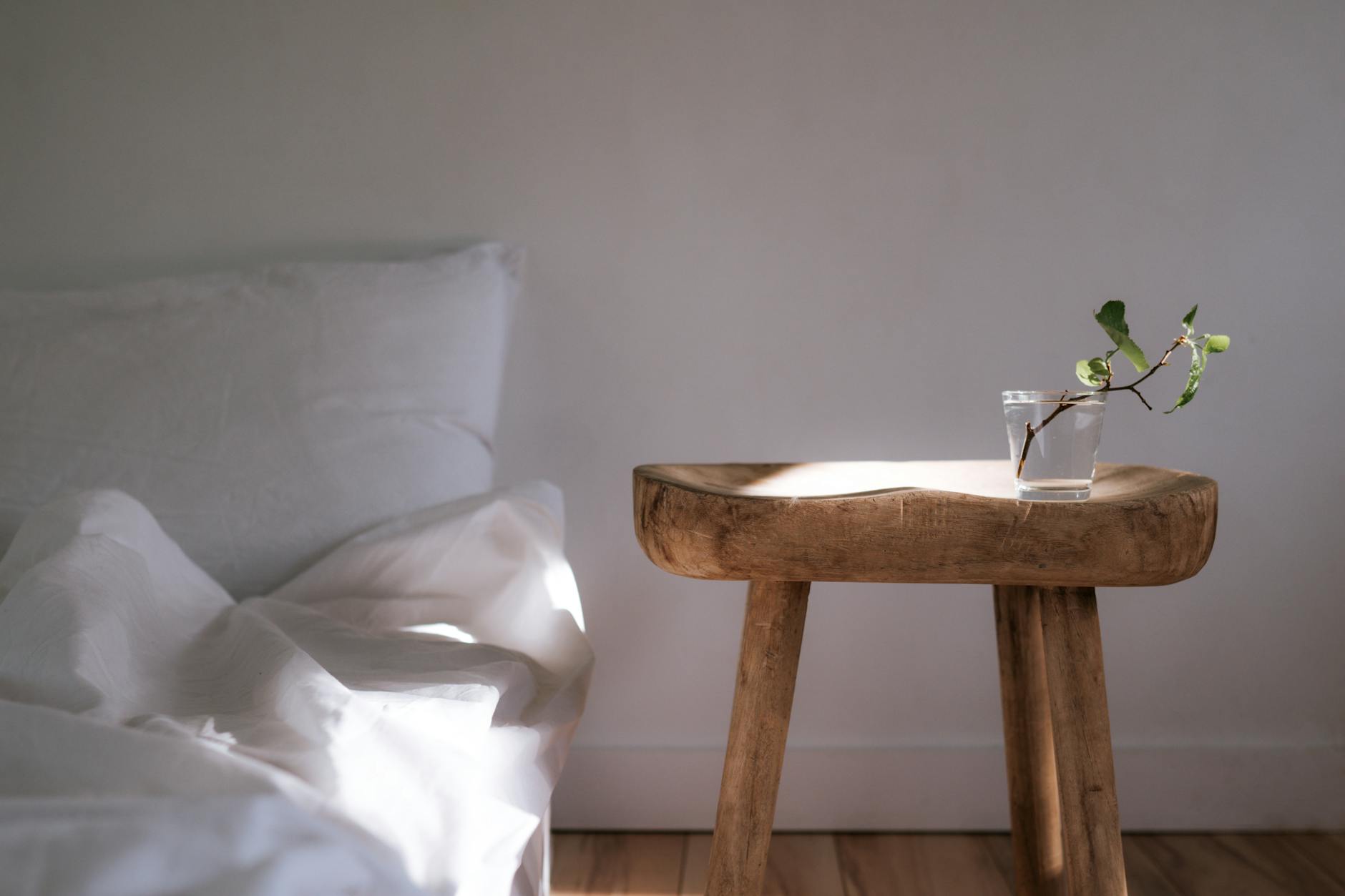
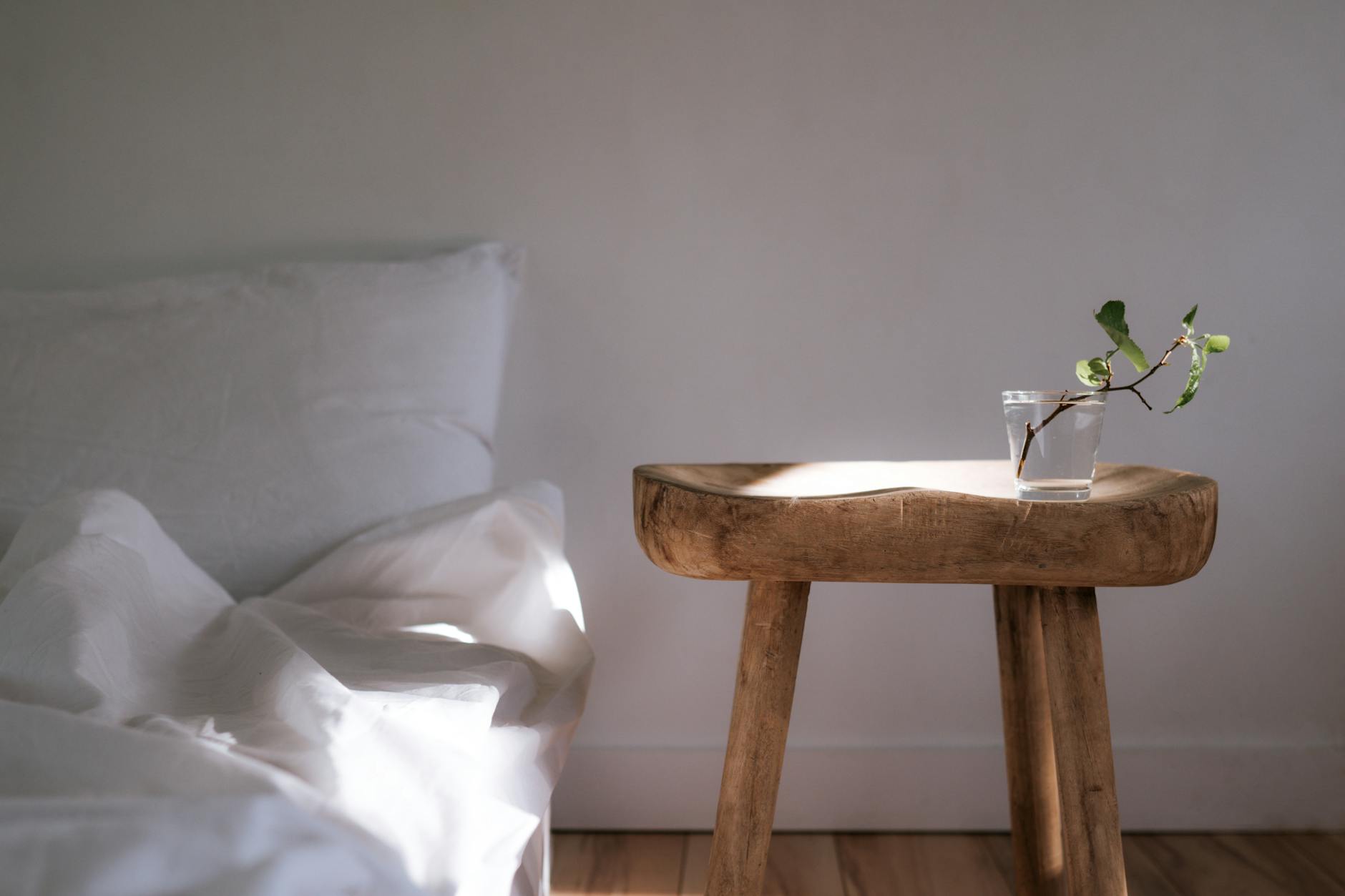
For a wall above a bed, an 11x14 or 16x20 reads clearly from a lying position without overwhelming the space. The 8x10 works well on a nightstand shelf or a reading nook where you'll be closer to it. As a general principle, the print you choose benefits from going slightly larger than your first instinct, especially if it will be the only piece on the wall. Breathing room around a print makes the words land differently than crowding them.
Why does the design matter as much as the words?
Research in environmental psychology consistently finds that the visual field participates in nervous system regulation independent of conscious attention. A design that is visually loud undermines a message about rest. The print works because the design and the words are doing the same thing. Warm white reduces visual noise. Clean typography reads without demanding. The physical experience of looking at the print supports the permission the words are offering.
Can a single print genuinely change how a room feels?
Yes, within limits. A print doesn't resolve what's difficult. But the visual field directly affects the nervous system, and a space that offers even one clear signal of safety registers differently than a space with no such signals at all. Where your eyes rest when you wake up, or when you sit with something hard, shapes the quality of those moments more than most people realize. One print, placed well, holds more than its size suggests.
The wall you're looking at right now holds nothing, or holds something that no longer fits. Both are fine. Both are where people start.
When you're ready, take your time with the Grounding Collection. There's no right order and no right moment. There's just the room you're in, and what you need it to say.
Related guide: For more gift and room ideas, read our meaningful quote prints guide. meaningful quote prints guide.
You might also enjoy
- 2026 Home Decor Trends That Actually Matter
- bedroom-design-mental-health
- Color Psychology at Home: What the Research Actually Says
- Building a Bedtime Wind-Down That Your Space Supports
- What "Rest Here" Means When Rest Feels Like Giving Up
- When Your Home Feels Too Loud: Small Visual Changes That Help

Written by Haven & Hold