The Wholeness Collection: What Circles Have Been Trying to Tell Us
Your eye finds circles first. Before you have registered what you are looking at, your nervous system has already decided how you feel about it. Researchers in visual perception have documented this for decades: the brain processes curved forms as less threatening than angular ones, softer than straight lines, more like something that holds than something that cuts.
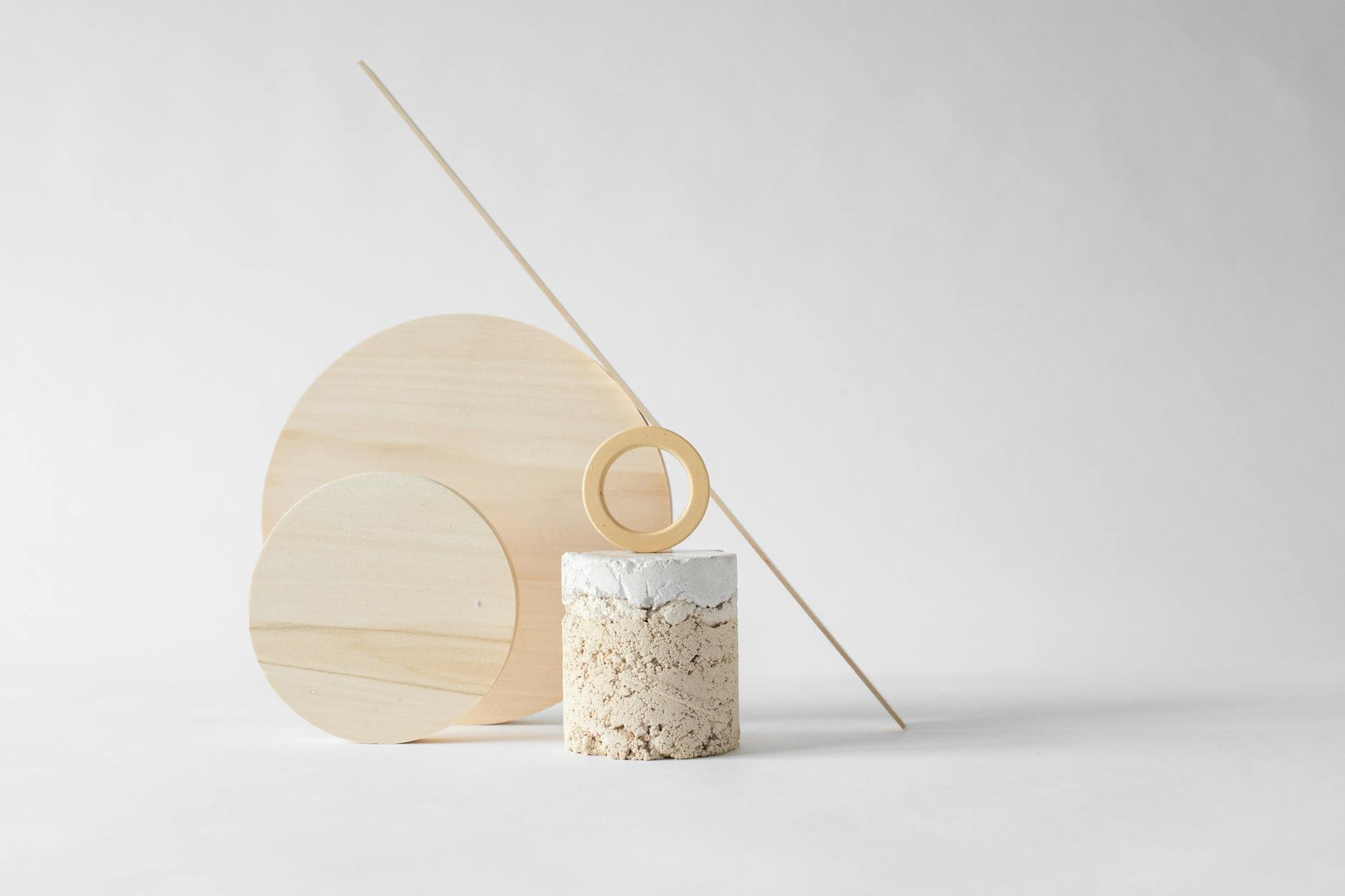
The Wholeness Collection exists in this territory. Circles, enso brushstrokes, and the quiet geometry of forms that return to themselves. Each piece carries a version of the same question: what if all of you belonged here, not just the parts you have managed to make presentable?
That is a harder question than it sounds.
The Ancient Logic of the Circle
The enso is a symbol rooted in Zen Buddhism and practiced in Japanese calligraphy for over 1,300 years. In its simplest form, it is a single brushstroke that forms a circle, completed in one continuous gesture. The stroke captures the exact state of the person who made it: steady hands or trembling ones, clarity or distraction, the full presence of the moment. The enso is one of the most widely practiced subjects in Zen art not because it is decorative, but because it is honest.
The open enso, the one where the brushstroke ends just before closing, carries a particular resonance. It represents wholeness that includes a gap. The circle does not need to be sealed to be complete. This is a different claim than most visual culture makes. Most images of wholeness are closed and finished and perfected. The enso includes the breaking.
In Western psychology, this idea has its own research lineage. In Dr. Kristin Neff's foundational 2003 research, published in Self and Identity, she documented that self-compassion, the willingness to treat yourself with the same care you would offer a good friend, was strongly and consistently associated with reduced depression, anxiety, and fear of failure across multiple studies. Her subsequent research, and the work of others who built on it, found a specific pattern: the people who struggled most were not those facing the hardest circumstances. They were the ones who believed the hardest parts of themselves did not deserve to be included.
The enso has been making the counter-argument in one brushstroke for more than a thousand years.
The Part of You That Doesn't Get Invited In
You probably know what it feels like to curate yourself. To bring the calm version to dinner. To save the overwhelmed version for the car ride home. To be competent at work and exhausted in the bathroom after a long meeting. To perform wholeness while quietly holding back the parts that feel too much, too messy, or too hard to explain.
This is not a character flaw. It is learned behavior. You learned, probably quite early, that some parts of you were easier for others to be around than other parts. That patience got warmth and crying got discomfort. That strength was welcome and need was not. You adjusted. Most people do.
But the adjustment has a cost. You end up living in a fraction of yourself. The rest of you waits.
The Wholeness Collection was built around this specific exhaustion. Not the exhaustion of doing too much. The exhaustion of holding yourself in two separate hands, one part forward and one part back.
If you are not sure where you are right now, the Sanctuary Style Quiz can help you find the approach that fits where you are.
What "All of You Fits Here" Actually Means
The Wholeness Collection's voice is "All of you fits here." Five words. They sound gentle. They are actually one of the more challenging things you can say to someone who has spent years believing the opposite.
All of you. Not the version that had a good week. Not the one who has been to enough therapy to feel like she is making progress. The one who cried in the parking lot. The one who canceled plans again. The one still carrying something from three years ago that she thought she was over.
Acceptance, in the clinical sense, refers to the willingness to allow difficult internal experiences, including thoughts, feelings, and memories, to be present without fighting them or suppressing them. This is the core of Acceptance and Commitment Therapy, developed by Dr. Steven Hayes and supported by hundreds of published studies, which found that psychological flexibility, the capacity to experience discomfort without being controlled by it, is one of the strongest predictors of long-term mental health outcomes.
Art that lives in the territory of acceptance does something different than art that motivates. It doesn't push. It holds.
Every piece in the Wholeness Collection was chosen for this quality: the capacity to sit beside you without asking anything of you. Not to fix, not to direct, not to remind you to be better. Just to say: you are already something whole.
The Wholeness Collection, Up Close
The five Wholeness mantras each approach the same territory from a different angle.
"Held gently, held wholly" is the collection's quietest piece. The words carry the same logic as the enso: to be held does not require you to be different first. The design is spare and warm, in soft clay tones that settle without demanding attention. You can see it here.
"Space for all of you" speaks to the fragmentation directly. The word "all" does real work in that phrase. It means the version of you that showed up to therapy and the version that sometimes still wonders if this is self-indulgent. Both are welcome.
"Soften here" is two words and a direction that doesn't command. It invites. "You belong here" and "Your story matters here" round out the five mantras, each landing on a different facet of the same permission: you are allowed to take up space without earning it first.
The Enso pieces work alongside these prints or on their own. The Open Enso, "Whole in the Breaking," makes the visual argument that wholeness includes the gap. The Complete Enso, "What Returns," speaks to cyclical completeness, the kind that has been broken and come back around.
Two botanical companions from the collection sit alongside these pieces well. The Eucalyptus print, "The Healing Is Already Here," and the Lavender Stem, "Restoration," offer softer visual anchors in a gallery arrangement.
Placing These Pieces
Roger Ulrich's landmark 1984 study, published in Science, found that patients who could see natural views from their hospital windows recovered significantly faster and required less pain medication than patients whose windows faced a bare brick wall. The study's influence on evidence-based design has accumulated for four decades: environments that hold the eye gently affect how the nervous system settles. The visual field is not neutral. What surrounds you is in conversation with your body whether you are aware of it or not.
You already know this in the rooms you have lived in. You know the ones where you could breathe and the ones where you couldn't.
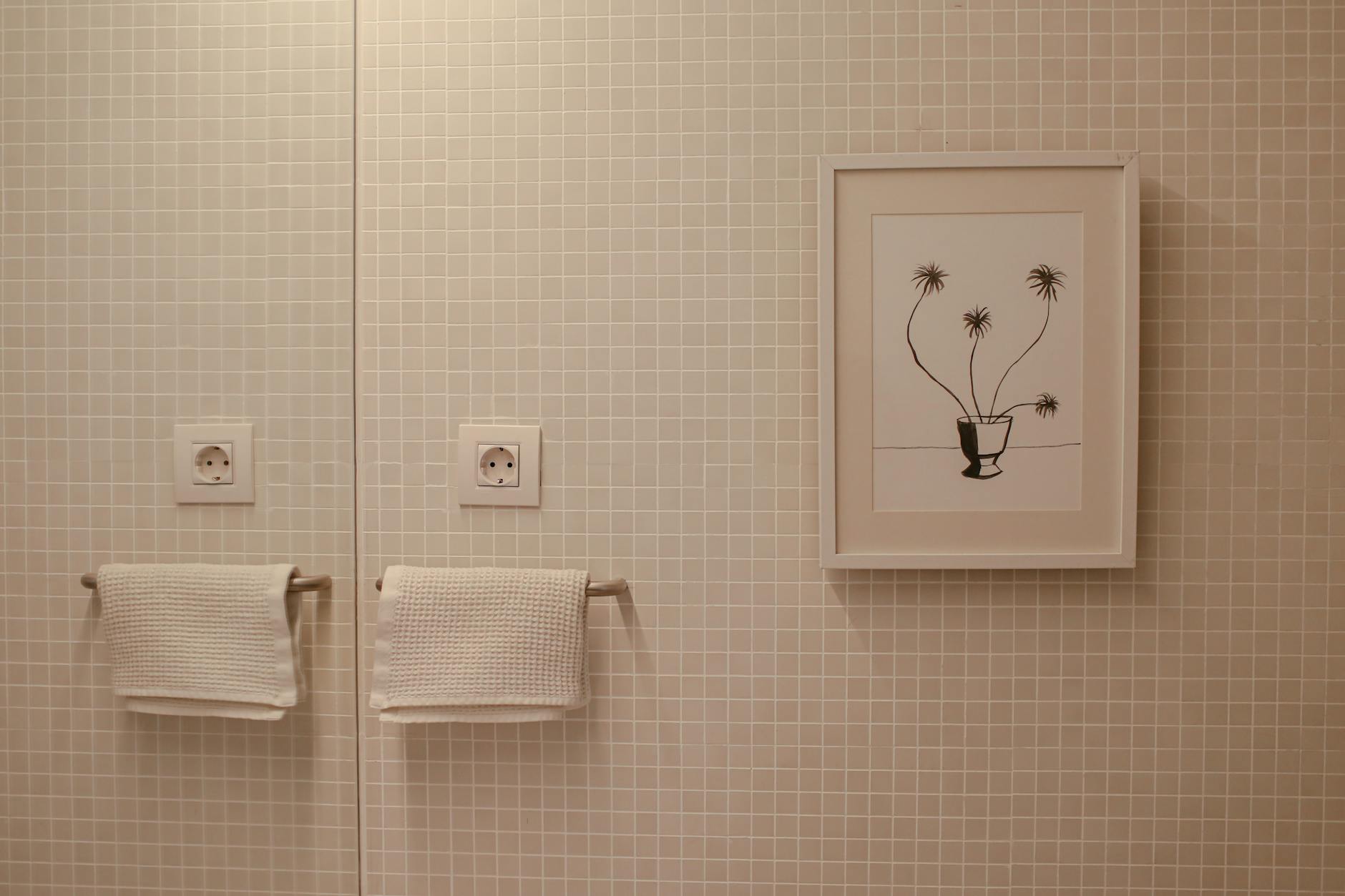
Wholeness Collection pieces work well in the spaces where you spend time alone with yourself. The bedroom, where you begin and end the day. A reading corner with a good chair and a lamp. A bathroom that sees more of you than almost any other room in the house. A therapy office, where the art needs to hold space for many different human experiences without directing any of them.
For a gallery arrangement, consider using the Open Enso as the center. It doesn't need precise alignment the way text-based prints do. It can hold the composition from a position that feels slightly off-center and still look right. The circle has that quality.
The Wholeness Collection is available framed and unframed, in sizes from 8x10 to 24x36. The framed versions are printed on enhanced matte paper and fitted with framed options in Black, White, and Natural finishes. They are made to hold a wall for a long time.
Frequently Asked Questions
What is the Wholeness Collection about?
The Wholeness Collection is Haven & Hold's collection focused on acceptance, integration, and self-compassion. It uses circular forms and enso-inspired artwork to hold the emotional territory of feeling whole as you are, without needing to change anything first. The collection's voice is "All of you fits here."
What does an enso circle represent?
An enso is a Japanese calligraphic circle drawn in a single brushstroke, practiced in Zen Buddhism for over 1,300 years. It represents wholeness, the cycle of life, and, in its open form, the idea that completeness includes imperfection. The circle does not need to be sealed to be whole.
How do I choose between the Grounding Collection and the Wholeness Collection?
The Grounding Collection speaks to stability and safety when everything feels unsteady. The Wholeness Collection speaks to acceptance and integration when you are tired of holding yourself in separate pieces. Both are valid needs, and the two collections work well together in a home that holds more than one kind of hard day.
What is self-compassion and why does it matter in a home environment?
Self-compassion refers to treating yourself with the same understanding and care you would offer a close friend, particularly during difficulty or failure. Research by Dr. Kristin Neff has documented its strong relationship to emotional resilience and reduced depression and anxiety. Surrounding yourself with objects and art that carry this quality functions as a gentle, persistent cue for how to relate to yourself throughout the day.
Can Wholeness Collection prints work in a therapy office?
Yes. The Wholeness Collection prints are appropriate for therapy offices because they hold emotional space without directing it. They make no claim about what the viewer should feel or do. The circular forms and quiet text give the room a quality of openness that supports, rather than prescribes, the work happening in the space.
Do the prints come framed?
Yes. All Haven & Hold prints are available unframed and in natural oak frames (Black, White, and Natural finishes). Prints are produced on enhanced matte paper with a clear front protector in framed versions. Sizes range from 8x10 to 24x36, starting at $35 for an unframed 8x10.
The circles in the Wholeness Collection are not decorating a wall. They are making a claim about who belongs in the room.
You do. All of you.
Take your time finding what fits. The Wholeness Collection holds the door open.

Written by Haven & Hold