Reading Nook Ideas for People Who Need a Space That's Just Theirs
You close the door and, for a moment, the noise of the day doesn't follow you in.
That pause between closing the door and the quiet settling is the thing people describe when they talk about wanting a space of their own. Not a room, necessarily. Not a renovation. Just a corner of their home that knows who they are, where nothing needs to be explained or managed, where they are allowed to simply be the person who showed up.
A reading nook is a dedicated area within a larger room, set apart from the rest of the space by intentional arrangement of light, seating, and personal objects. It doesn't need its own four walls. It needs enough intention to feel distinct from everything else.
This is about building that corner.
Why a Space of Your Own Is Not a Small Ask
In 2009, researcher Dr. David Lewis at MindLab International found that reading for just six minutes reduced participants' heart rate and eased muscle tension, lowering stress levels by up to 68 percent. More than listening to music, more than taking a walk. The act of reading, in itself, did that.
But the space matters too. Research published in the Journal of Environmental Psychology has found that people who experience a sense of "place identity" in their homes, meaning a sense that the space genuinely reflects who they are, report significantly lower stress and higher wellbeing than those who feel their home environment is generic, unfinished, or out of their control.
So the reading nook isn't a luxury. The wish for a corner that belongs to you is not precious or self-indulgent. It's a practical act of care for the person you're trying to hold together.
There's a version of this impulse that gets dismissed. "I don't have space for that." "I share this apartment." "I'll do it when I move." But the desire doesn't shrink when you push it down. It waits. A corner that's yours isn't about perfection or square footage. It's about intention.
You Don't Need a Spare Room
The most workable reading nooks exist inside rooms that already serve another purpose. The foot of the bed. A window seat currently holding boxes. A section of the living room nobody really sits in. The chair in the hallway that became a coat rack.
The reading nook begins when you look at one of these spots and say: what if this were mine?
If you want a place to start, The One-Wall Reset walks you through it, one wall at a time.
Small spaces benefit from thinking vertically. A single floating shelf at eye level, a floor lamp angled over the chair, and a basket for the books you're working through right now. You don't need a built-in. You need the three elements that signal to your nervous system that this corner is different from the rest of the apartment.
Some specific configurations that work in tight spaces:
Window corner. A single armchair pulled toward a window, even a small one. The natural light does most of the work. Add a small side table at arm height and one shelf above.
Closet alcove. A small reading space built inside a shallow closet with the door removed is one of the most contained and quiet configurations possible. Floor cushion or a compact chair, warm-toned light, and books on both sides. The enclosure itself creates the sense of separation.
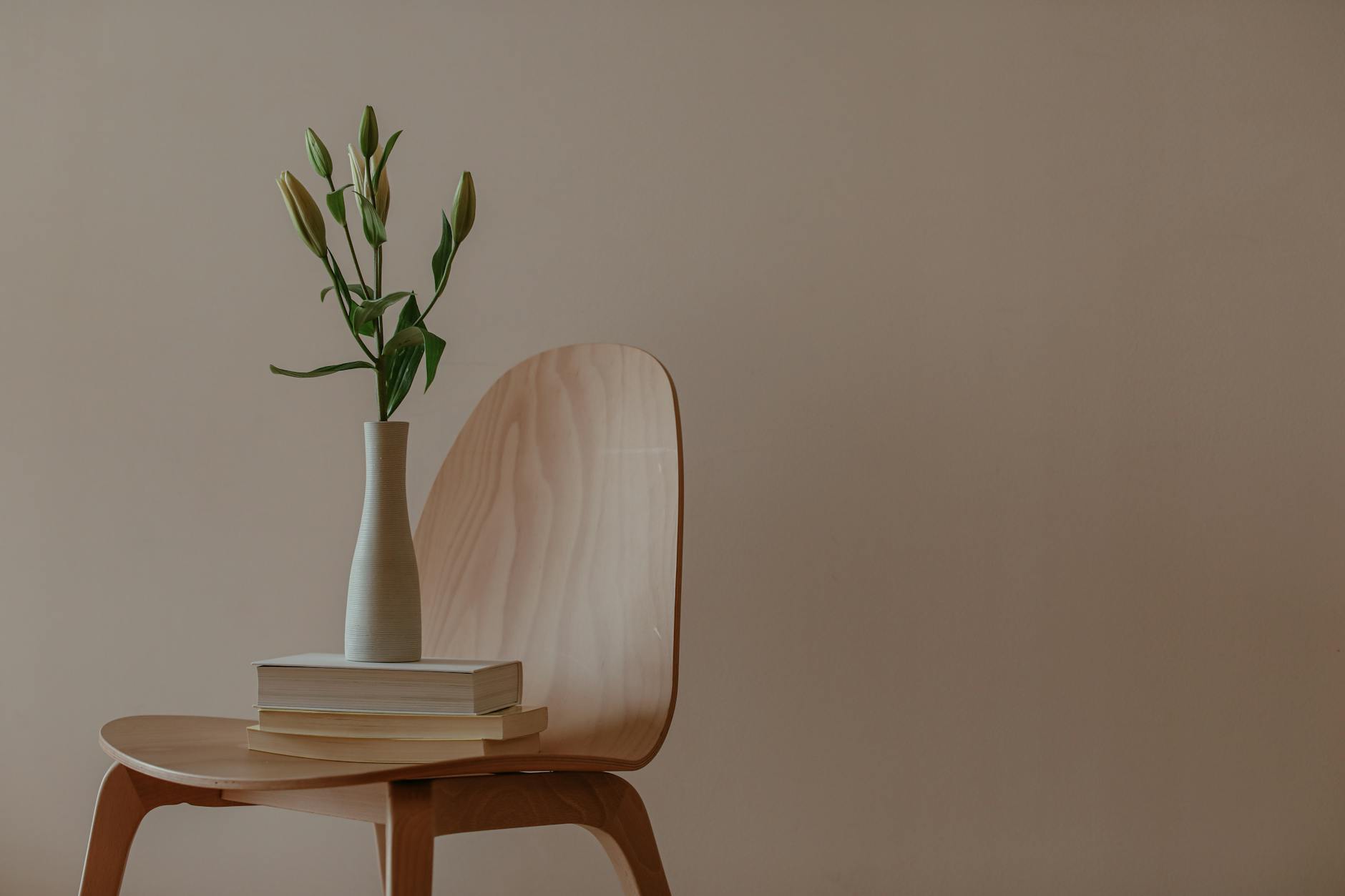
Unused chair, newly declared. Sometimes the nook is already there, just undeclared. A chair in the corner with a lamp and a small table becomes a reading nook when you decide it is one and stop setting things on it.
The Three Elements That Make a Corner Feel Like Yours
You can spend a long time searching for the perfect reading chair or the exact right shelf. The specifics matter less than the combination. What signals "this is mine" to your nervous system is the convergence of three things.
Light That Doesn't Make You Work for It
Overhead lighting is practical but not personal. The reading nook wants a source of light that comes in close. A floor lamp with a warm-toned bulb, positioned so it falls over your shoulder. A small table lamp at eye level. The quality of light matters more than the fixture.
Warm-toned bulbs, at 2700K or lower, shift the atmosphere of a space in a way that genuinely affects how settled you feel. Research on circadian lighting shows that warmer, dimmer light signals rest to the body in a way that cooler, brighter overhead lighting does not.
The rule: the light in your reading corner should feel different from the light in the rest of the room. That difference is part of what marks the transition.
Something to Sit In, Not Just On
The reading chair is not a chair that happens to be near books. It's a chair that holds you back. Deep enough to curl into. Sturdy enough that you don't have to think about it.
A good floor cushion or low-slung chair works as well as anything more expensive, provided it actually fits your body. The test is whether you can sit in it for twenty minutes without adjusting. If you keep shifting, the seat isn't right.
Add a small blanket draped over the arm. Not because it's decorative, but because having it within reach matters on the days when you sit down cold and tired and need something that says: you're allowed to settle now.
The Wall Beside You
The wall closest to your reading corner is often the one that gets forgotten. But it's what your eyes rest on when you look up from the page. A blank wall isn't neutral. It's either waiting to hold something or quietly signaling that this space isn't quite finished.
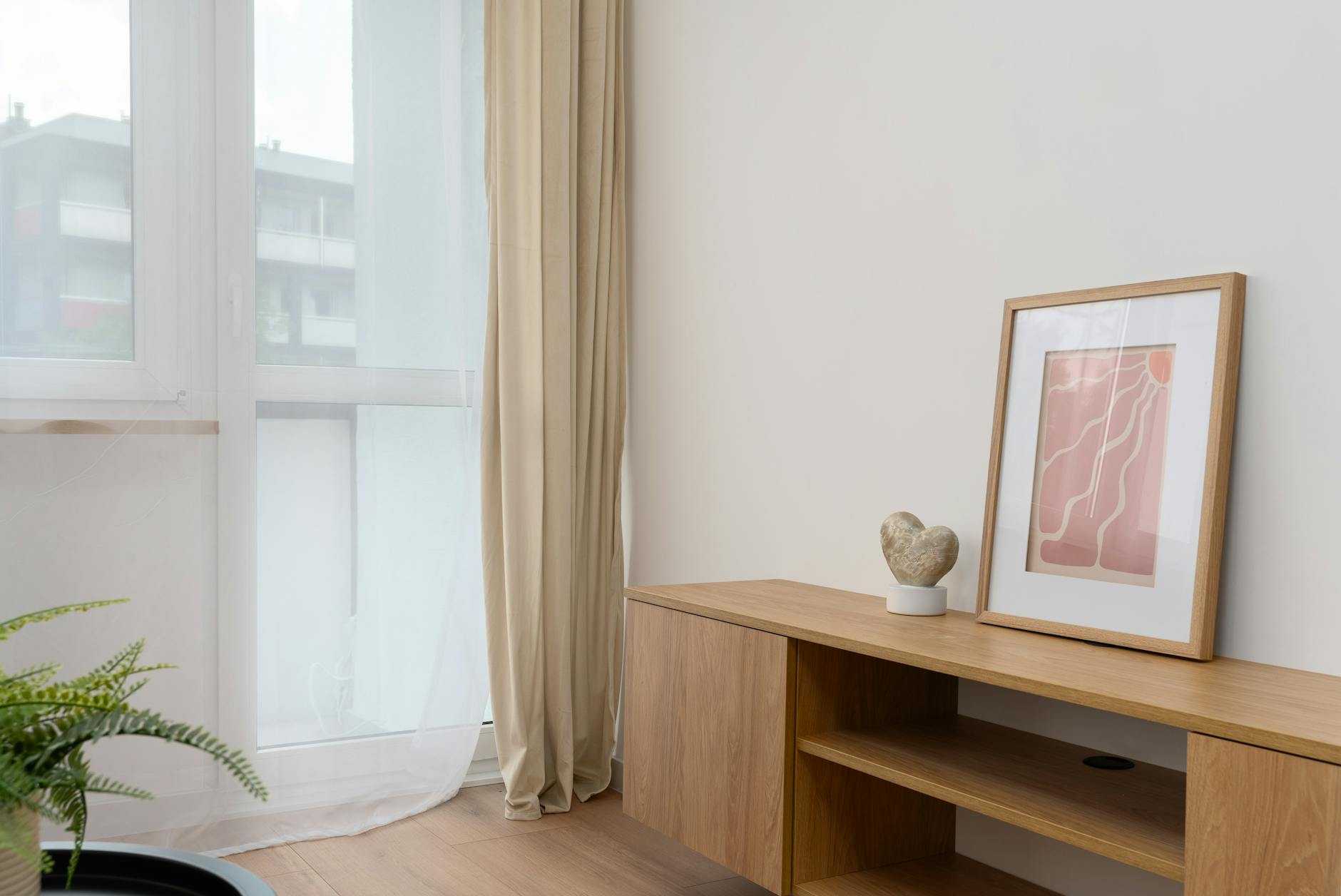
One print, chosen for how it makes you feel rather than how it looks in a catalog, changes that. Not a decorative choice. A grounding one.
The Nook and Office Collection is built for exactly this kind of space: smaller rooms and quiet corners where the art needs to hold rather than perform. For steadiness, the Grounding Collection carries that territory. For the quiet permission to stop trying to fix yourself, the Wholeness Collection holds space for that. Neither shouts. Both stay.
Keeping It Yours Over Time
The hardest part of a reading corner isn't building it. It's keeping it from becoming a surface.
Things migrate. The charging cable, the half-finished cup of tea, the mail. The nook becomes a landing spot and then it stops being a nook.
A few things that help: one small container in or near the space where things that don't belong get placed before they're moved out. A visible signal that the corner is intentional, a print on the wall, a lamp that only gets switched on when you actually sit down. A low bar for what counts as using the space.
Reading one page counts. Sitting in silence counts. The point is not productivity. The point is being held.
The reading nook works because it's yours. Not because it's finished. Not because anyone else would understand it. Because every time you sit down there, the space says: you don't have to be anything here.
If you're still figuring out what belongs on that first wall, take the Haven and Hold quiz to find the collection that fits the emotional territory you want your corner to hold.
Frequently Asked Questions
How small can a reading nook be?
A reading nook can be as small as one chair with a lamp positioned behind it. The dimensions matter less than the sense of separation from the surrounding room. Even a corner of a studio apartment can function as a distinct nook with intentional light and one personal object on the adjacent wall.
What furniture do I actually need for a reading nook?
The core is a comfortable seat and a light source you can position close enough to read by. A small side table at arm height is useful but not required. Shelving adds to the sense of place but is not essential to start. Simplicity helps. The fewer objects competing for attention, the clearer the signal that this corner is for one thing.
How do I keep my reading nook from turning into a storage spot?
One designated container in or near the nook helps. Anything that drifts into the space gets placed in that container before being moved out. This creates a buffer zone rather than letting things pile directly on the chair or table. A five-minute weekly reset is enough to maintain the intention of the space.
What should I put on the wall next to my reading nook?
The wall beside a reading corner benefits from something that rewards repeated looking, something your eyes can rest on without needing to process it actively. A single print in a restrained palette, chosen for its emotional resonance rather than its visual complexity, works better here than a full gallery wall. The space is for quiet, and the wall should hold that quality.
Can I create a reading nook in a studio apartment?
Yes. Studio apartments often have an underused corner near a window, the space beside the bed, or a section of wall that doesn't belong to the kitchen or the living area. A single chair, a floor lamp, and a clear intention are enough to establish a reading nook. The separation is psychological as much as physical, and it works.
Do I need to spend a lot to create a meaningful reading nook?
No. The most important elements, a seat that fits your body, light that comes in close, and one intentional object on the wall, are achievable at almost any budget. The investment that matters most isn't financial. It's the decision to claim that corner as yours and then protect it.
Take your time with the corner. Let it start small. One chair. One lamp. One wall that holds something you actually want to look at.
The reading nook you're imagining doesn't need to be finished to be yours. It just needs to be intentional. Sit in it before it's perfect. The space will meet you there.

Written by Haven & Hold