Living Room Wall Decor for Homes Actually Lived In
You have walked past that wall twenty times this week without deciding anything about it.
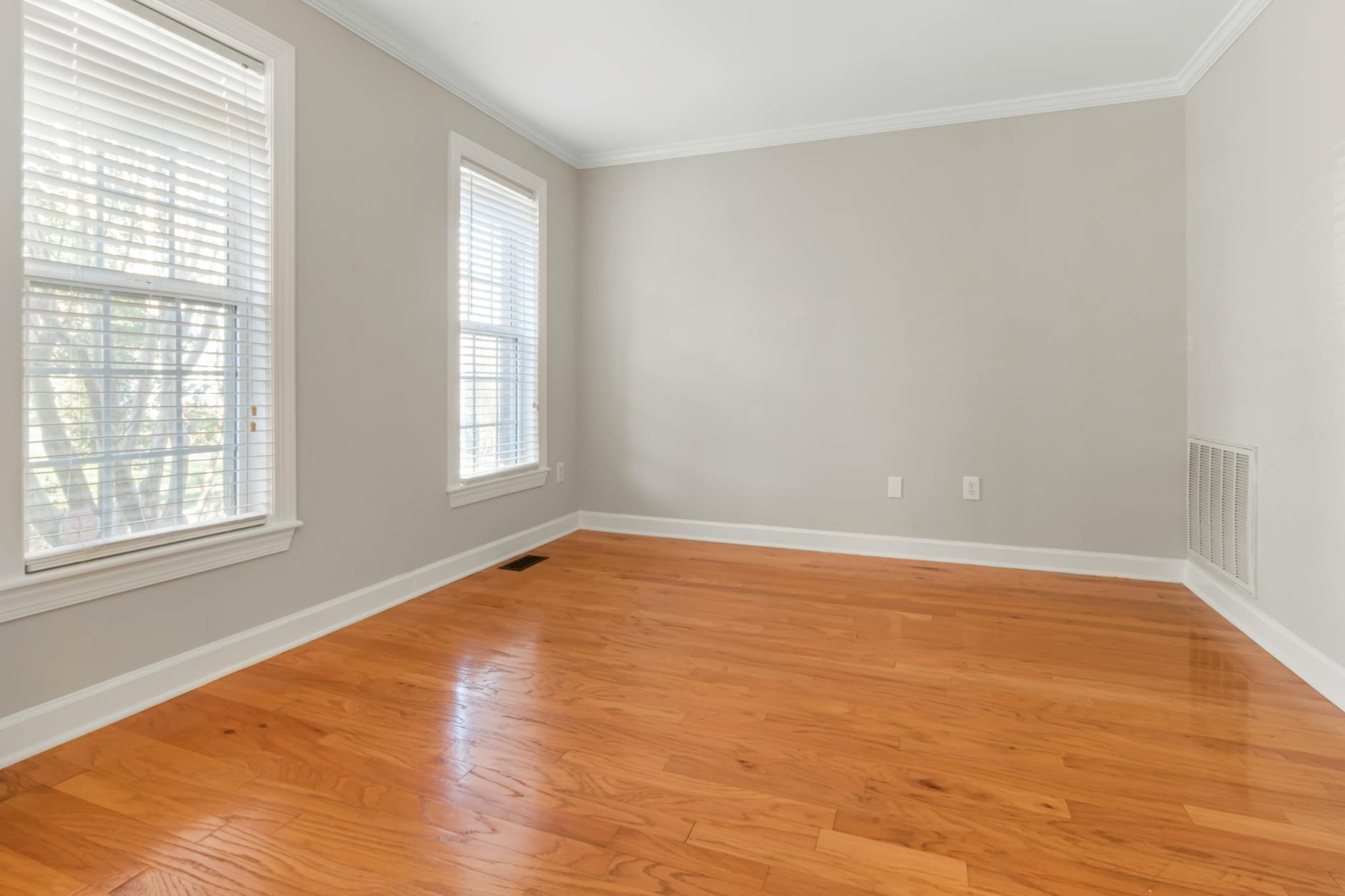
The sofa is in position. The rug anchors the room, or it doesn't. But the wall stays blank, or holds one thing you are not sure about anymore, and every time you open a new tab looking for ideas, you close it fifteen minutes later without choosing anything.
This is not a design failure. It is what happens when you care too much to settle.
Why Your Living Room Wall Keeps Getting Deferred
Environmental psychologists have spent decades studying how the homes we live in affect our physical and mental states. A 2010 study led by researchers Darby Saxbe and Rena Repetti at the University of California, Los Angeles found that women who described their home environments as "cluttered" or "unfinished" showed measurably higher cortisol levels throughout the day, compared to women who described their homes as "restful" or "restorative." The blank wall and the unresolved wall both register in the body as unfinished business.
But underneath that data is something harder to name.
For a lot of people, the living room wall stays blank not because of inaction, but because of care. You have scrolled enough to know that most of what is available feels hollow, or generic, or like it belongs in someone else's apartment. You are not indecisive. You are waiting for something true.
That waiting is worth understanding, not rushing past.
The living room is not a neutral space. It is the room you return to at the end of the day, the one that absorbs the transition between the world outside and the one inside. What you put on its walls becomes a presence, not just a picture.
What People Are Actually Asking About Their Walls
The most common questions about living room wall decor are not "what color frame should I get" or "what is trending this season." In communities where people talk honestly about creating a home, the questions sound more like this:
How do I make my living room feel like mine without it looking like I tried too hard? What do I put on the walls when I do not know what I like yet? Is it okay to have just one piece on a big wall? Why does my room still feel empty even when there is stuff on the walls?
These are real questions. They deserve real answers.
If you want a place to start, The One-Wall Reset walks you through it, one wall at a time.
What "Lived-In" Actually Means for a Wall
"Lived-in" is one of those phrases used often and defined rarely. In the context of a home, it refers to the quality that emerges when a space reflects accumulated time and genuine preference rather than deliberate performance. A room that looks lived-in is not necessarily untidy. It is one where everything present has earned its place.
A visual anchor refers to a single object or composition that the eye returns to as a resting point within a space, providing a sense of orientation without requiring active attention. Every well-composed room has at least one. The living room's anchor is often the wall you face most often, the one your eyes settle on when you are sitting still.
In 1984, researcher Roger Ulrich published a study in the journal Science showing that hospital patients who had views of trees recovered more quickly, needed less pain medication, and had shorter hospital stays than patients whose windows faced a blank brick wall. The research established something environmental designers have applied ever since: what you see regularly is not a neutral experience. It affects how your body feels.
Your living room wall is not a hospital window. But the principle holds. What you see every evening when you finally sit down matters.
Lived-in walls tend to share certain qualities:
- They have breathing room. Empty spaces feel considered rather than incomplete, and nothing hangs there by accident.
- They mix scales. One large piece alongside smaller ones, or a grouping that together creates a larger visual presence.
- They hold things with different weights. A photograph, something printed, and something with texture. The variety creates rhythm without crowding.
- They change slowly, when something new arrives that finally feels true, and not just because a season turned.
The Wall Above the Sofa (Where Most People Get Stuck)
The wall above the sofa is the most searched phrase in residential design for a reason. It is the largest uninterrupted surface in most living rooms, visible from nearly every seat in the space, and it sits directly behind where you spend the most time.
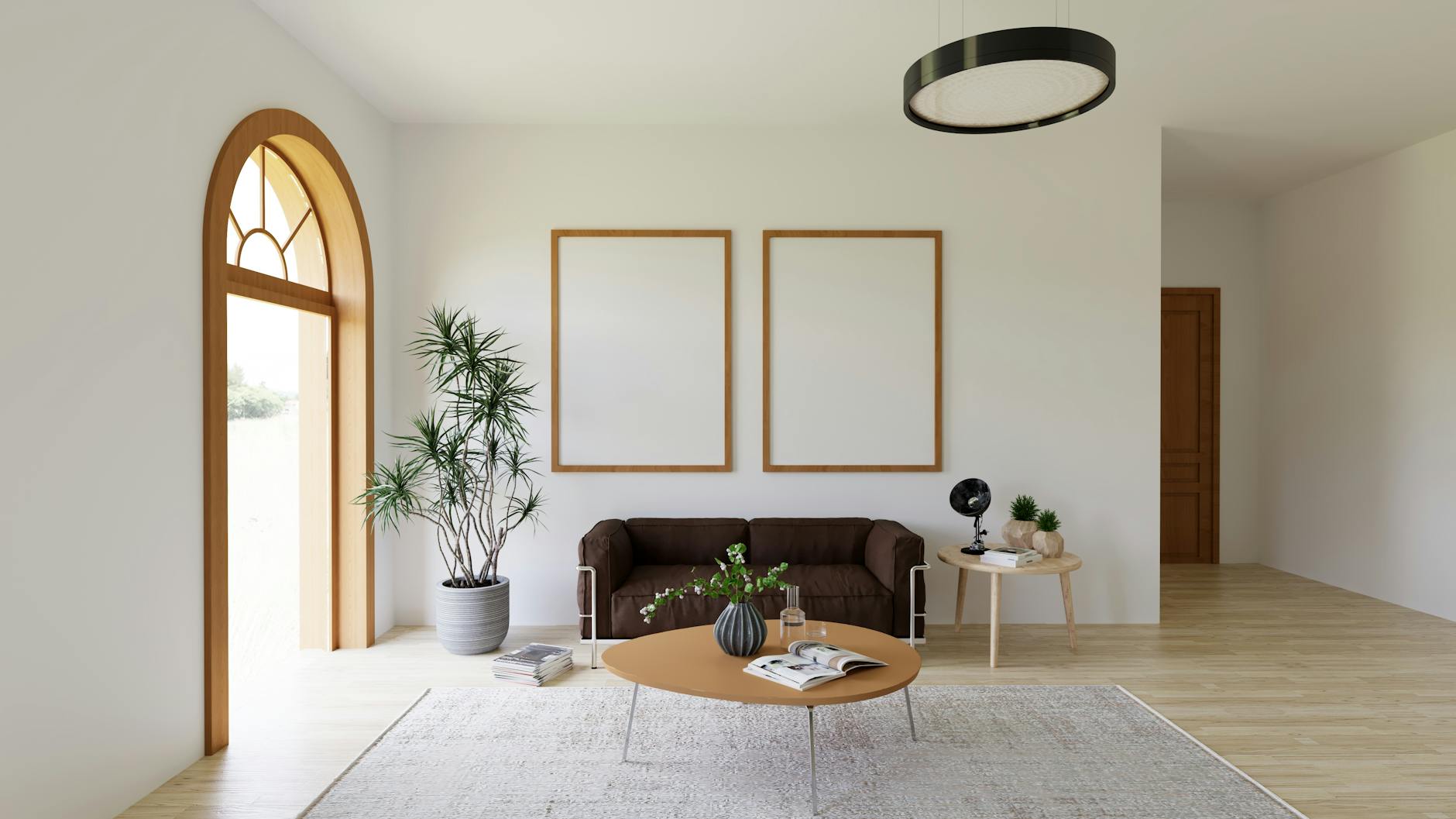
A useful proportion: art hung above a sofa should sit roughly six to eight inches above the top of the sofa back, and the piece or grouping should span about two-thirds of the sofa's width. These proportions give the eye a sense of connection between the furniture and the wall, so nothing floats or gets lost.
But the more important question than "how high" is "what belongs there."
The wall behind where you sit most is the wall your nervous system registers from the edge of its attention all evening. It is always slightly in your peripheral vision. What you choose for that space, whether it is a single large print or a quiet grouping, becomes a kind of background signal you absorb without noticing.
That is worth taking slowly.
Starting Smaller Than You Think You Need To
One of the most common patterns in living room decorating is trying to solve the whole wall at once. You stand in front of it, imagine the finished version, feel the distance between here and there, and do nothing.
The alternative is to start with one piece, placed where you will actually see it, and let the room grow from there.
A single print hung at eye height on the wall you face most is not an unfinished room. It is a room that has started somewhere real. The rest can come over time, added when something new arrives that belongs alongside it.
The Within These Walls print from the Grounding collection is the kind of piece that works this way. It holds a specific, grounded weight. It reads differently in the morning than it does at the end of a hard day. It is a good place for a living room wall to start.
What Makes Art Feel Like It Belongs
Most standard advice about choosing living room art tells you to match your color palette, or pick something that coordinates with your sofa. This is useful information. It also misses the point for a lot of people.
The questions worth asking instead are simpler and stranger:
Does this say something you actually believe? Something true, not uplifting or aspirational, but honest in the way you would be honest with yourself on a hard night.
Would you want to see it on a hard day? Because the wall behind your sofa is not a decoration. It is a presence. The art that belongs there is the art you would want around you when you are tired, or grieving a little, or trying to quiet down after everything.
Does it look made? You can feel the difference between a design that was chosen with intention and one that was placed. The typography, the spacing, the way negative space holds the words. These things register even when you are not actively looking.
The Living Room collection is organized around this kind of question.
Or take the quiz to find the collection that holds the emotional territory you are working in right now.
Frequently Asked Questions
How big should wall art be in a living room?
For a sofa wall, the art or grouping should span roughly two-thirds of the sofa's width. A piece that is too small for the wall creates an unanchored, adrift feeling. If you are hanging art on a wall without furniture beneath it, a piece at least 24 inches wide tends to register as intentional rather than incidental.
Is it okay to have just one piece of art in a living room?
One piece, well-chosen and well-placed, is often more grounded than a crowded gallery wall. The key is proportion: the piece should be large enough to feel held in the space, not floating. A single print at the right scale reads as deliberate and considered, rather than incomplete.
How do I start a gallery wall without it looking chaotic?
Begin with one anchor piece, your largest or most meaningful, and build outward from there. Cut paper templates to your frame sizes and tape them to the wall before committing to holes. Keep three to five inches between frames. The arrangement does not need to be symmetrical, but it benefits from a consistent center point or bottom line that gives the eye somewhere to settle.
What kind of art works best in a living room versus a bedroom?
Living rooms carry more of your social and active life, so art there can hold a slightly wider range of energy and visual weight. Bedrooms benefit from pieces that are quieter and more specifically personal. For living rooms, prints with visual presence and a clear point of view tend to hold well over time. For bedrooms, pieces that speak to rest, safety, and stillness are often the right choice.
Why does my living room feel empty even when there is art on the walls?
Visual scale is usually the answer. A small print on a large wall reads as decoration rather than presence. The room feels empty because the art is not doing the work the space is asking of it. Trying one significantly larger piece, or a grouping that together occupies the scale the wall needs, often resolves the feeling immediately.
Your living room does not need to be finished to hold you.
The walls in a real home change over time. Things come down when they stop being true. New pieces arrive when something shifts. Choosing what belongs on your walls is part of the slower work of understanding what you need from the space you live in most.
Start somewhere. One wall, one piece, one true thing.
You might also enjoy

Written by Haven & Hold