Creating a Meditation Corner in Any Size Home
Your body already knows where it wants to settle. The corner near the window. The edge of the bed before the day starts pulling. That small floor space between the bookshelf and the wall you've walked past a hundred times without naming.
You haven't created a meditation corner yet. And if you're honest, you know why. You think you need more room. A spare bedroom, a reading nook with a door that closes, a home that doesn't have two people and a dog and someone's work bags permanently in the hallway. The picture of a meditation space that lives in most people's heads requires something closer to a dedicated studio than a one-bedroom apartment.
That picture is keeping you from something you already have.
What a Meditation Corner Actually Is
A meditation corner is a designated area in your home, however small, that you return to consistently for quiet. It doesn't require a particular aesthetic, a full room, or anything that costs money to set up. What it requires is repetition: the same spot, the same intention, enough times that your nervous system begins to recognize it as a place to soften.
A 2010 study published in Personality and Social Psychology Bulletin found that women who described their homes as cluttered or visually chaotic had significantly higher levels of cortisol, which refers to the body's primary stress hormone and a key marker of how taxed the nervous system is, throughout the day compared to those who described their homes as restful and restorative. The reverse also holds. Spaces that feel intentional, even small ones, support your body's natural ability to settle.
This is not about perfection. It's not about having the right cushion or the right plant or the right print above the right wall. It's about the act of returning. The corner you come back to teaches your nervous system something the rest of your apartment cannot: that there is a place here where nothing is being asked of you.
You don't need a room. You need a relationship with a place.
The Space You Actually Need
The minimum requirement is enough room to sit. That's it. A traditional round meditation cushion measures 14 to 16 inches across, taking up just over a square foot of floor space. A yoga mat is 24 inches wide by 68 inches long. A folded blanket takes up even less. If you can place your body in a spot and stay there for ten minutes without being in the middle of foot traffic, you have what you need.
Some of the most consistent meditation practices happen in the following places:
- A bedroom corner with a single floor cushion and a small plant on the windowsill
- A closet with the door open, a folded blanket on the floor, and a string of warm lights overhead
- The end of a hallway with a yoga mat and a print on the wall at eye level when seated
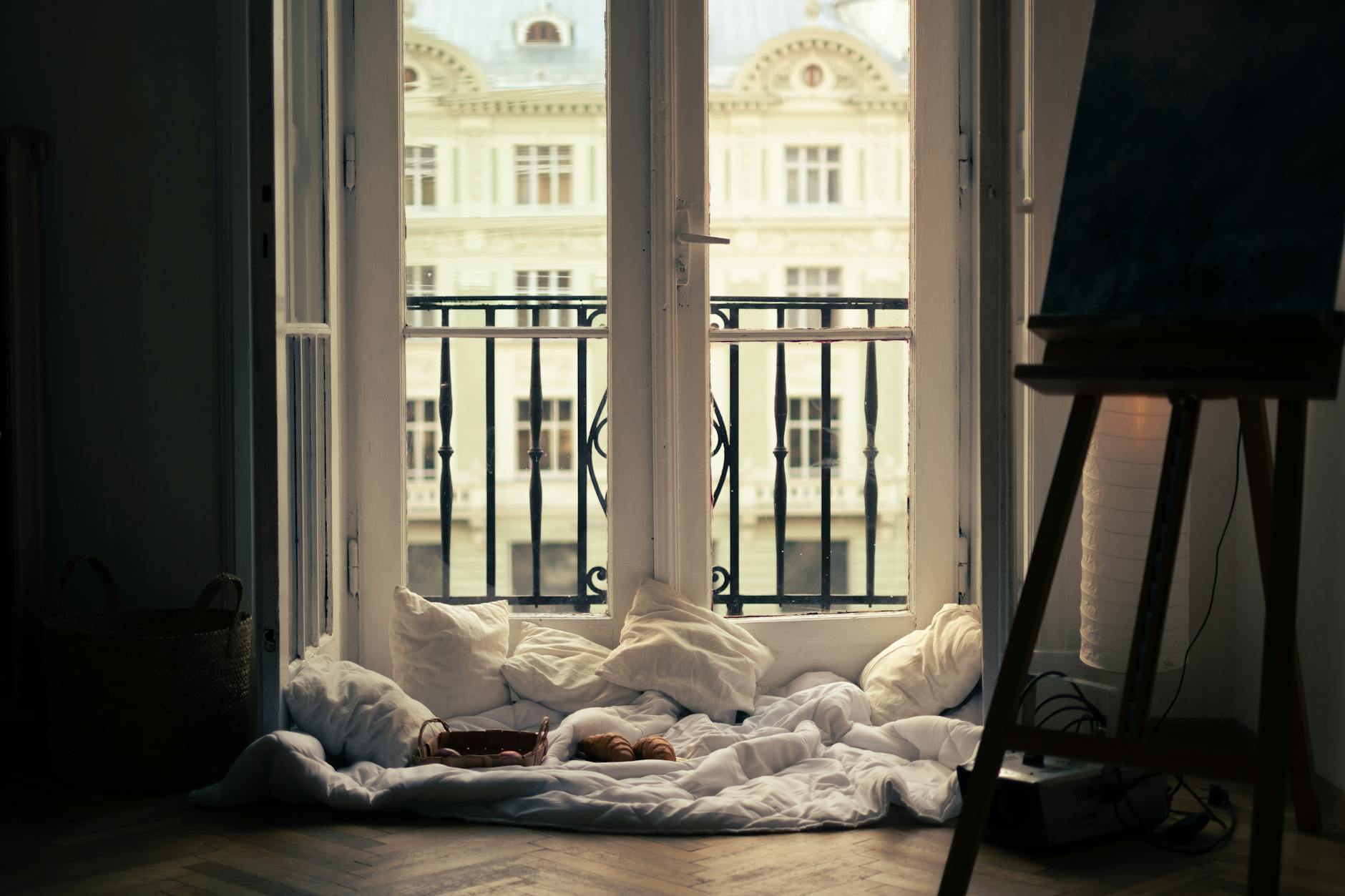
- A reading chair pulled slightly away from the rest of the room, angled toward a window
What these spaces share is not size. It's a quality of separateness: a sense that the rest of the day has been placed on pause.
If you want a place to start, The One-Wall Reset walks you through claiming a single wall at a time, one intentional choice at a time.
The Elements That Make a Corner Feel Like a Corner
A corner becomes a corner through a few deliberate choices, not a full redesign. These are the elements that matter most, in rough order of importance.
Consistent location. The same spot every time. Your nervous system learns from repetition. When you return to the same place, your body starts to soften before you've even closed your eyes. This is the single most important design decision you'll make, and it doesn't cost anything.
Softness underfoot or underhand. A cushion, a folded blanket, or a yoga mat. Something that signals: you're not here to work. Texture is part of the language your body understands. The physical difference between sitting on a hard floor and sitting on something soft is the difference between alert and at ease.
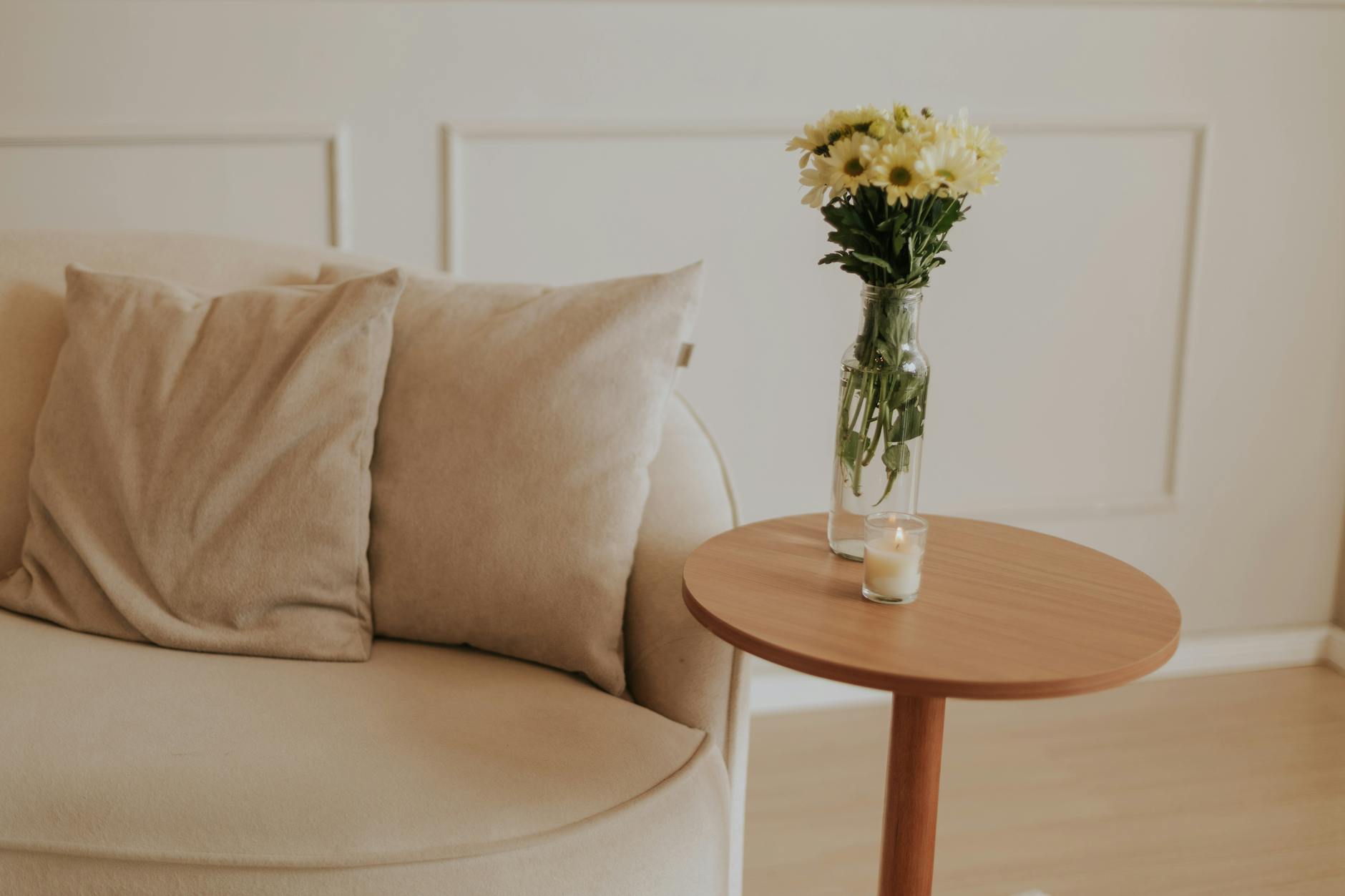
Low, warm light. Overhead lighting activates the alert state. Low lighting, side-lit or placed at eye level, supports the shift toward quiet. A small lamp, a candle, or morning light through a sheer curtain all work. The goal is light that doesn't demand anything from your eyes.
One anchor on the wall. Something at eye level when you're seated. When sitting on a floor cushion, that eye level falls roughly 30 to 36 inches from the ground, which means art hung lower than you might expect for a standing viewer. This is where many people get stuck, waiting to find something perfect before they begin. The wall above your cushion doesn't need to be fully decorated. It needs to hold something that means something to you. A piece of art, a photograph, a single print with words that feel true, or nothing at all until the right thing arrives.
The scent of something familiar. Optional, but effective. A candle you light only in this spot, a diffuser with the same oil each time. Scent is one of the most direct pathways to the nervous system, and it can become a cue that says: this is the time, and this is the place. Use it consistently and your body will start to settle the moment you light the match.
A 2025 study from Mount Sinai found that regular meditation practice induces measurable changes in deep brain areas associated with memory and emotional regulation. The physical environment you practice in is part of that process, not separate from it. What you see when you open your eyes, what you smell, what you feel beneath you: these are all inputs your nervous system is reading.
Room by Room: Where to Put It
In a studio or one-bedroom apartment
A corner of the bedroom works better than most people expect. Pull a chair or floor cushion away from the bed, angle it toward a window if you have one, and claim that small geometry as yours. If you share the space with someone, a folded blanket and a single piece of art on the wall above it can mark the spot even when it's not in active use.
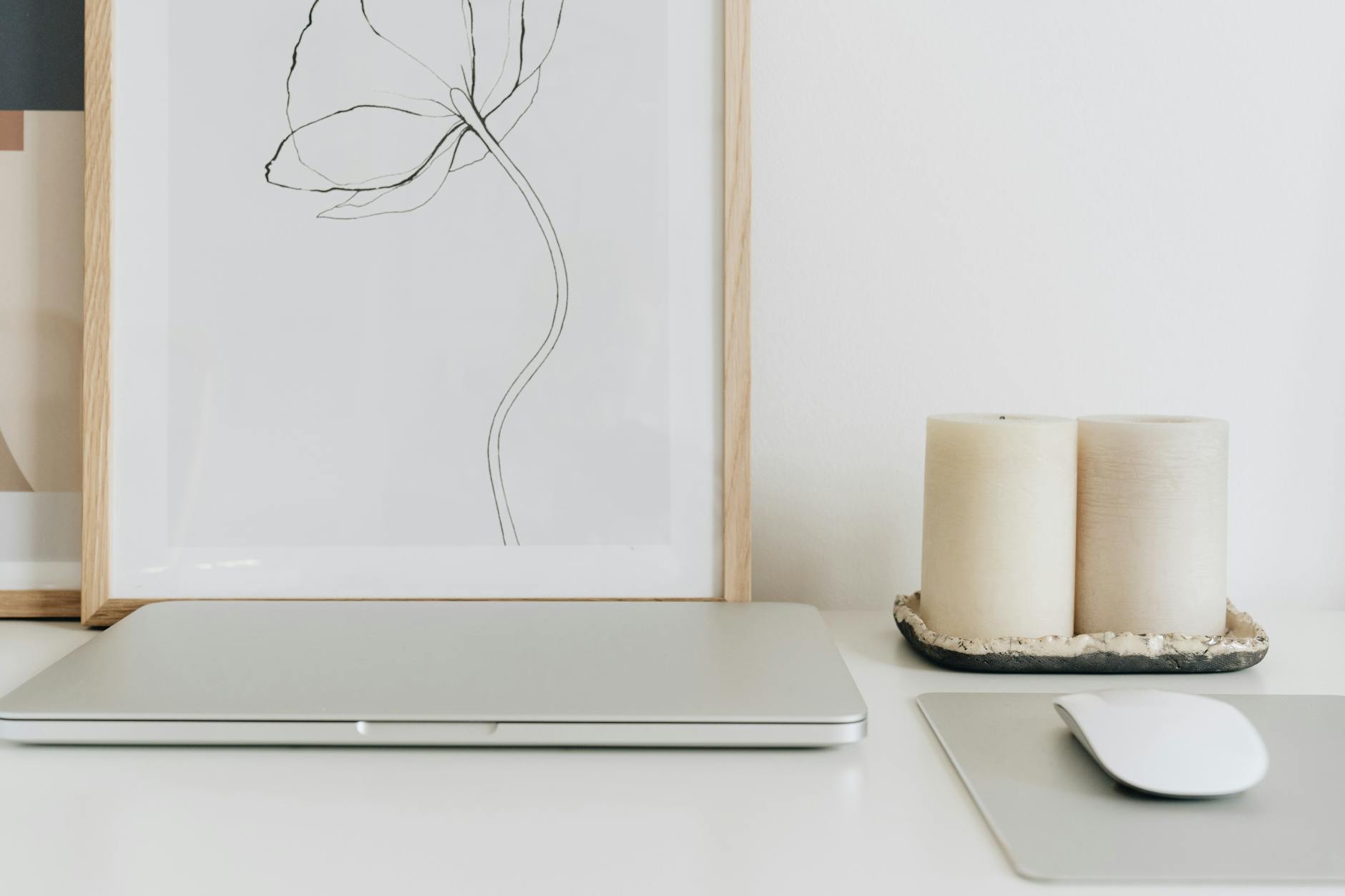
Consider what the Nook/Office Collection was put together with in mind: smaller rooms, quieter intentions, art scaled for intimate spaces rather than grand statements. A corner of a bedroom is not a lesser option. It's often the most honest one.
In a shared house or open-plan home
A bedroom corner gives you privacy. A bathroom, particularly one with a tub, gives you a door. Don't overlook the functional room. A bathroom with a single candle and a print on the wall at eye level becomes something else entirely when the door is closed and the rest of the house is temporarily somewhere else.
The corner of a living room works if you're willing to signal to the people you share space with what that spot is for. A floor cushion stored in a nearby basket, a plant to one side, and a print on the wall above it: even an open floor plan holds corners. The signals matter. They give the space a name.
In a spare room or home office
The advantage here is a door. But a room used for work needs a clear signal that this corner is different from the desk. Facing a different direction than your work surface, using lower light, and keeping a single anchor on the wall that belongs to this corner alone: these small distinctions help the room hold more than one intention. The corner doesn't need to be elaborate. It needs to be clearly its own thing.
The Wall Above Your Space
The wall above a meditation corner does something specific. It gives your eyes a place to rest when you open them. It holds something still when everything inside you is not.
This is not the place for a gallery wall or a framed collection of photographs. One thing. Preferably something that meets you where you are rather than telling you where to go.
The Wholeness Collection holds this territory. Acceptance, integration, self-compassion, the quiet sense that all of you is allowed to be here. "Space for all of you." "Soften here." "Held gently, held wholly." These are prints chosen for the moments when you sit down and realize the whole day has been asking something of you. Something quiet enough to sit with, and true enough to return to.
Not sure which collection fits where you are right now? The quiz takes about two minutes and meets you where you are.
Frequently Asked Questions
How much space do I need for a meditation corner?
The minimum is enough room to sit comfortably without being in the middle of foot traffic. A floor cushion takes roughly two square feet. If you have a corner and enough room to sit down, you have what you need. Consistency of location matters far more than the size of the area.
What should I put in my meditation corner?
The essentials are a comfortable place to sit (cushion, mat, or chair), some form of low or warm light, and an anchor on the wall at eye level when you're seated. Everything else is optional. Scent, plants, and objects with personal meaning can deepen the space, but none of them are required to start.
Can I create a meditation corner in a bedroom I share with someone?
Yes. A small floor cushion stored in a basket nearby, a single print on the wall above a specific spot, and a candle you light when you're using the space are enough. The consistency of returning to the same location matters more than the physical markers around it. The practice creates the space as much as the space creates the practice.
What kind of art works best in a meditation corner?
Something quiet and honest at eye level. Art that meets you rather than instructs you. A single piece with words that feel true, or a minimal geometric print that simply holds still, tends to work better than anything demanding active interpretation. The wall above your space is not the place for instructions.
Do I need to decorate my meditation corner before I start using it?
No. The corner itself, returned to consistently, is what creates the practice. Decoration supports and deepens it over time, but it doesn't start it. A blank corner you return to every morning holds more intention than a beautifully arranged one you visit twice a year. Start with what you have, and let the space tell you what it needs.
Can a closet or bathroom actually work as a meditation space?
Yes. A small closet with the door open or a bathroom with the door closed can work remarkably well. What they offer is containment and privacy, two things that help the body settle. The key is consistent return. The space doesn't create the practice. The practice, over time, creates the space.
Your corner is already there. You've walked past it. You've sat near it without naming it.
You don't need a room. You don't need a renovation or a new aesthetic or anything beyond what you already have and a few minutes each morning.
Name the corner. Return to it. Let the rest arrive.
You might also enjoy

Written by Haven & Hold