When You Can't Sleep and the Ceiling Is Watching | Haven & Hold
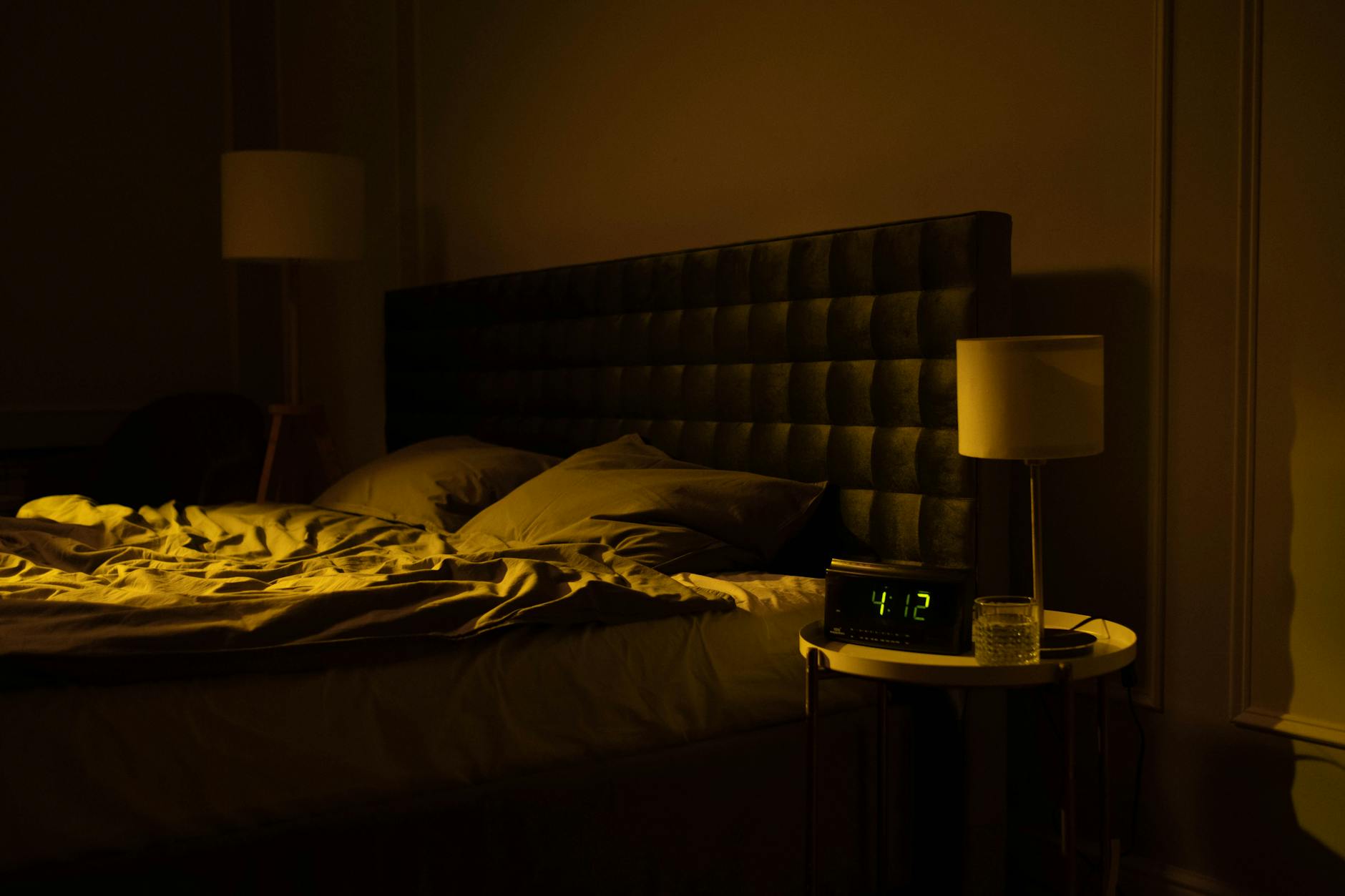
Your eyes are open. Not in the soft way they open in the morning, gradual and quiet. Open the way they do at 2am when your mind has decided it has something to say, and your body is too exhausted to argue.
The ceiling is the same ceiling it always is. And still you watch it, as if it holds some arrangement of shadow and plaster that will finally say the right thing. It does not. But it is there, which is more than you can say for sleep.
This is a particular kind of night. The kind where the thoughts arrive with a weight they have not earned, where every unresolved thing from the last several months lines up to present itself, where the house is quiet and your nervous system is not.
You are not failing at sleep. You are not broken. You are carrying something real, and the dark has run out of distraction. This post is not going to fix that. It is just going to sit here with you for a while.
Why Night Makes Everything Louder
Nighttime anxiety refers to the experience of heightened worry, racing thoughts, or physiological arousal that occurs during the hours when the body is meant to rest. It is not weakness. It is not a sign that something is wrong with who you are. It is, in significant part, biology.
Cortisol, the body's primary stress hormone, follows a natural circadian pattern. It reaches its lowest point around midnight and then begins a gradual climb in the early morning hours, typically between 2 and 4am. For most people, this gentle hormonal tide is part of what prepares the body to eventually wake. For people already carrying significant anxiety, this pre-dawn cortisol rise arrives into a nervous system that is already on alert. Wakefulness becomes urgent even when nothing is happening.
According to the Sleep Foundation, up to 50 percent of people with an anxiety disorder also experience chronic insomnia. The relationship between the two runs in both directions: anxiety disrupts sleep, and disrupted sleep amplifies anxiety. Understanding this does not make the ceiling feel any further away. But it offers something. You are not uniquely broken. You are inside a very human loop, and a lot of people are on the other side of their own ceilings tonight.
The night is not lying to you. It is just quieter. During the day, there is noise and motion and the small obligations that occupy the front of the mind. At night, the things that were waiting in the background get their turn. The thoughts were always there. The hour just stopped interrupting them.
The Room That Has Always Watched You
Your bedroom has seen this before. It has seen the 2am version of you, the 3:30am version, and the pale, exhausted version that finally drifts off twenty minutes before the alarm. It has held all of it. It has not judged any of it.
The room is not the cause of the spiral. And it is not the cure. But it is the witness. The walls, the ceiling, the particular quality of the dark in here. This space has been present for your hardest nights, including this one. That presence is not nothing.
What you put in a room begins to matter over time, because the nervous system is always scanning for cues. It reads safety and threat in the details of a space, in what the eyes land on when they open unexpectedly at 2am. A study published in Personality and Social Psychology Bulletin found that people who described their homes as cluttered or unfinished showed measurably higher cortisol levels throughout the day, compared to those who described their spaces as restful and restorative. The body takes the environment seriously, even when the mind thinks it is not paying attention.
None of that is a task for tonight. Tonight, the room is the witness. That is enough.
If you want some words to hold on to during the hard seasons, Words for Hard Seasons is a free collection of phrases and grounding language for the times when ordinary words run out.
What the Mind Does When It Thinks You Are Sleeping
The mind at 2am has a particular agenda. It reviews. It extrapolates. It takes everything unresolved and runs it through a loop that feels urgent, even necessary, even useful. You are in the loop right now. You know this is not the first time.
Psychologists call this rumination: the repetitive focus on distress, its causes, and its possible consequences. It feels like problem-solving. It is not. The mind runs the loop as if eventually it will locate the solution that daylight keeps hiding. But the solution is almost never found at 2am. The problem is not really the thing being reviewed. The problem is the state of the nervous system itself.
You are not supposed to resolve things at 2am. You are supposed to be asleep. The unresolved things will still be exactly where they are at 8am, and your nervous system will be in a completely different state to meet them. That is not avoidance. It is accurate accounting.
Putting the loop down for tonight is not abandoning it. It is setting it somewhere you can find it tomorrow, when you are better able to carry it.
Finding the Floor
When the mind is running, the body is the place to return to. Not because the body has answers, but because it is here. Your breath is here. The weight of your limbs against the mattress is here. The temperature of the air in the room is here. These things are not solutions, but they are anchors.
Exhaling more slowly and fully than you inhale activates the parasympathetic nervous system, the part of the body responsible for signaling safety and rest. The exhale is not going to fix the night. It offers something smaller: a signal sent through the nervous system, a small message that says the body is here and present and not in danger, even if the mind has not received that message yet.
You do not have to fall asleep to survive the night. Sometimes surviving the night looks like lying still and letting the hours pass. Sometimes it looks like getting up, sitting in the dark with something warm to drink, and waiting. There is no wrong way to be in a hard night.
Some people find that having something in their room that reads as stable and intentional helps the nervous system settle. Not decoration, not a fix, but a cue. Something placed with care that holds its ground quietly and asks nothing in return. When you are ready for your walls to hold something grounding, the Grounding Collection is there. The You Are Held Here print was made for rooms like this one, for walls that have watched someone through the long hours.
If you want a sense of which words tend to hold you, the Haven & Hold quiz takes about three minutes and asks nothing hard.
Frequently Asked Questions
Why does anxiety get worse at night?
During the day, external stimulation and routine tasks occupy the front of the mind, leaving anxious thoughts less space to surface. At night, when those demands fall away, worry moves forward. Cortisol also follows a natural rise in the early morning hours, increasing physiological arousal in people who are already prone to anxiety and making it harder to remain asleep once woken.
Is staring at the ceiling bad for sleep?
Lying awake without sleep is not harmful in itself. However, spending long stretches in bed while anxious can begin to associate the bedroom with wakefulness and dread rather than rest. Sleep specialists often suggest that if you have been awake and anxious for more than 20 minutes, moving to another room for a quiet, non-stimulating activity can help interrupt that association before returning to bed.
What is sleep anxiety?
Sleep anxiety is the experience of dread or heightened worry focused specifically on the act of falling asleep or staying asleep. It is distinct from general anxiety that happens to occur near bedtime, though the two frequently overlap. Sleep anxiety creates a cycle in which the fear of not sleeping becomes itself a barrier to sleep.
Does my bedroom environment affect nighttime anxiety?
Research suggests it does. The nervous system continuously reads the environment for signals of safety and threat. A cluttered or chaotic space sends cues of unfinished business, which keeps the body in a state of mild arousal. Creating a space that reads as calm, settled, and intentional supports the parasympathetic response the body needs in order to rest.
What should I do when I cannot fall back asleep?
There is no single answer that works for every person. Leaving the bed helps some people break the association between lying down and lying awake. Gentle body awareness, such as noticing the weight of the body against the mattress or counting slow exhales, helps others reduce physiological arousal. The most important reframe is this: lying still and resting, even without sleep, allows the body to recover. You do not need to sleep perfectly to survive the night.
How do I stop racing thoughts at 2am?
Racing thoughts at 2am are the mind's attempt to solve problems during a time when problem-solving is not actually possible. Rather than trying to stop the thoughts, it helps to acknowledge them briefly and then redirect attention to something physical: the breath, the weight of the body, the temperature of the air. Writing a thought down, even just a few words, can also reduce the urgency the mind assigns to it.
The ceiling will still be there tomorrow. So will you.
Whatever tonight holds, you are allowed to simply be in it, without fixing it, without resolving it, and without needing it to look different than it does. That permission is already yours. It was always yours.
When you are ready, the Grounding Collection is here.

Written by Haven & Hold