Bring Nature Indoors: Biophilic Design Without a Greenhouse
Your shoulders come down when you step outside. Not because you decided to let them drop, but because something in the air, the light, and the simple presence of growing things does it for you. Biophilic design is the practice of incorporating natural elements, patterns, and textures into your living space, and you can do it without a greenhouse, a renovation, or even a single plant. That last part surprises most people. The word "biophilic" sounds botanical, a little demanding. It sounds like something that requires a sunlit loft, a watering schedule, and endless patience with living things. But the research points somewhere more ordinary than that.
You are allowed to start small. You are allowed to start with one thing.
What Biophilic Design Actually Means
Biophilia refers to the innate human tendency to seek connection with nature and other living systems, a concept developed by biologist E.O. Wilson in the 1980s. Biophilic design is the intentional application of that tendency to architecture and interior spaces. It is about creating environments that speak to the parts of us that evolved surrounded by trees, water, and open sky.
The full expression of biophilic design includes living plant walls and rainwater features and spaces built to maximize light from every angle. That version is real and beautiful. It is also, for most people, completely inaccessible. Most of us live in apartments, rentals, and rooms we cannot structurally alter. Most of us are not interior designers with an unlimited budget.
What the research actually supports is broader than plants. Natural light, organic textures, colors drawn from the earth, and imagery that references the natural world all register in the nervous system in ways that matter. A linen pillow cover. A wooden bowl. A print that carries the shapes of growing things. These are not consolation prizes for people who cannot afford a moss wall. They are legitimate tools with real effects.
The goal is not to re-create a forest in your living room. The goal is to give your nervous system enough signals from the natural world that it can soften.
Why Your Nervous System Keeps Looking for This
You feel it in your body before you have words for it. Some rooms make you want to stay. Others make you want to leave as quickly as you can. The difference is not always obvious from a photograph or a floor plan, but your nervous system reads it in seconds.
There is substantial research behind what you are already experiencing. A 1984 study published in the journal Science found that hospital patients with a window view of trees used 23% fewer analgesic doses and had shorter post-operative stays than patients whose windows faced a brick wall. The natural view did not change the surgery, the medication protocol, or the nursing care. It changed the environment, and the environment changed the recovery.
More recent research gets closer to daily life. A 2019 study published in Frontiers in Psychology (Hunter et al.) found that spending as little as 20 minutes in contact with nature, including brief outdoor exposure in an urban setting, lowered salivary cortisol levels measurably regardless of whether participants felt stressed going in. Cortisol, the primary stress hormone, dropped simply from proximity to natural elements. The effect did not require a forest or a park. It required a change in environment.
This is why the blank wall in your apartment might feel heavier than you expect. Not because walls are supposed to be filled, but because spaces that carry nothing from the natural world are harder to rest in. Your nervous system is scanning constantly. When it finds organic forms, textures that reference the outdoors, or light that shifts with the hour, it reads safety. It reads familiar. It softens.
If you want a concrete starting point, the Five-Minute Room Reset gives you something to do today, one small shift at a time.
What You Can Do Without a Single Plant
If you have kept plants alive and loved it, keep going. But if every plant you have ever owned has quietly expired, that is not a character flaw, and it does not disqualify you from a space that feels more natural. Here is where to start instead.
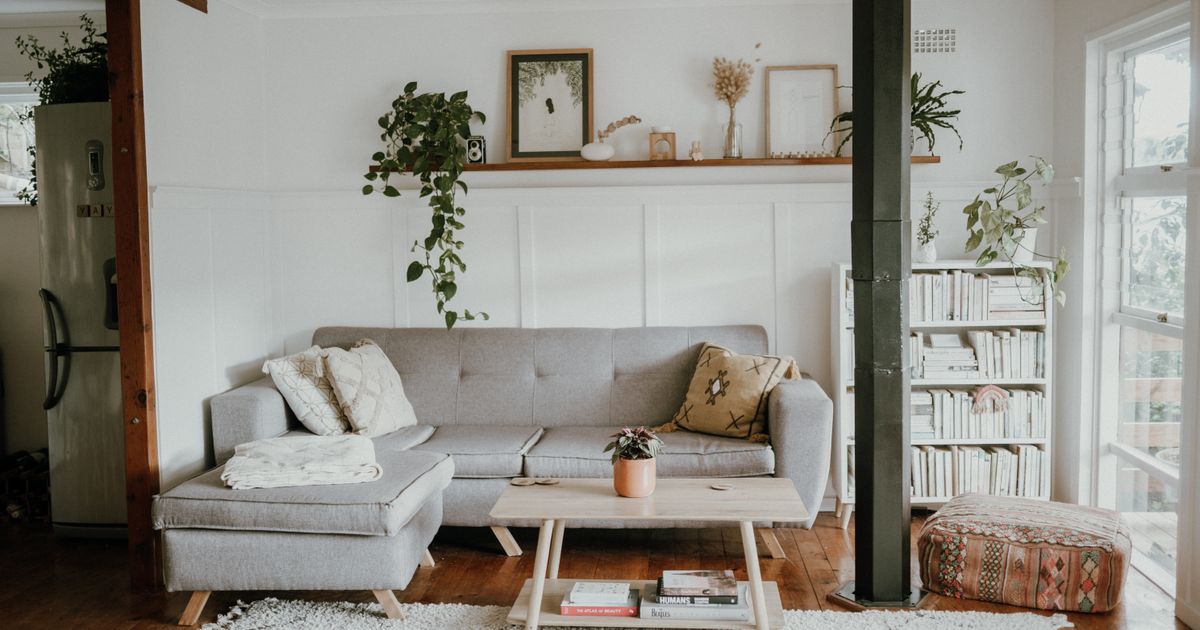
Start with light. Natural light is the most fundamental biophilic element, and it costs nothing to optimize what you already have. Pull back curtains fully. Move furniture that blocks your windows. Add a mirror across from your best light source to carry it deeper into the room. Rooms with access to daylight consistently score higher for occupant wellbeing than rooms without it, independent of any other design feature. Light shifts the baseline.
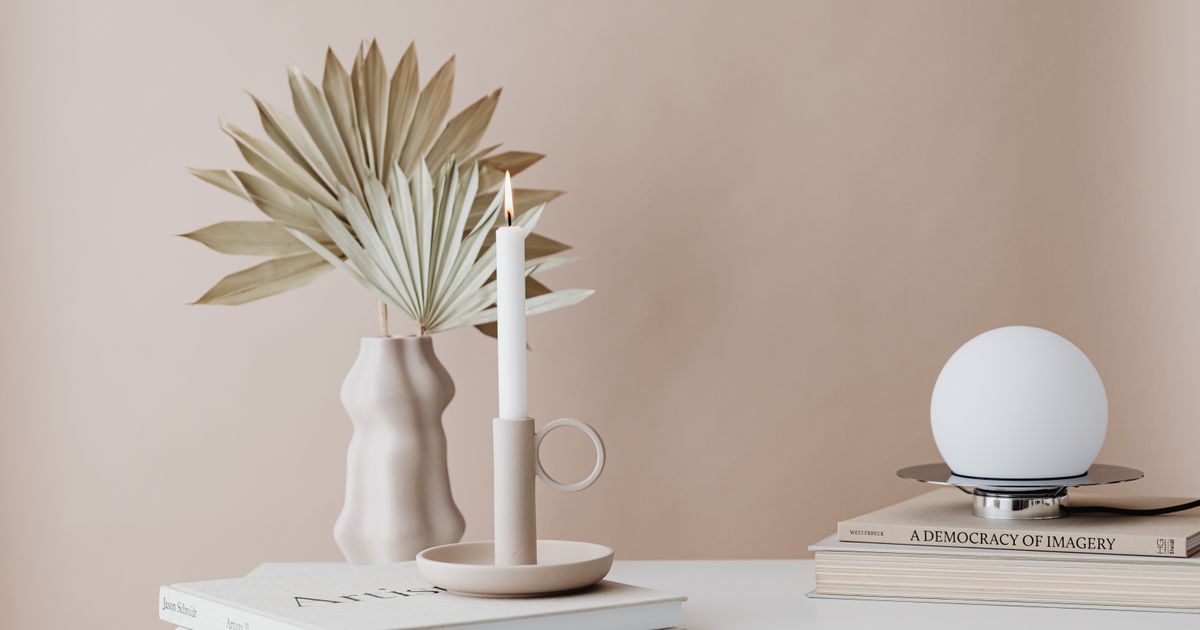
Add one natural texture. The surfaces around you are doing more work than you realize. Natural materials register in the nervous system differently than smooth synthetics. A linen throw over the arm of a chair. A rattan basket. A cutting board left out on the counter. These are not aesthetic choices, or not only that. They are sensory signals that tell your nervous system it is in a space made of real things. You do not need many of them. One is enough to begin.
Look at your color palette. Biophilic color palettes reference what you actually find outdoors: warm sandy neutrals, muted greens, dusty blues, the warm brown of bark and the off-white of river stone. These are not colors that trend and fade. They persist because they register as familiar. If your space runs toward bright whites and saturated tones, one soft throw or a single print in an earth tone can shift the room's emotional register noticeably.
Consider what is on your walls. This is the part most biophilic design guides skip, but environmental psychology research is clear: nature imagery, including high-quality prints featuring botanical or organic forms, activates the same neural pathways as natural environments. A wall that carries nothing is not neutral. A wall that holds an image of growing things is doing something for you, quietly, every time you walk past it.
When Art Counts as a Biophilic Element
If you have been staring at a blank wall for longer than you want to admit, you are not alone, and you are not being indecisive. You are being honest about what you actually want. A print that has nothing to say is worse than no print. You would rather wait.
What you are waiting for might be simpler than a full design plan. Art that carries organic forms, the upward arc of a new shoot, the spiral geometry of a lotus, the suggestion of things in the process of becoming, qualifies as a genuine biophilic element. It is not a substitute for nature in a diminished sense. It is one of the ways that the natural world has always entered enclosed spaces: in the shapes and imagery that human beings have carried indoors since the first drawings on stone walls.
The Growth Collection was built around this territory: the organic, emergent quality of things in the process of becoming. Lotus forms, spirals, and the geometry of growth. These are not abstract patterns chosen purely for aesthetics, though the design is careful. They are shapes that carry meaning, the kind of visual language that marks transitions and the quiet persistence of living things.
A print like Still Becoming placed in a reading corner or above a desk does not announce itself. It works quietly. Over time, that kind of quiet is worth something.
If you are not sure which territory fits where you are right now, the collection quiz takes about two minutes and asks the right questions.
Putting It Together Without Starting Over
Biophilic design does not ask for a renovation. It asks for attention.
Start with your light source. Then add one texture. Look at what your walls are holding, or not holding, right now. You do not have to change everything at once, and you probably should not. One shift, one surface, one print. That is how a space begins to feel like it belongs to you.
The spaces we inhabit are not passive containers. They respond to us, and we respond to them, in ways that move faster than language. What your room offers you at the end of a difficult day matters. It is worth caring about.
You do not need a greenhouse. You do not need to start over. You need a place that holds you back a little, and that is something you can build from right where you are.
Frequently Asked Questions
What is biophilic design?
Biophilic design refers to the intentional incorporation of natural elements, patterns, textures, and imagery into interior environments to support human wellbeing. It is based on the concept of biophilia, the innate human tendency to seek connection with nature, developed by biologist E.O. Wilson. The practice spans live plants, natural light, organic materials, nature-derived color palettes, and nature imagery.
Do I need live plants to practice biophilic design?
Live plants are one element of biophilic design, not a requirement. Research supports the role of natural materials, organic textures, natural light, and nature-derived imagery in creating restorative environments. Many of the most effective biophilic changes involve light, texture, color, and art rather than horticulture.
How do I start biophilic design in a small apartment?
Start with whatever natural light your space already has and clear anything blocking it. Add one natural texture, such as a linen throw or a wooden surface. Consider a print with organic forms for a blank wall. Small, intentional changes accumulate into a space that reads, to your nervous system, as more natural and easier to rest in.
Does nature-themed art count as biophilic design?
Yes. Environmental psychology research consistently shows that nature imagery, including high-quality prints featuring botanical or organic forms, activates neural pathways associated with natural environments. Art with organic forms contributes to the restorative quality of a space and is considered a legitimate biophilic design element.
How quickly does a biophilic space change affect mood?
The 2019 study by Hunter et al. in Frontiers in Psychology found measurable reductions in cortisol after as little as 20 minutes in contact with natural elements. The cumulative effects of art, texture, and light build over daily exposure. Most people report a noticeable shift in how a room feels within the first week of intentional biophilic changes.
Can I do biophilic design in a rental?
Yes. The most effective biophilic changes, including maximizing natural light, adding natural textures through soft furnishings, adjusting your color palette, and hanging prints with organic forms, are fully renter-friendly and require no permanent alterations to the space.
You might also enjoy

Written by Haven & Hold