Why You Don't Need to Be Fixed: What Your Walls Could Say
Your therapist said it quietly, and you've been turning it over ever since. Not because you disagree. Because some part of you doesn't quite believe it yet.
You don't need to be fixed.
On paper it sounds simple. In the room where it was said to you, eyes steady, voice unhurried, it landed differently. And then you drove home, walked back into your apartment, and the walls said nothing at all.
What would it mean for a wall to say it back?
What Therapists Actually Mean When They Say You Don't Need to Be Fixed
Self-acceptance is the unconditional recognition that you are who you are, independent of whether you've achieved anything, resolved anything, or improved anything yet. It is not the same as self-esteem, which rises and falls with performance and comparison. Self-acceptance is steadier than that. It doesn't require you to have done something right today.
Most of us have spent years inhabiting a culture that treats us as projects. Optimize, heal faster, become a better version of yourself by next quarter. Therapy can absorb those same assumptions if you let it, becoming one more place where you arrive to be corrected.
What skilled therapists offer instead is something closer to accompaniment. Not a roadmap to a fixed version of you, but a steadying presence beside the version that already exists. Acceptance and Commitment Therapy (ACT), one of the most extensively researched therapeutic frameworks developed in the past three decades, is built on exactly this principle. Psychological flexibility, meaning the ability to hold your thoughts and feelings without being controlled by them, predicts emotional wellbeing more reliably than the absence of difficult feelings.
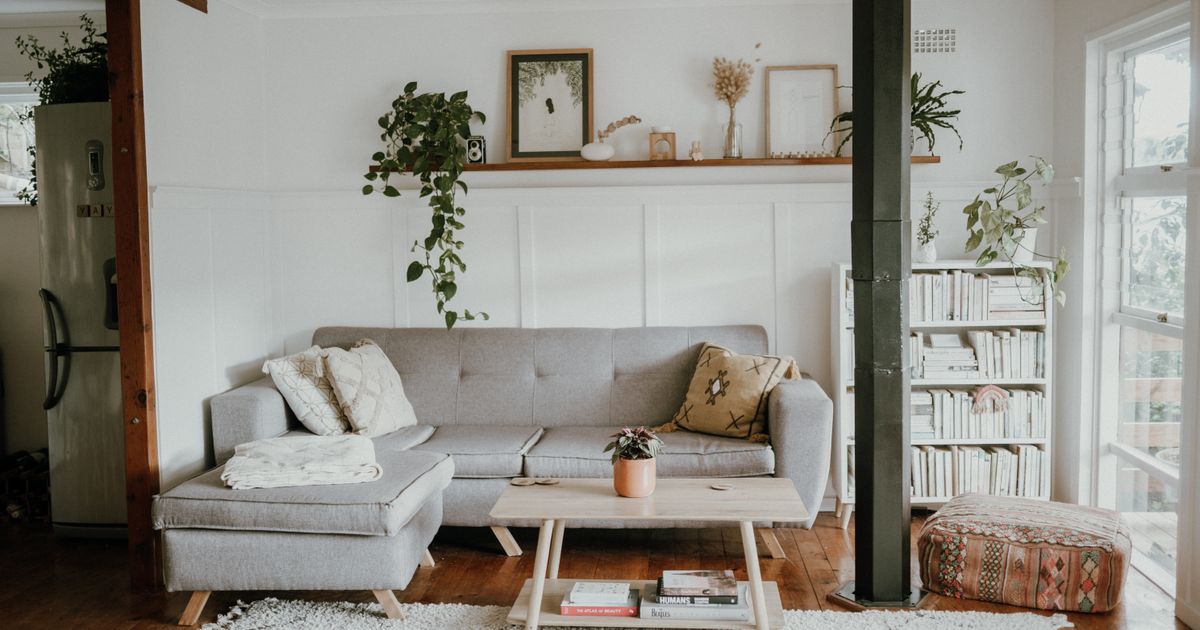
The space you inhabit carries weight in this too. A 2010 study led by researchers at UCLA, published in Personality and Social Psychology Bulletin, found that women who described their home environments as cluttered or unfinished showed elevated cortisol throughout the day compared to women who described their homes as restorative. Your physical space is not a backdrop. It is in active conversation with how you feel about yourself.
Which raises a quiet question: what is your home saying to you right now?
The Words That Surround You Shape the Words You Use About Yourself
The messages in your environment are not passive. They accumulate. Environmental psychology research shows consistently that the visual and textual cues in a living space influence mood and self-perception over extended periods. We tend to believe we are filtering out the background of our lives, but the background is always working on us.
Most wall art, even the thoughtfully chosen kind, sends a message of striving. Keep going. Be braver. Rise. The implicit assumption behind nearly all of it is that where you are right now is not yet enough. That you are a rough draft waiting for revision.
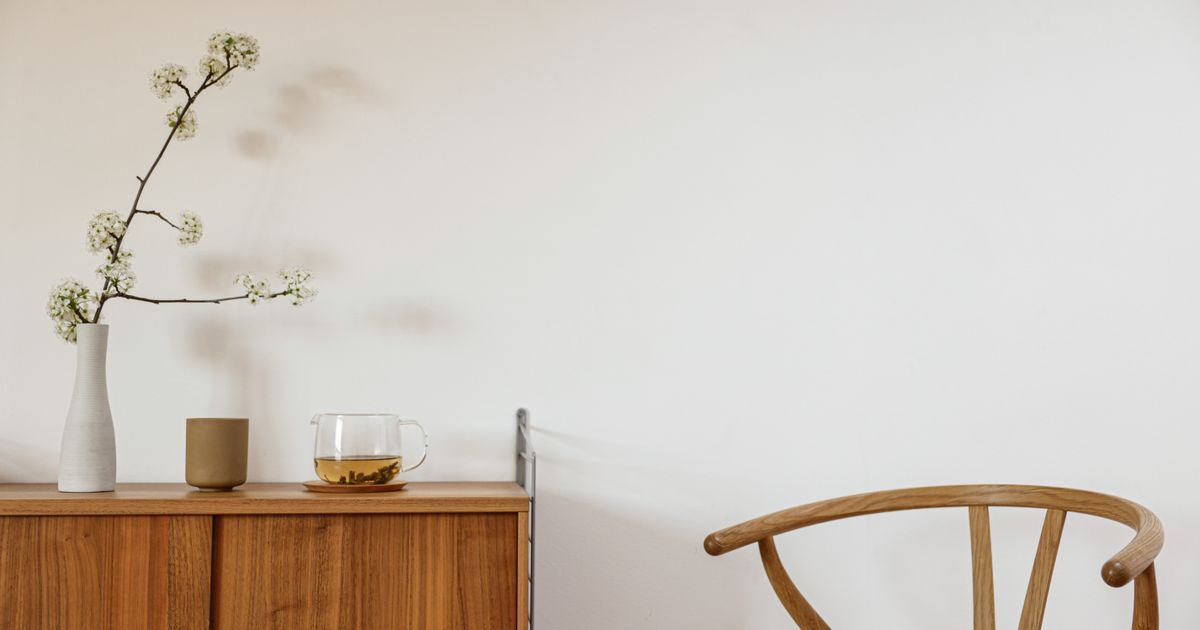
What would it feel like to walk into a room that doesn't expect anything from you? That holds you as you are, on the hard days and the okay days and the days when nothing resolves?
That is not a design question. It is a therapeutic one. And it is worth sitting with before you put anything on a wall, because the words you choose to live among become part of your internal architecture over time.
If you're not sure which words feel right for where you are right now, the Sanctuary Style Quiz can help you find an approach that fits the season you're in, not the one you think you should be in.
What Wholeness Actually Means (And Why It's Different From Working On Yourself)
Wholeness, as a therapeutic concept, refers to the state of holding all parts of yourself, including the parts that haven't resolved, the parts that still ache, and the parts you're still learning to understand, as present and valid. It is not completion but integration.
This distinction matters because "working on yourself" often implies a self that has been partitioned into acceptable and unacceptable sections. The goal becomes sorting, discarding, and upgrading. Wholeness suggests something different: that all of it belongs here. That the grief and the softness and the parts you're still figuring out are not obstacles to being whole. They are part of what whole looks like.
A 2012 meta-analysis published in Clinical Psychology Review, examining studies across clinical and non-clinical populations, found that higher levels of self-compassion were consistently associated with lower anxiety, lower depression, and greater psychological wellbeing. The distinction from self-esteem is meaningful: self-esteem requires you to think well of yourself. Self-compassion only asks that you treat yourself with gentleness. That bar is lower, and that is the point.
The Wholeness collection was designed for exactly this feeling. Not for the days when you feel good about your progress. For the ordinary days when you need something on the wall that simply says: all of you fits here.
The Objection Worth Naming
Here is the thought that surfaces when someone hears "you don't need to be fixed": but what if some things genuinely need to change?
What if accepting yourself as you are becomes permission to stay in patterns that aren't serving you?
This is a reasonable thing to wonder, and it deserves a direct answer.
Self-acceptance is not resignation. Accepting where you are does not mean you want to stay here permanently. What self-acceptance removes is the contempt. The bracing you do against yourself. The exhaustion of meeting a standard that keeps moving. The internal voice that criticizes before you've even finished a thought.
Growth that comes from self-contempt is relentless and brittle. It works, for stretches, the way running from something works. But it doesn't sustain.
Growth from a base of acceptance is slower, softer, and more durable. You do not have to despise where you are in order to want something different. Research on behavior change consistently shows that shame accelerates avoidance rather than action. Caring for yourself is what makes changing feel possible in the first place.
Choosing Words That Hold This
The blank wall is not neutral. It is an absence. And for people who care too much about meaning to put just anything up, that absence can become its own kind of weight. You've closed the Etsy tab. You've scrolled past the inspirational prints with the calligraphy you don't believe. You're waiting for something that actually says what you need to hear.
Three words can become a practice. On a wall in a room where you return every morning and every night, "space for all of you" stops being decoration and becomes something steadier. Not a reminder to be better. Not a directive toward growth. A quiet acknowledgment that all of it, the parts still forming and the parts still hurting and the parts you haven't named yet, fits here.
You can find Space for all of you in the Wholeness collection, alongside prints that hold the same territory: acceptance, integration, and the quiet permission to be where you are.
Take your time with it. The right words will find you when you're ready.
Frequently Asked Questions
What does it mean when a therapist says you don't need to be fixed?
When a therapist says this, they are naming and refusing the underlying assumption that therapy exists to correct you. What skilled therapeutic work actually does is help you develop a more spacious, compassionate relationship with yourself as you already are. The goal is integration and acceptance, not optimization or arriving at a better version of yourself.
Is self-acceptance the same as giving up on growth?
No. Self-acceptance means releasing the contempt you direct at yourself for not being further along. You can want things to be different and still be at peace with where you are right now. Research consistently shows that self-compassion supports durable change more effectively than self-criticism, because it removes shame from the process and makes action feel possible rather than obligatory.
Why do the words on your walls matter for mental health?
Environmental psychology research shows that the visual and textual cues in a living space influence mood and self-perception over time. A 2010 UCLA study found that home environments described as cluttered or unfinished were associated with higher cortisol levels in women throughout the day. The space you inhabit is in active conversation with how you feel about yourself, whether you are aware of it or not.
What is the Wholeness collection?
The Wholeness collection is a set of minimalist quote prints designed around the emotional territory of self-acceptance, integration, and the permission to be whole as you are. It includes prints like "Space for all of you," "Held gently, held wholly," and "You belong here." Prints range from $35 unframed to $175 for a large framed piece.
What is the difference between self-compassion and self-esteem?
Self-esteem is an evaluation of yourself that rises and falls with performance and how you compare to others. Self-compassion is the practice of treating yourself with gentleness regardless of outcomes. Research by psychologist Kristin Neff and colleagues at the University of Texas found that self-compassion predicts psychological wellbeing more reliably than self-esteem, because it does not require positive results to be activated.
How do I choose wall art that supports my wellbeing without feeling clinical or prescribed?
Look for words that meet you rather than direct you. Art that holds is different from art that instructs. If a quote makes you feel like you should be doing something with it, it is working against you. If it makes you feel seen, or slightly less alone, or a little softer, it is doing the right work.
You might also enjoy

Written by Haven & Hold