Dorm Room Wall Art: Building Your First Haven
Your desk chair is still in the wrong place, and the walls are the color of no one's choice.
You came here with boxes, with the things you packed deliberately and the things that just came along. The room doesn't know you yet. It holds the shape of whoever lived here before, and it will hold yours, if you let it.
The walls are the easiest thing to dismiss. You have bigger things to figure out. But what you put on them, or choose not to put on them, becomes part of the daily texture of living here. It shapes how the room feels when you walk in at the end of a long day and it's just you and the quiet.
Why the walls in your first space matter more than you expect
Most dorm rooms feel like waiting rooms. The furniture is chosen for durability, not for you. The walls are painted a neutral that belongs to no one. The message the space sends, before you do anything with it, is institutional indifference.
Room ambiance refers to the combination of sensory and aesthetic qualities a space provides, including its light, color, texture, and the objects and art that line its walls. It is the felt atmosphere of a place, distinct from its functional layout, and it shapes your nervous system in ways you often don't notice until you notice how different you feel somewhere else.
A 2023 study published on PubMed, titled "There's no place like dorm," found that the gap between a student's ideal room ambiance and their actual room ambiance was a meaningful predictor of depressive symptoms, even when researchers controlled for personality, physical health, and academic stress. The room you're in affects how you feel in it, and not in a vague, decorative sense. The research was specific: when the space around you fails to evoke the emotional qualities you need from it, there are real consequences.
Earlier research from the University of Florida found that students living in well-lit rooms reported measurably greater self-esteem than those in darker spaces, and that natural light, open views, and visual complexity were among the strongest environmental factors in how easily students adjusted to college life.
Your space is not incidental to how you feel. It is part of how you feel. And within limits, it is something you can tend.
College students in campus housing spend roughly 60 percent of their waking hours in their dorm room during fall and winter semesters. No other space you inhabit claims that much of your daily life.
What most students get wrong about dorm room art
The usual approach works like this. You open a browser, scroll through pages of options, add something to your cart, think about it for three days, and close the tab. The wall stays blank.
The problem is almost never taste or budget. The problem is that most affordable wall art offers two options: hollow positivity or aesthetic filler. The cursive "good vibes only." The black-and-white skyline that means nothing in particular. The tropical leaf print because someone on the internet said plants are calming. These aren't wrong, exactly. But they also don't hold you.
You can look at them for a year and feel nothing from them. On a hard night, when you're tired and a little far from home and your anxiety is doing its thing, they will be exactly as present as a blank wall.
The distinction worth making is between decorative art and anchoring art. Decorative art fills space. Anchoring art gives you somewhere to return to. It says something true enough that you can lean on it when you need to. The test is simple: could you look at it on your worst night and feel something other than nothing?
The blank wall is actually the most honest place to start. It means you care too much about what goes there to put up something that lies to you.
If you want a place to start, The One-Wall Reset walks you through it, one wall at a time.
How to choose art that holds you in a small space
Small spaces have their own logic. What fills a sprawling apartment can overwhelm a twelve-by-fourteen foot room, and most US residential dorms measure between 150 and 200 square feet. The constraints of a dorm room, when you work with them, often produce something more intentional than more space would allow.
Four principles that consistently hold:
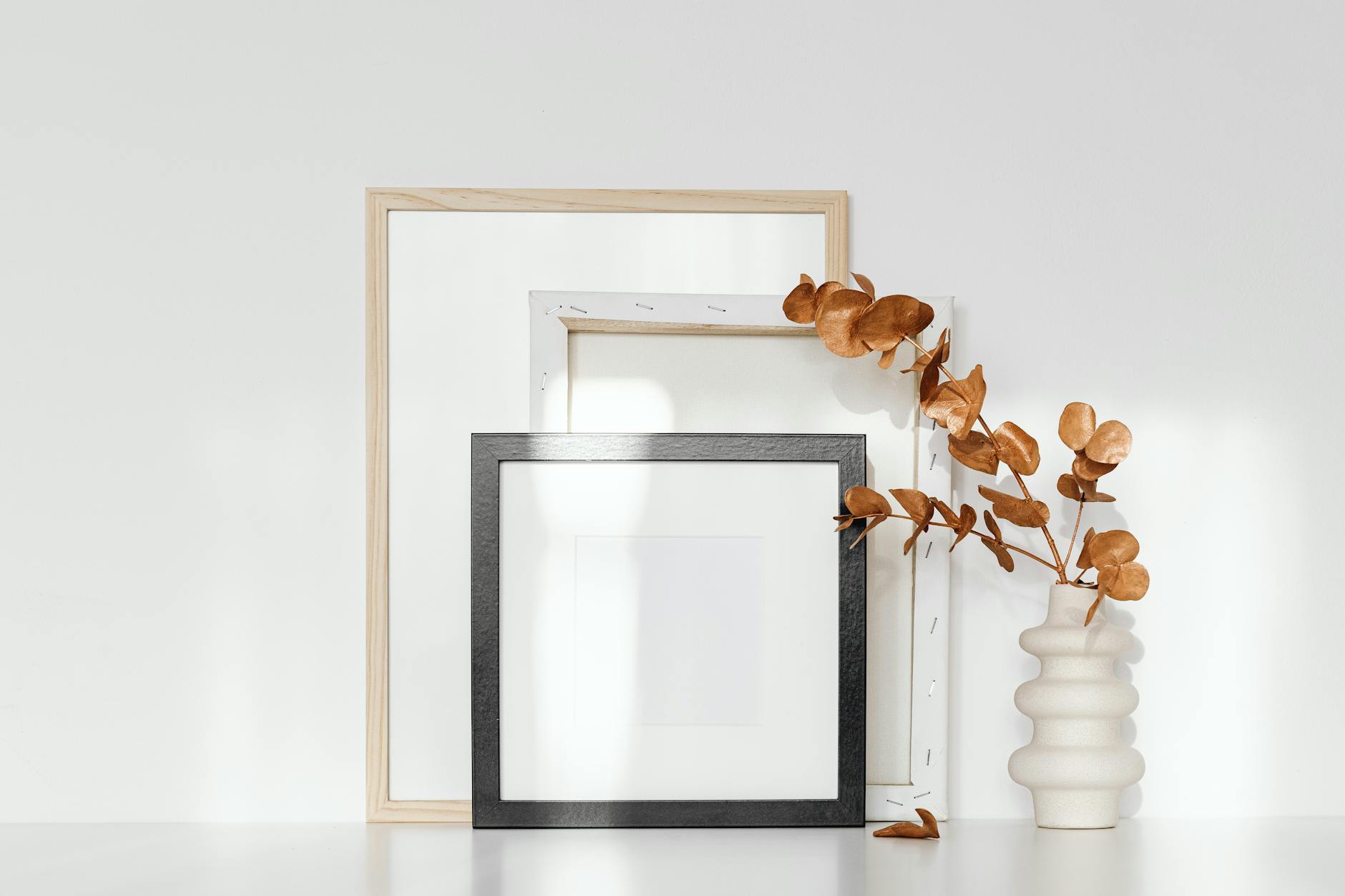
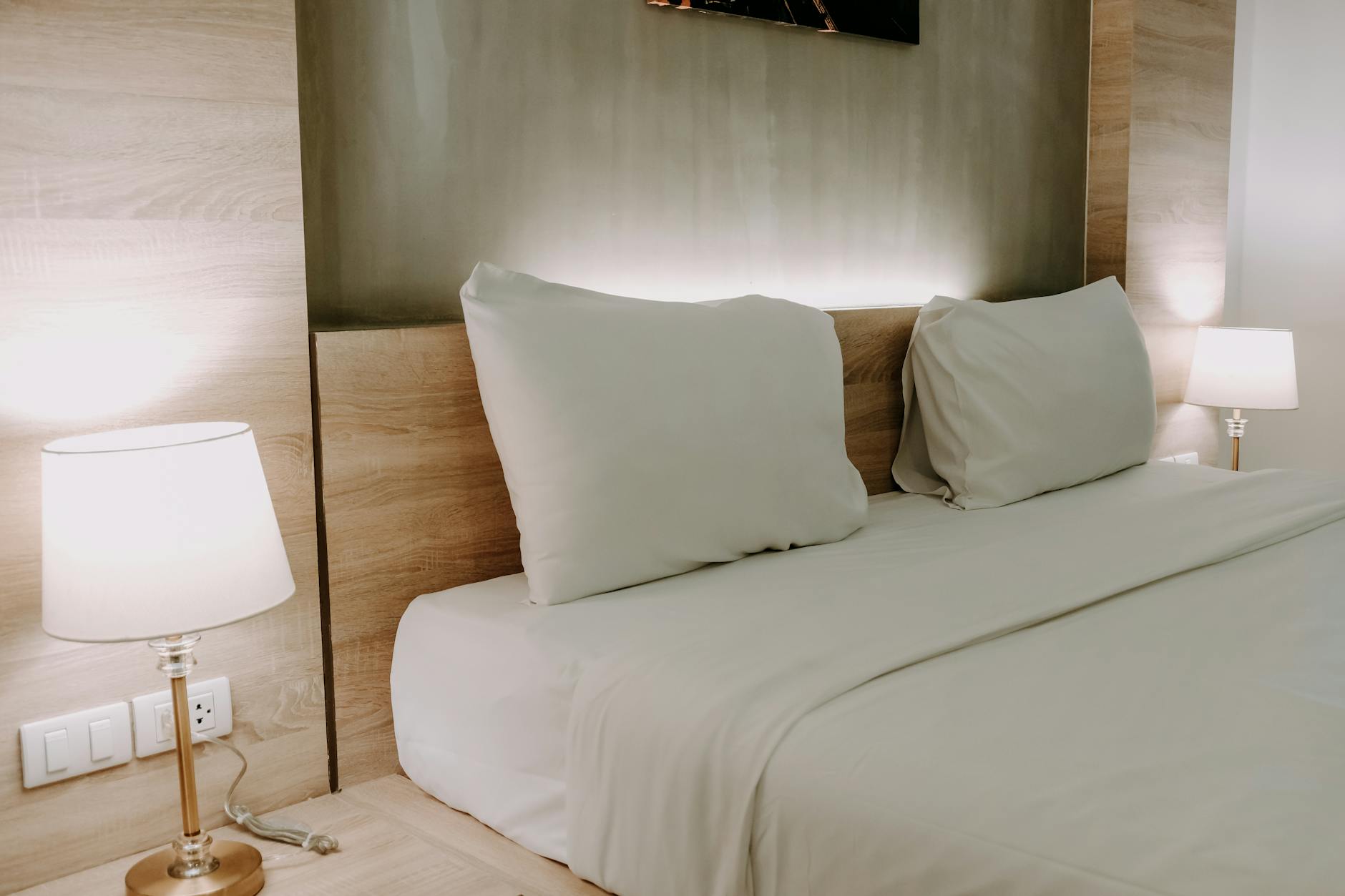
1. One main piece is enough to start. A single print above your desk or above your headboard changes the entire feel of a room without requiring a gallery wall. You don't need to fill the space. You need to anchor it.
2. Minimal over complex. In a small room, art that is restrained in its design breathes. Complicated imagery competes with the furniture, the light, and everything else that's already in the room. One clean image on a muted ground tends to do more than three busy pieces crammed onto a single wall.
3. Words that are true, not aspirational. An aspirational quote asks something of you every time you read it. A grounding phrase just holds you. There is a difference between a print that pushes you forward and one that lets you rest where you are.
4. Neutral and earth tones age well in small spaces. In 2026, the strongest trend in student housing decor centers on neutral palettes, featuring beige, cream, sage green, and soft gray. These tones don't fight with natural light and they don't tire you out over months of looking at them. They also tend to work with whatever else you bring into the room.
If you're choosing your first print for a space that's still figuring itself out, art that holds space for exactly where you are tends to serve you better than art that points toward where you want to be. The Growth collection was designed for in-between places. Prints like Still becoming and Held in transition were written for the experience of being somewhere between who you were and who you're becoming. That's not a temporary state. That's what this year is.
An 8x10 unframed print is one of the most practical options for a first space. It costs less, ships flat, needs no hardware, and still anchors a wall in a way you notice. If you want a bit more presence, an 11x14 works in most dorm rooms above a headboard or on an accent wall.
Damage-free hanging: what actually works
Most dorms prohibit nails and permanent mounting. This is not actually a limitation.
For unframed prints on enhanced matte paper, removable adhesive strips from Command (3M) hold reliably on painted drywall and peel off cleanly without tearing the surface. One pair of small-size strips handles an 8x10 print with room to spare. For a framed piece, use the weight-rated strip appropriate for the frame's total weight and follow the bonding instructions, because the adhesive needs a full 24 hours to set before it will hold properly.
Three options that consistently work:
1. Command Damage-Free Hanging Strips: Available in weight-rated sizes up to 12 pounds per pair for the large strip. They peel off the wall without residue when you follow the removal instructions, which means warming the strip slowly rather than pulling straight out.
2. Poster putty (Blu-Tack or similar): Works well for lighter unframed prints. Press a small amount to each corner. Removes without residue on most painted surfaces and doesn't leave the faint shadow that regular tape does.
3. Leaning: For a heavier framed piece, leaning it against a wall on your desk or dresser creates a gallery feel without attachment. This is especially effective for small-to-medium frames and gives the room a relaxed, intentional quality.
A practical note on weight: a framed options is heavier than a lightweight frame with acrylic. An 8x10 framed runs roughly 1.5 to 2 pounds. Weight-rated Command strips at the large size handle this comfortably. Always check the weight rating printed on the strip packaging before you hang anything framed.
Building your first haven, one wall at a time
You don't need to finish this in the first week. A haven isn't something you complete. It's something you tend.
Start with the wall you look at the most. The one across from your desk, or the one you face when you wake up. Put one thing there that feels true. Something you could read at the end of your worst week and feel, not fixed, but held. Not like someone is telling you to cheer up. Like someone understands what the week was.
The prints that hold you here will hold you in every space after this. The dorm is temporary. The art moves with you.
If you're not sure where to start, take the Haven & Hold quiz. It helps you find the collection that fits where you are right now. It takes about two minutes.
Your walls will learn you over time. Let them.
Frequently asked questions
Can I hang art in a dorm room without damaging the walls?
Yes. Removable adhesive strips from Command (3M) are specifically designed for painted drywall and remove without damage when you follow the provided removal instructions. Poster putty is a good option for lighter unframed prints. Most dorms permit these methods even when nails are prohibited, but check your specific housing policy if you're unsure.
What size print works best in a small dorm room?
An 8x10 is the most practical starting size. It is large enough to anchor a wall and feel intentional, and small enough to sit comfortably in a compact space without competing with everything else. An 11x14 works well above a headboard or as the single piece on an accent wall if you want a bit more visual weight.
How do I choose wall art that doesn't feel hollow in a small space?
Look for art with words or imagery that feel genuinely true, not aspirational or performative. In a small room, what you put on the wall is what you look at every day for months. Minimal, quietly meaningful art holds up under that kind of repetition far better than something decoratively busy or something that pushes you every time you read it. The question to ask yourself is whether you could look at it on a hard day and feel something real.
Is it worth buying quality art for a temporary space like a dorm?
The prints that hold you in a dorm room will hold you in every space after that. A piece you genuinely believe in is a better long-term choice than a wall full of things you're already over by November. Dorms are temporary. The art moves with you.
What is the difference between decorative art and anchoring art?
Decorative art is chosen to fill space and look pleasant. Anchoring art holds a specific emotional territory and gives you somewhere to return to when you need steadiness. Decorative art looks fine. Anchoring art is the piece you still notice after three months, the one that still says something true.

Written by Haven & Hold