Containment Theory: Why Some Rooms Feel Like a Hug
Some rooms do something to you before you have set down your bag.
You notice the shoulders first. They drop a little. The breath settles into a longer rhythm. The quiet in this room feels different from the quiet in other rooms, like it is made of something solid rather than something absent. You do not decide to feel this way. It happens before thought, before opinion, before you have looked around long enough to form a judgment about the furniture.
This is not magic. It is not good taste. It is your nervous system recognizing a space that knows how to hold you.
Therapists have a name for this.
What Containment Theory Actually Means
Containment, in therapeutic terms, refers to the process by which a person or an environment receives another's difficult feelings and holds them without collapsing under their weight. The concept was developed by psychoanalyst Wilfred Bion in the early 1960s, building on Donald Winnicott's earlier idea of the "holding environment," which described the psychological and physical space a caregiver creates for a child to feel safe enough to exist fully.
Winnicott was not talking only about being picked up and carried. He was talking about reliability, steadiness, and the felt experience that your emotional reality is welcome here. That you do not have to manage yourself down to a quieter, more acceptable version before you enter.
Your therapist's office works this way. The same chair every week. The same soft light. The tissues in the same corner. These choices are not random or incidental. They are deliberate acts of containment. They tell your nervous system: you have been here before. You know what this space does. You are safe.
Now consider the room where you sleep. What does it tell your nervous system when you walk in at the end of the day?
What Happens in Your Body in the First Few Seconds
Your nervous system makes a threat-or-safety assessment within milliseconds of entering a space. You do not initiate this. It runs beneath awareness, scanning for pattern, for familiarity, for what your body can expect from the environment around it.
A 2010 study published in Personality and Social Psychology Bulletin by researchers Darby Saxbe and Rena Repetti at UCLA found that women who described their homes as cluttered or unfinished showed significantly higher cortisol levels throughout the day compared to women who described their homes as restful. The effect was consistent and measurable. Your home is not neutral. It is either adding to the weight your body carries through the day or helping to set some of it down.
Environmental psychology describes a concept called perceptual coherence: the brain's effortless ability to read a space, to predict what is where, how it behaves, and what it means for your safety. When a room is perceptually coherent, your nervous system can settle into its parasympathetic state, the rest-and-digest mode that is the opposite of scanning and bracing. When a room is visually chaotic or ambiguous, your brain keeps working even after you have stopped moving. You never fully arrive. You stay in a low hum of alertness you have probably stopped naming as stress.
This is the physiological basis for why some rooms feel like a hug. Your body can stop working so hard inside them.
If you are not sure where to begin, the Sanctuary Style Quiz can help you find the approach that fits where you are right now.
Four Qualities That Create Containment in a Room
These are not design rules. They are qualities. You can achieve them across different aesthetics, different budgets, and different spaces. What they share is a function: they help your nervous system settle.
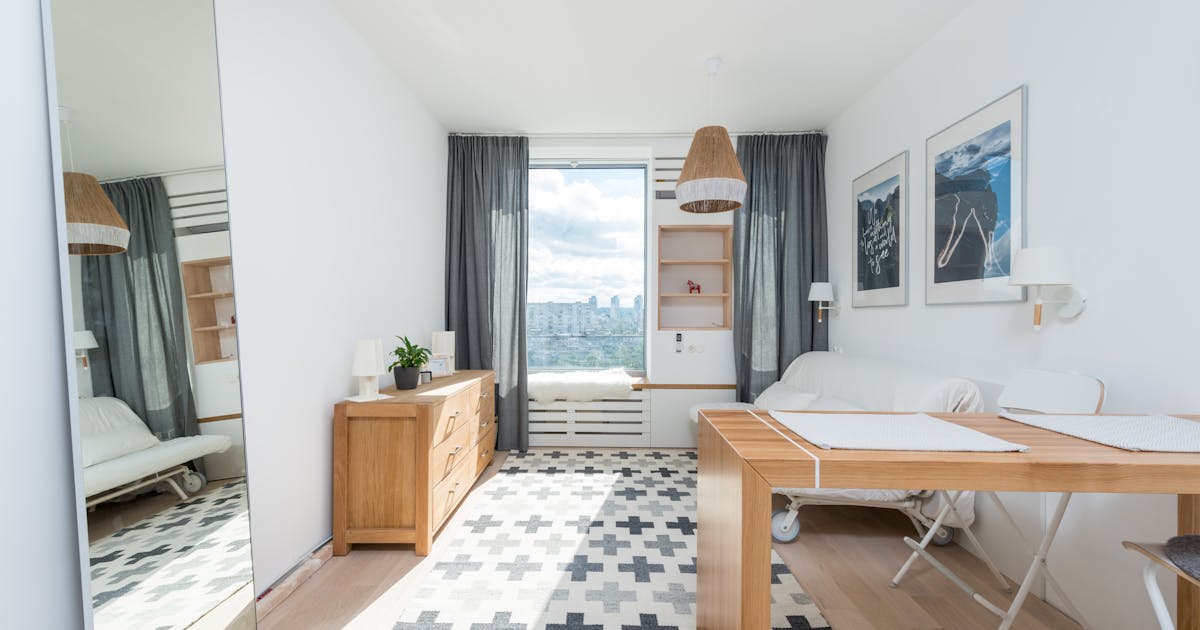
Defined edges. A contained room knows where it ends. Furniture arranged in loose conversation rather than pushed flat against the walls. Visual anchors, such as a rug, a headboard, or a single piece of art, that tell the eye where to rest. Your nervous system needs to understand where you are in space before it can feel genuinely safe inside it. A room with no visual anchors keeps the scan running.
A palette that does not compete. Muted, tonal, or softly warm colors that speak a common language. This is not a requirement for beige or minimalism. It is about harmony, colors that were clearly chosen together, that lower the visual volume. Saturated or clashing tones create noise the eye cannot stop processing. Visual noise is another form of the brain staying alert.
Predictability built into routine. The light at night is the same as last night. The texture under your hand when you reach for the lamp is familiar. Your keys live in the same place. Winnicott's holding environment always involves consistency and reliability. Your home can carry this too. Small rituals and stable arrangements build a felt sense of knowing where you are in time and space.
Meaning anchored to the walls. This is the quality most people underestimate. Your eyes return to your walls hundreds of times each day, most of those passes completely unconscious. Whatever is on the wall is entering your field, setting a register before you have consciously read it. Art that is decorative but meaningless creates low-level static. Nothing on the walls can feel clean, but for many people it quietly reads as absence rather than peace. Art chosen with intention, art that holds a specific emotional territory, shifts the room's baseline in a way that accumulates without demanding your attention.
Why the Wrong Art Breaks Containment More Than No Art At All
If your walls have been empty longer than you planned, you are probably not indifferent. You probably care too much about what belongs there to put up something that does not fit.
There is a real difference between emptiness and cleanness. An empty room asks to be filled. A clean room asks to be inhabited. If your bare walls feel like waiting rather than rest, that is information. You are looking for something specific. Something honest about how you actually want to feel when you wake up in that room. The options you have scrolled past on Etsy and closed the tab on were not wrong because they were too expensive or too simple. They were wrong because they performed something you do not feel, or told you to feel something you were not ready for.
Motivational art is designed for someone who needs pushing. If you are in therapy, or in recovery from something, or simply someone who has learned to be honest about what you carry, you probably do not need pushing. You need acknowledgment. You need a space that says your reality is welcome here, even the hard parts.
Art chosen with therapeutic intention works differently because it is designed to anchor a specific emotional territory rather than to perform a mood. The Grounding Collection was built for rooms that need to feel stable and safe. For the walls of someone doing hard work who deserves a space that holds that truth.
Building Containment Without Starting Over
Containment is not a renovation. You do not need new furniture, a fresh coat of paint on every wall, or a cohesive aesthetic that photographs well. You need a few deliberate decisions made from the right questions.
The right questions are not "what looks good here?" They are: what do I want to feel when I wake up in this room, and what does this room need to hold for me?
Choose one corner and make it feel held. A chair you actually use. A lamp at the right height. One piece of art that means something. Your nervous system does not require a whole room to settle. It requires enough signal to stop scanning. Start there and let the rest of the room find its way.
Start with what your body is already asking for. If you have been feeling unsteady, your space needs anchoring. If you have been hard on yourself, it needs softness. If you are in the middle of something uncertain, it needs quiet acknowledgment of where you are. These are not decorating instincts. They are nervous system requests, and your home can answer them.
The words on your wall are doing something every time your eyes pass over them. They are either holding a space for you or they are not. You get to choose which.
Frequently Asked Questions
What is containment theory in the context of interior design?
Containment theory, as applied to interior design, draws from psychoanalytic concepts developed by Wilfred Bion and Donald Winnicott to describe the way a physical space communicates safety, predictability, and emotional welcome to the nervous system. A contained room is not simply tidy or minimalist. It holds the person inside it through coherence, familiarity, and intentional visual anchoring.
Why do some rooms feel instantly calming while others do not?
Environmental psychology research points to perceptual coherence as the key variable: the brain's ability to read a space effortlessly without staying in a low-level scanning state. When a room's elements work together in a way that is easy for the brain to predict and understand, your nervous system can move into its parasympathetic, rest-and-digest mode. Rooms that feel chaotic, ambiguous, or visually competitive keep the brain working even after the body has stopped moving.
Can wall art genuinely affect how a room feels?
Yes. Your eyes return to your walls hundreds of times each day without conscious awareness, and whatever is there enters your visual field repeatedly. Art that carries visual noise or performative messaging creates low-level static that the mind registers whether you notice it or not. Art chosen with emotional intention, with a clear relationship to how you want to feel in the space, accumulates over time in the room's felt register.
Do I need to redecorate completely to make my room feel more contained?
No. Containment can be created in one deliberate corner: a chair you use, a lamp at the right height, and one piece of art that anchors the emotional territory you are trying to hold. Your nervous system responds to signal, not scale. A single anchor is enough to shift the baseline. Start with the corner of the room you use most.
What does it mean when your walls are blank for a long time?
Persistent blank walls often reflect a high standard for meaning rather than a lack of interest. People who leave their walls empty past the initial settling-in period frequently care too much about what belongs there to put up something that does not fit. The useful question is not what looks good, but what you want the room to hold for you.
Is the concept of a holding environment the same as containment?
They are related but distinct. Winnicott's holding environment describes the relational and psychological space a consistent caregiver creates. Bion's containment theory describes the active process of receiving another's feelings and holding them without being destabilized. Applied to physical spaces, both concepts point toward environments that communicate: your emotional reality is safe here, and this space will not collapse under the weight of what you bring into it.
Your room is already doing something. It is either helping your nervous system settle or keeping it in a low hum of alertness that you have probably stopped noticing. That is not a failure. It is just what happens when we do not yet have the framework to see what our spaces are doing.
The good news is that containment does not require perfection or expense. It requires intention. A few honest decisions. A wall that holds something real rather than something decorative.
Take your time. The right choices are worth the patience.

Written by Haven & Hold