Small Apartment Decor Ideas for a Calm, Restful Space
You walked in, set your bag down, and waited for the space to exhale with you.
It didn't.
That feeling has a name even if you haven't given it one yet. Your apartment is a place you sleep, but it doesn't feel like a place that holds you. The walls are blank, or filled with things that don't quite say anything. The light is overhead and unforgiving. You've scrolled through decor ideas at midnight, closed the tab, and told yourself you'll figure it out someday.
Someday keeps not coming.
This post is for the small apartment that hasn't become home yet. The space that's functional but not restorative. And for you, the person who wants it to feel different but isn't sure what, exactly, would make it so.
Why Small Spaces Often Feel Sterile (Even When You're Trying)
Small doesn't cause the problem. Bare does. Cold does. Unintentional does.
Research from UCLA, published in Personality and Social Psychology Bulletin, found that women who described their home environments as cluttered or chaotic showed significantly higher cortisol levels throughout the day compared to those who described their homes as restful or restorative. The finding wasn't about square footage. It was about the psychological weight of an environment that feels unresolved.
What's less discussed: the opposite of clutter isn't emptiness. A blank apartment can carry the same weight as an overstuffed one. Both signal the same thing to your nervous system: this space isn't finished, isn't safe, isn't yours.
Attention Restoration Theory is the framework developed by Rachel and Stephen Kaplan at the University of Michigan to describe how certain environments help the mind recover from mental fatigue. The theory holds that spaces with coherent, gentle visual complexity, rather than either visual noise or visual emptiness, allow the prefrontal cortex to release its grip and rest. A sanctuary isn't designed for aesthetics. It's designed for that release.
Small apartments often fail not because they lack space, but because they lack intention. The furniture is where it landed on move-in day. The walls are what the landlord left behind. Nothing has been placed; things have just accumulated.
What Sanctuary Actually Needs in a Small Space
Sanctuary, as it applies to a home, refers to a space designed to meet you where you are rather than demand something from you. It doesn't require a second bedroom, a dedicated reading nook, or a curved window with morning light. It requires coherence, softness, and at least one place your eyes can rest without working.
In small apartments, sanctuary often comes from subtraction rather than addition. What do you remove? What do you stop tolerating? What one thing, if you finally dealt with it, would make the whole room breathe differently?
Three qualities tend to distinguish a restful small space from a stressful one:
- Visual anchors: at least one point where the eye lands and rests, rather than scanning for what's wrong
- Layered light: light sources at different heights and intensities, rather than a single overhead bulb doing all the work
- Intentional objects: fewer things, each chosen with care, so nothing feels accidental
You don't have to address all three at once. Start with one.
If you want a place to start, The One-Wall Reset walks you through it, one wall at a time.
Start With the Wall You See First
In most small apartments, one wall does most of the emotional work. It's the one you see when you wake up, or the one facing you when you sit on the couch, or the one you pass every time you walk from the kitchen to the door.
That wall is already speaking. The question is whether it's saying anything you want to hear.
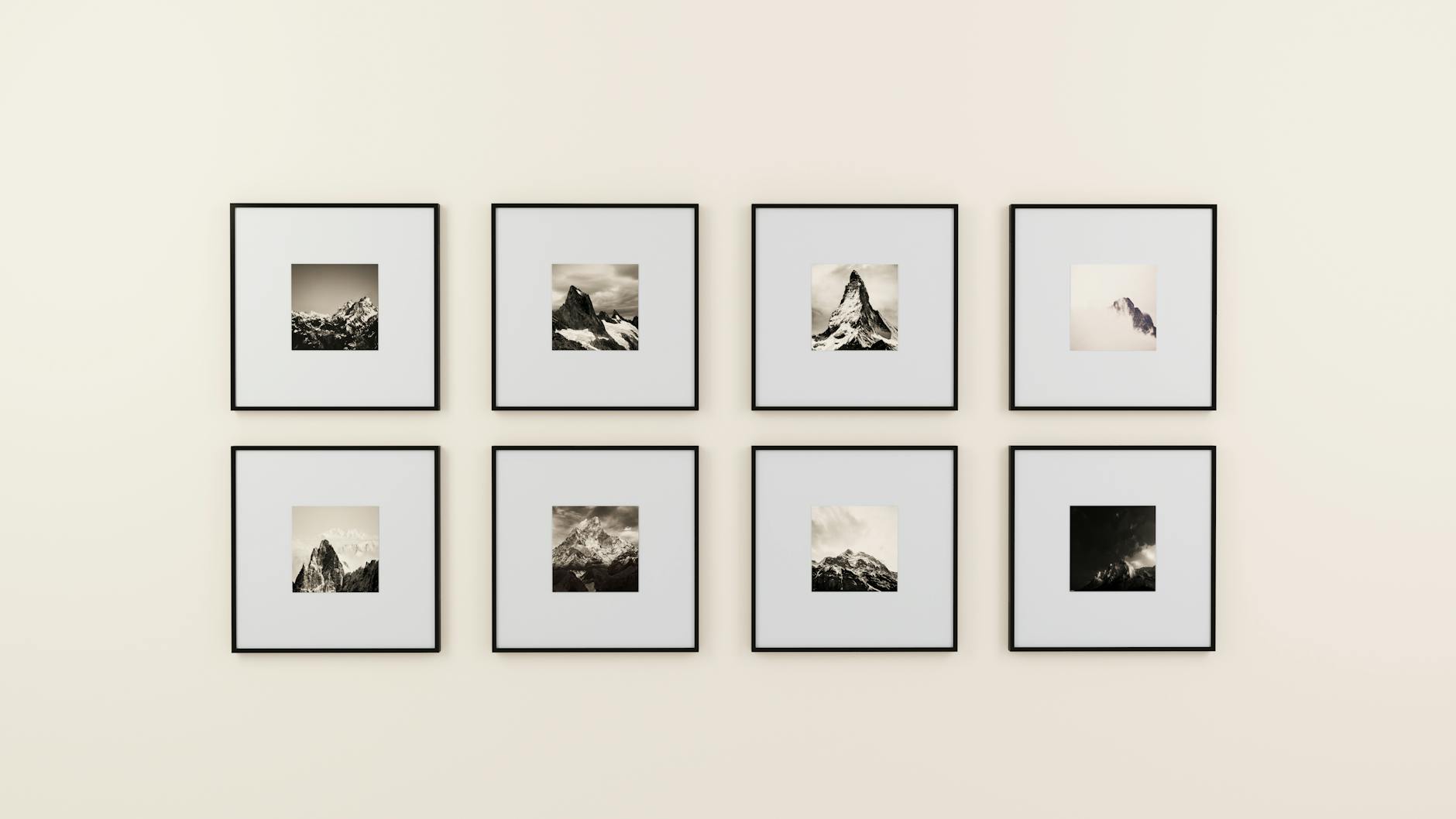
Blank walls aren't neutral. They read as unfinished, and your nervous system registers that as a mild, ongoing signal of incompleteness. Overcrowded gallery walls in small spaces can read as frantic. The goal is considered, not minimal and not maximal.
One or two pieces, well-placed, do more than five pieces arranged without intention.
When choosing what goes on that wall, the most useful question isn't "do I like this?" The question is: "does this feel like it belongs to me?" Art that earns its place in a small apartment reflects something true about who you are or what you need. Something that makes you feel like you live there.
There's a reason "hang your art" comes up again and again in conversations about making an apartment feel like home. Art is the fastest signal to both you and your space that someone has moved in and made choices.
Light Is Doing More Work Than You Realize
Overhead lighting is the single most common reason small apartments feel clinical.
A standard ceiling fixture floods a room evenly. Even coverage sounds appealing in theory, but in practice it flattens everything. Shadows disappear. Texture disappears. The space reads as flat and utilitarian, like a fitting room or a waiting area.
Layering your light means adding sources at different heights: a floor lamp beside a chair, a table lamp on a surface, a small light on a low shelf. None of them need to be expensive. All of them change the feeling of the room substantially.
A 2020 review published in LEUKOS: The Journal of the Illuminating Engineering Society found that occupants in spaces with layered, lower-intensity light sources reported significantly higher levels of perceived comfort and emotional wellbeing compared to those in uniformly lit spaces of the same size. The room didn't change. The light did.
Warm-toned bulbs (2700-3000K on the color temperature scale) shift a space toward amber and shadow, which your nervous system tends to read as evening and rest. Cooler bulbs (above 4000K) read as midday and alertness. Most small apartments benefit from warmer light in living and sleeping areas, and the shift can happen with one bulb swap.
The Art of Choosing What Stays
The hardest part of decorating a small apartment isn't finding things to add. It's deciding what you're allowed to let go.
Permission is the right word here. Many people hold onto objects they don't love because releasing them feels wasteful, or ungrateful, or final in some way. In a small space, that hesitation costs more than it does in a larger one. Every object that doesn't belong takes up not just physical space but visual and emotional space.
When you're working with limited square footage, the objects that remain carry more weight. A chair you love changes a room. A chair you're tolerating quietly degrades it, a little, every day.
The same holds for art. Wall decor in small apartments deserves to be chosen as carefully as furniture. A print that speaks to you, that you'd stop and look at even if it weren't in your home, belongs on your wall. One that you kept because it was a gift or because it filled a gap probably doesn't.
Browse the Grounding Collection if your small space needs something steady on the walls: a visual anchor that holds the room without filling it.
The Permission to Commit, Even in a Rental
One of the most common reasons small apartments stay unfinished is the renter's hesitation. If it's temporary, the reasoning goes, why invest?
That reasoning costs you the present tense. You're living there now. Your nervous system is registering that space as home now. The toll of an unfinished, unloved apartment is paid daily, not just when you move out.
Committing to a rental doesn't mean permanent renovations or irreversible changes. It means buying the lamp you actually love instead of the one that was available. It means hanging art instead of leaving it leaning against the baseboard. It means choosing, rather than accumulating, because you've decided this space is worth caring for.
A print for a small apartment doesn't need to cost much. A piece from the Wholeness Collection starts at $45. It's a small investment toward a space that holds you back when you come home tired.
If you're not sure which print fits your space, the Haven & Hold quiz takes a few minutes and points you toward the collection that fits where you are right now.
Your apartment doesn't need to be permanent to be yours.
Frequently Asked Questions
How do I make a small apartment feel bigger without renovating?
Visual space is different from physical space. Using light-toned walls and furniture, keeping the floor visible by choosing furniture with legs, and selecting one or two carefully placed pieces of art rather than many small ones all create the impression of more room. Mirrors placed across from windows reflect natural light and extend sightlines. The goal isn't to add more; it's to reduce visual noise.
What kind of art works best in small spaces?
Pieces with calm, minimal compositions tend to hold well. Large-scale art in small rooms often reads as bold rather than overwhelming, especially when hung on the wall you see most. Avoid busy patterns or very dark pieces in already-dim rooms. A single print with soft color and intentional negative space can anchor a small room without filling it.
How do I make my apartment feel cozy without making it feel cluttered?
Coziness comes from texture, warmth, and layered light rather than from volume of objects. A textured throw, a soft rug, a lamp at eye level, and one piece of art that means something to you create coziness without adding clutter. The distinction is between objects with presence and objects with weight. Choose fewer things, and choose ones that feel considered.
Do I need matching furniture or a cohesive color scheme?
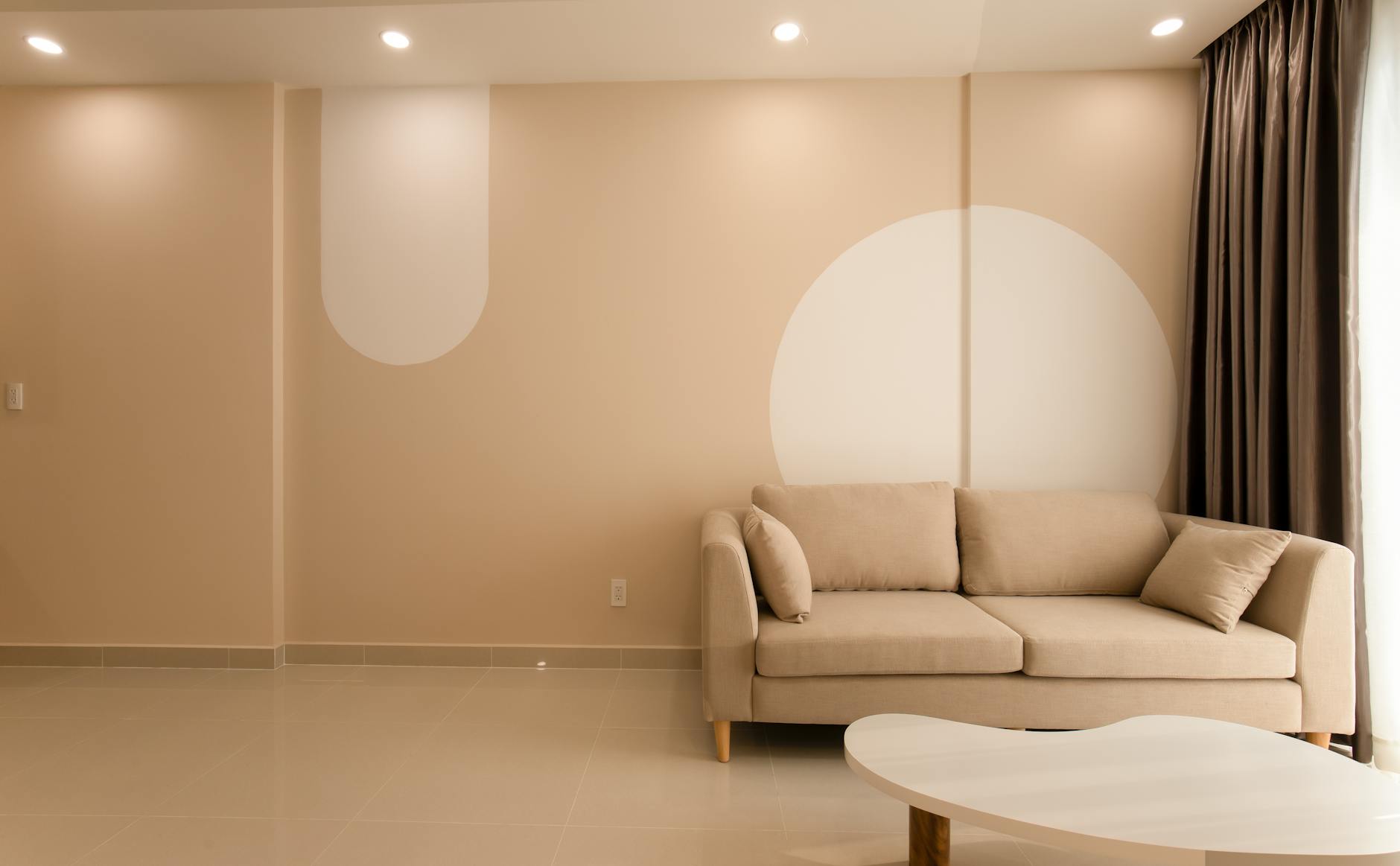
Cohesion helps, but it doesn't require matching sets. A consistent color palette across your textiles, art, and larger furniture pieces creates visual calm without uniformity. Warm neutrals such as sand, linen, and warm white alongside one or two deeper tones tend to read as intentional rather than sparse.
Can I make a rental apartment feel like a sanctuary without putting holes in the walls?
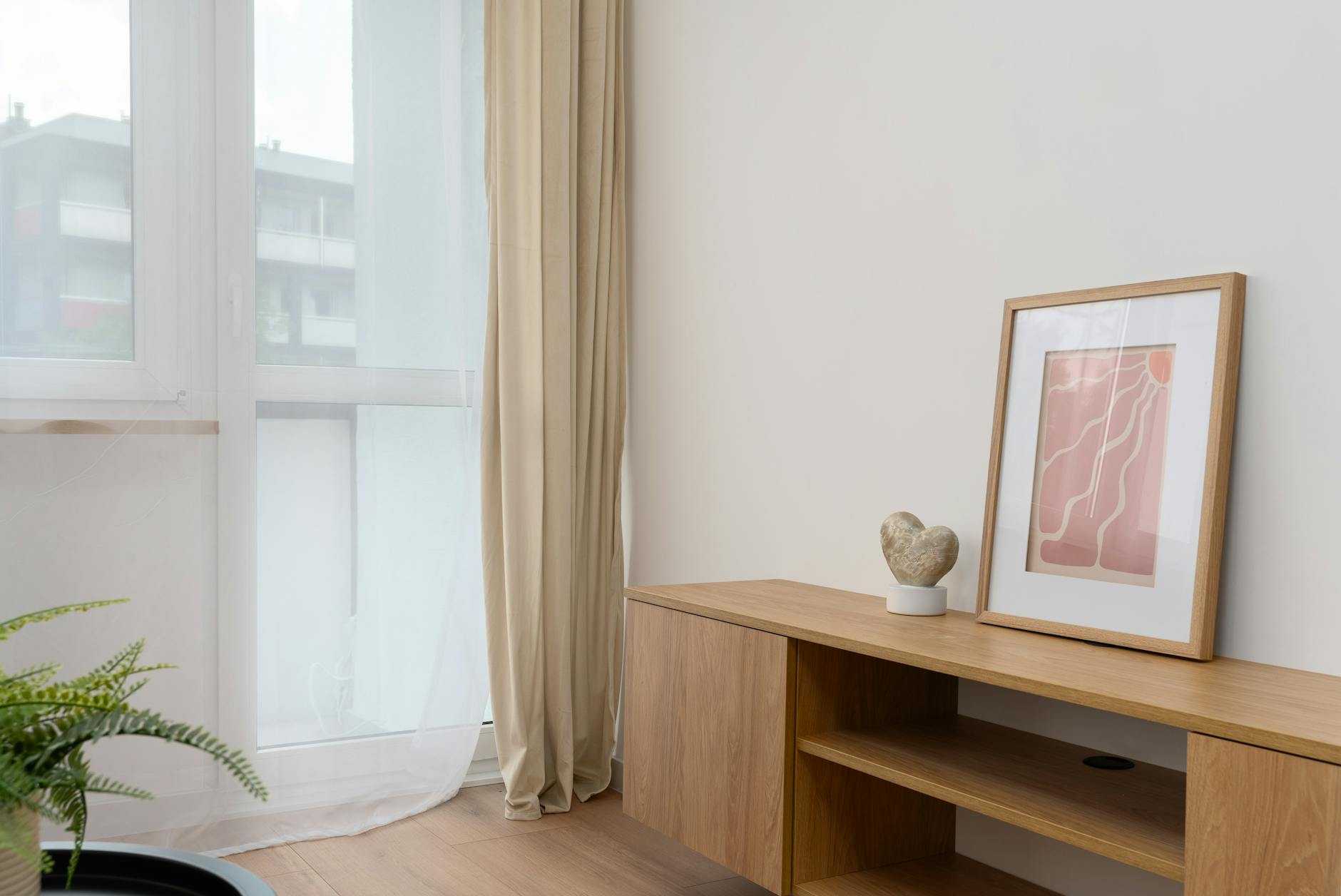
Yes. Command strips and adhesive hooks handle most lightweight art. Floor-leaned art arrangements work well in smaller spaces and require nothing from the walls at all. Rugs, lighting, and textiles do enormous work in a rental and are fully removable. Intentionality doesn't require a drill.
How do I start when I don't know where to begin?
Start with the wall you see most. One piece of art, well-chosen, shifts the feeling of a small apartment more than a dozen smaller choices. You don't need a complete vision. You need one decision that feels right, and then the next one becomes easier.
Your space doesn't need more square footage to become a place that holds you. It needs a few things that belong, a light source that isn't overhead and unforgiving, and the quiet permission to commit to a life you're already living.
That's all a sanctuary has ever been.
You might also enjoy
Which collection speaks to your season?
Take the 2-minute Sanctuary Style Quiz and find your starting point.
Take the Quiz
Written by Haven & Hold