How to Design a Trauma-Informed Therapy Office
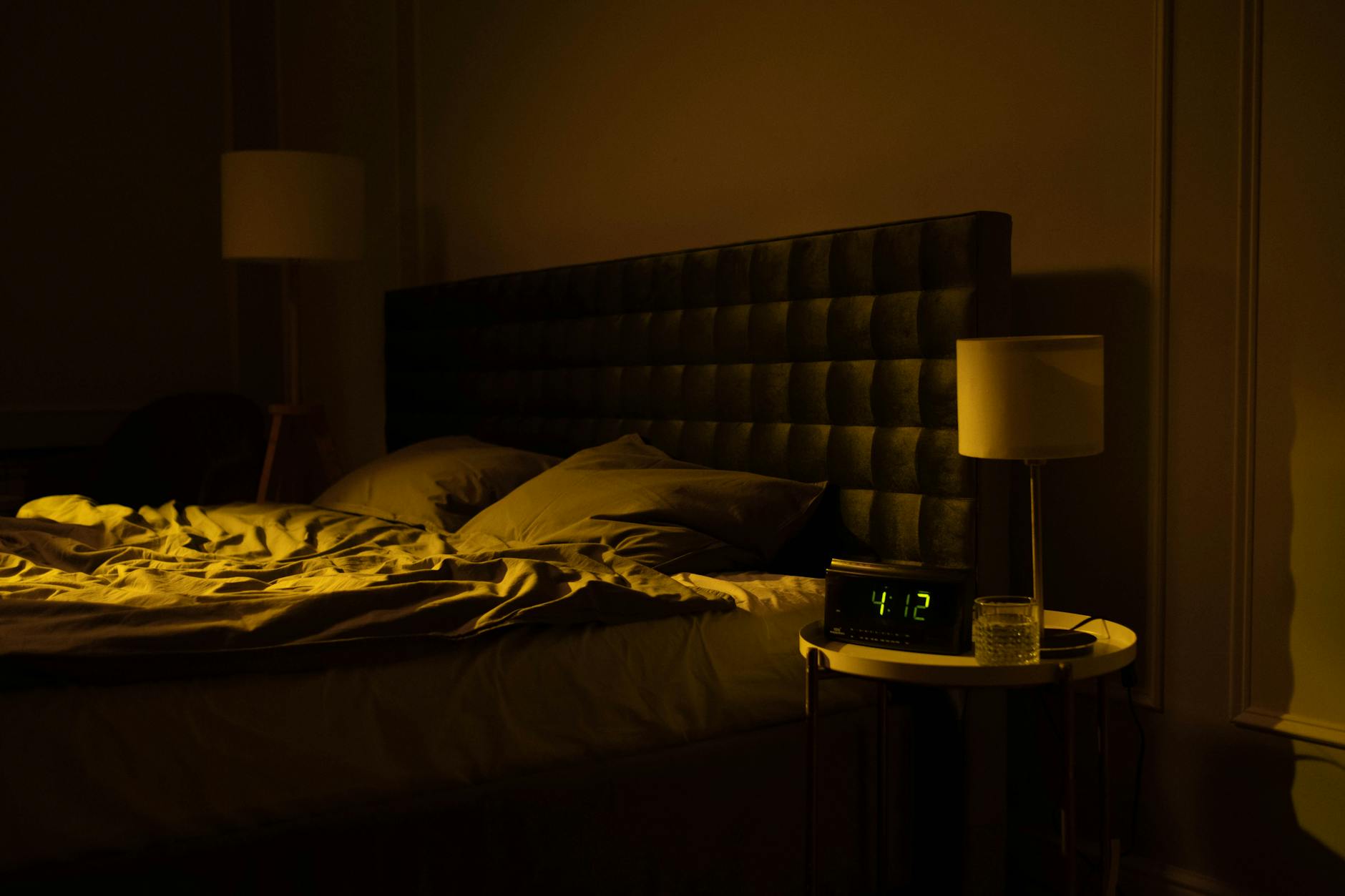
Before your client speaks a single word, their nervous system has already decided whether this room is safe.
This happens in milliseconds. The eyes scan for exits. The body registers the quality of the light, the temperature of the color on the walls, the distance between chairs. Threat or comfort. Open or closed. Held or exposed. The assessment is involuntary, and it finishes long before anyone asks "how are you feeling this week?"
Trauma-informed care has long centered the therapeutic relationship. But more and more, clinicians are recognizing that the relationship begins with the room itself. That the space around your client is already doing something, whether you are intentional about it or not. The question is what.
What Trauma-Informed Design Actually Means
Trauma-informed design is the practice of creating physical environments that actively support nervous system regulation, reduce hypervigilance, and communicate safety before any clinical intervention begins. It draws on principles from environmental psychology, somatic theory, and the documented experience of trauma survivors to shape spaces that do quiet, consistent work.
This is distinct from ordinary office decorating. A room can look welcoming and still feel threatening. A space can be organized and still feel cold. Trauma-informed design asks a different question: not "does this look good?" but "does this room give my client permission to let their guard down?"
The distinction matters because clients who carry trauma histories are, by definition, more attuned to environmental signals than most. Their nervous systems have been shaped to read rooms for danger. Every design decision either reinforces that vigilance or gently invites it to soften.
The Foundation: Seating, Layout, and Sightlines
The single most consequential structural choice in a trauma-informed therapy room is seating arrangement.
Research in environmental psychology consistently shows that room layout directly affects clients' perceived safety and their willingness to self-disclose. A 2019 study published in the British Journal of Guidance and Counselling found that physical environmental factors, including seating position and room orderliness, significantly influenced clients' reported comfort and openness in therapeutic settings.
Two principles guide seating in trauma-sensitive spaces. First, your client should never sit with their back to the door. For someone whose nervous system has been conditioned to scan for threat, sitting unable to see an exit creates low-level arousal that competes with the therapeutic process. Position chairs so the client has a clear sightline to the door, even if the door is behind your chair or to the side.
Second, power dynamics live in furniture. A desk between therapist and client creates distance that reads as evaluative. Chairs at equal height, angled slightly rather than face-to-face, and without a table as a physical barrier communicate something specific: we are here together. There is no hierarchy in this room.
A few practical notes worth holding:
- Offer two seating options when possible. The ability to choose where to sit is a small but real form of agency for someone accustomed to feeling powerless.
- Avoid chairs with arms that trap. A client should be able to shift, stretch, ground their feet, or move without feeling contained by the furniture.
- Leave adequate space between chairs. Personal space violations activate the same alarm system as physical proximity to a stranger, and the research is clear that perceived closeness affects disclosure.
Light, Color, and Sensory Safety
Light is the most frequently underestimated variable in therapeutic space design.
Overhead fluorescent lighting creates a visual environment associated with institutional settings: hospitals, courtrooms, administrative offices. For clients with histories of institutional trauma, this association can be unconscious and powerful. Research on trauma-informed environments, including the U.S. General Services Administration's Trauma-Informed Design Quick Reference Guide, recommends lighting in the 2700 to 3500 Kelvin range for therapeutic settings. That is the warm, diffused end of the spectrum that reads as domestic and safe rather than clinical and exposed.
Warm floor lamps. Diffused natural light. Pendants that direct light up rather than down. These are not aesthetic preferences. They are regulatory tools.
Color follows a similar logic. Cooler hues with shorter wavelengths, soft blues, sage greens, and muted teals, are associated with reduced physiological arousal and increased willingness to engage in difficult conversations. Saturated reds and bright oranges activate rather than settle. The goal is not a room that looks like a spa. It is a room that communicates, on a sensory level, that this is a place where you can slow down.
Sound and scent deserve attention too. White noise outside the door protects privacy and reduces hypervigilance about being overheard. Scent is a powerful trauma trigger and is best left neutral. Avoid diffusers, candles, and strong cleaning products. A client who once experienced something hard in a lavender-scented room will know why they feel suddenly uneasy, but they may not be able to name it.
If you want a structured place to begin assessing your current space, the Therapy Office Checklist walks through each of these elements room by room.
What You Put on the Walls
The walls of a therapy room carry more weight than walls in most settings. Clients spend fifty minutes looking at them. They notice more than you might expect. For more on selecting calming art for clinical settings, see our complete guide to wall art for therapy offices and our practical roundup of 12 therapy-office wall art ideas.
A 2010 study published in Personality and Social Psychology Bulletin, conducted by researchers Darby Saxbe and Rena Repetti at UCLA, found that women in high-clutter home environments had significantly higher cortisol levels throughout the day than those in more ordered spaces. The relationship between visual environment and physiological stress is not metaphorical. It is measurable. The same mechanism operates in a therapy room.
This is why art selection for a clinical space is worth taking seriously.
A few principles that both research and clinical observation support:
Abstract over narrative. Art with a clear story, a figure in distress, a scene of loss, becomes a projective surface that can activate rather than settle. Minimal, abstract forms leave emotional space for whatever the client is carrying without directing it.
Avoid faces. Images of faces, even serene ones, trigger social processing. The face of a stranger on the wall is an additional relationship the client's nervous system is quietly managing for the duration of the session.
Grounded imagery. Horizons. Simple botanicals. Geometric forms that suggest stability. This is the difference between art that asks something of the viewer and art that simply holds space for them.
The prints in the Grounding Collection were designed with this context in mind. Stable geometric forms, muted palettes drawn from sand and earth and quiet light, and language chosen with therapeutic precision: "You are held here." "Within these walls." "Rest here." They are not motivational. They do not ask anything of the person looking at them. They are quiet. They hold space without directing it.
When a client pauses on one and says "I keep looking at that one," that is not a distraction from the work. That is often the opening.
Designing Across Multiple Rooms
For group practices with several therapy rooms, the challenge is creating visual coherence without repetition. Each room should feel complete, but the overall practice should feel like it came from the same place.
A few approaches that hold well across multiple rooms:
One collection per room. Three rooms, three collections. A Grounding room for clients working on safety and stabilization. A Wholeness room that holds space for self-compassion and integration. A Growth room for the clients in active transition. Clients who use different rooms over time often find themselves drawn to a particular space. That preference is information.
The waiting room is part of the practice. Clients spend time there alone, before they are ready to speak. What the waiting room communicates sets the regulatory tone before the session begins. Calm, uncluttered, and visually grounded. Not sterile, not decoratively busy. Held.
Let the art work quietly. The best office art is the kind clients comment on themselves. "I see you put up something nice" is pleasant. "I keep looking at that one, I don't know why" is a door opening. Design for the second kind.
Frequently Asked Questions
What is trauma-informed design?
Trauma-informed design refers to the practice of creating physical environments that actively support nervous system regulation and reduce hypervigilance in people who have experienced trauma. It applies principles from environmental psychology and somatic theory to interior spaces, with the goal of communicating safety before any verbal interaction begins. It is not a single aesthetic, but a set of intentional choices that together create a room that holds its occupants.
What kind of art is appropriate for a trauma-informed therapy office?
Abstract or minimalist art with stable, grounded forms works best in trauma-sensitive spaces. Art that depicts faces, distress, or strong narrative content can activate rather than settle the nervous system, even when the imagery is not overtly negative. Simple botanicals, horizon forms, and geometric shapes that suggest stillness are generally well-tolerated and support the therapeutic environment without directing the client's attention.
How does seating arrangement affect the therapeutic environment?
Seating arrangement directly affects a client's felt sense of safety. Trauma survivors are often hypervigilant to exits and perceived power dynamics, and sitting with their back to the door can maintain low-level physiological arousal that competes with the therapeutic process. Chairs positioned to give clients a clear sightline to the exit, at equal height and without physical barriers between therapist and client, support a sense of agency and equality in the room.
Does lighting really matter in a therapy room?
Yes, and its effect on the nervous system is well-documented. Overhead fluorescent lighting is associated with institutional settings that many trauma survivors connect to experiences of being evaluated or confined. Warm, diffused light in the 2700 to 3500 Kelvin range reads as domestic and safe, supporting regulation rather than alertness. Floor lamps, table lamps, and natural light where available make a measurable difference in how safe a room feels.
How do I choose art for multiple therapy rooms without everything looking the same?
Designing for coherence rather than uniformity works well across a multi-room practice. Choosing art from the same visual family (consistent palette, similar scale, related forms) allows each room to feel complete in its own emotional territory while maintaining an overall sense of continuity. Organizing by emotional theme rather than matching piece for piece gives each space its own character without visual fragmentation across the practice.
What scents are safe in a trauma-informed therapy office?
The safest approach is no added scent at all. Smell is processed directly by the limbic system, which means it bypasses the cognitive filter that allows clients to contextualize a trigger. Even pleasant scents (lavender, eucalyptus, citrus) can be unconsciously associated with a specific difficult memory. Neutral, lightly cleaned air and ventilation that removes stale or strong odors is the trauma-informed default. If a client finds a particular scent grounding, that is a conversation for within the therapeutic relationship, not a design choice made in advance.
Your office is not a neutral container for the work you do. It is part of the work. The quality of light on a Tuesday afternoon, the space between chairs, the print on the wall that a client keeps returning to without knowing why. These things are already doing something.
You already care enough to ask what. That is a good place to start.
What is a trauma-informed approach to arranging chairs?
A trauma-informed approach to arranging chairs starts with one principle: the client must have a clear sightline to the exit without having to turn their head. Position chairs at a slight angle to each other rather than directly facing, so the conversation does not feel like confrontation, and keep them at equal height to remove implicit hierarchy. Leave physical space between you, but no barrier. A desk or table between therapist and client introduces a feeling of formality that competes with the work. The therapist sits closer to the door only if the client expresses a preference; the default is to give the client the position of greater agency.
How should a trauma-informed waiting room or lobby be designed?
A trauma-informed waiting room is the first impression your office makes, and the nervous system reads it before the client meets you. Seating should offer choice. Multiple chairs in different orientations let people sit facing the entrance, away from other clients, or near a window without having to ask. Lighting should be soft and warm, never overhead fluorescents, and avoid televisions, news media, or recorded music with lyrics. Wall art should be visually calm: abstract, botanical, or minimalist, and avoid anything depicting distressed figures or strong narrative content. The room should feel more like a quiet living space than a medical lobby.
You might also enjoy
Which collection speaks to your season?
Take the 2-minute Sanctuary Style Quiz and find your starting point.
Take the Quiz
Written by Haven & Hold