Art Print Care Guide: Keep Prints Beautiful for Years
You notice it first when the afternoon light catches the frame at a new angle. A slight unevenness where the ink once sat richly against the paper. The print is not ruined, but something has shifted, and you feel it the way you feel most small losses: quietly, and a little too late.
The good news is that most of what causes prints to fade, yellow, or warp is preventable. And if you are reading this before hanging your print rather than after, you are already ahead.
This guide covers everything you need to know about caring for your prints, whether they are framed or unframed, newly acquired or already on the wall. The details are practical. The goal is simple: the print you chose for its meaning should be able to hold it for as long as you need it to.
What "archival" actually means for the paper on your wall
Archival paper refers to acid-free, pH-neutral paper that is engineered to resist the chemical degradation that causes ordinary paper to yellow, become brittle, and break down over time. The term "archival" is not a style choice. It is a material specification, and it changes what is possible for the life of a print.
Most paper contains lignin, a compound derived from wood pulp that oxidizes over time and produces the yellowing and brittleness you see in old newspapers and mass-market prints. Acid-free, lignin-free archival paper removes that built-in clock. The result is a material that stays chemically stable across decades.
Haven & Hold prints are produced on 230gsm archival matte paper. The weight matters practically: heavier paper is more dimensionally stable, less prone to warping when humidity shifts, and more resistant to handling. The archival designation matters more fundamentally. With proper care, prints made on acid-free archival stock can last 200 years or more without significant color degradation. That is not a claim invented for marketing. It is the measured performance of the material under real conditions, documented by paper conservators and museum archivists.
The ink matters too. Pigment-based inks, which are used for fine art reproduction, are significantly more UV-resistant than the dye-based inks found in standard inkjet printing. The combination of pigment ink and archival matte paper is what gives a well-made print its longevity.
Understanding this helps reframe the question from "will this last?" to "what does it need from me to last?" The answer is less demanding than most people assume.
Where you hang it changes everything
UV light is responsible for up to 40% of color fading and the majority of deterioration in paper-based art, according to research from archival conservation specialists. It is also the most preventable cause of print damage, because it comes from sources you can choose to avoid or filter.
The sources of UV exposure in a home are three: direct sunlight through windows, indirect sunlight reflected off walls and ceilings, and overhead fluorescent lighting. Direct sunlight is the most damaging, but all three carry UV radiation that slowly breaks down pigment in ink and weakens paper fibers over time.
The placement decision that matters most is keeping your prints away from walls that receive direct sunlight for significant portions of the day. An east-facing wall that gets morning light for an hour is very different from a south-facing wall that bakes in afternoon sun. Indirect light, including the soft diffused light that makes a room feel warm and alive, is generally safe and often beautiful with prints.
Beyond light, temperature and humidity affect paper stability in ways that compound slowly. The ideal range for displaying fine art is 40 to 60 percent relative humidity and 60 to 75 degrees Fahrenheit. Bathrooms and kitchens fall outside this range regularly: humidity from steam, temperature swings from cooking and showering, and airborne grease or moisture all accelerate paper degradation. A print in a bathroom is a print under ongoing stress unless the ventilation is genuinely exceptional.
Bedrooms, reading nooks, and home offices tend to be the most stable environments in a home. This is likely part of why those spaces feel like the right place for art that means something. The stability of the environment mirrors what the print is meant to provide.
If you are working through placement decisions alongside sizing and framing choices, the Sizing and Framing Card walks through it one decision at a time.
Framing as protection, not just presentation
A frame is not only how a print looks on your wall. It is the primary line of defense for the paper inside it, and the materials that make up the frame determine how long that defense holds.
UV-filtering glazing refers to glass or acrylic that has been coated or treated to block UV radiation before it reaches the paper. UV-filter frame glazing blocks 90 to 98% of UV rays, a significant reduction compared to standard glass, which blocks almost none. If your print will receive any ambient light from windows or overhead sources, UV-filtering glass or acrylic makes a measurable and lasting difference.
Acid-free matting is equally important and often overlooked. Standard cardboard mats contain acids that off-gas slowly and migrate into adjacent paper. The yellow-brown stain ring you sometimes see around the inside edge of an old framed photograph is acid burn from a non-archival mat. It is permanent. Acid-free mats prevent it entirely.
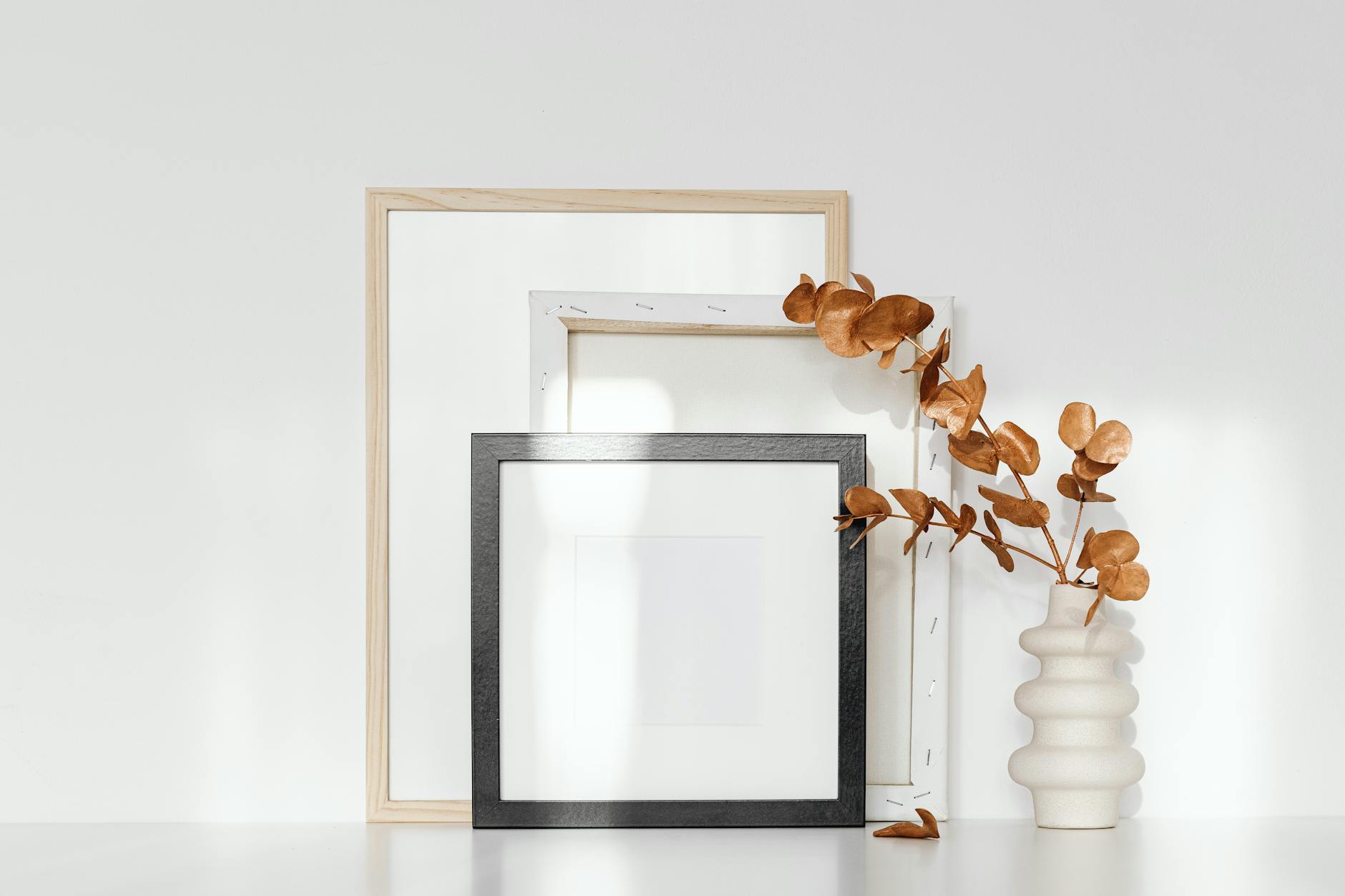
Haven & Hold frames are made with real glass and solid oak in four finishes: Natural, Walnut, Black, and White. If you are framing a print yourself, the criteria to look for are: UV-filtering glazing (glass or acrylic), acid-free mat and backing board, and a backing that seals well enough to limit moisture and dust infiltration. The upgrade in materials costs less than you might expect relative to the value of protecting something meaningful.
One practical note on glass versus acrylic: both carry UV-filtering coatings when specified, so either works for protection. Real glass is heavier and more scratch-resistant over time. Acrylic is lighter, safer for large-format prints in terms of handling, and less likely to shatter if the frame falls. For most standard sizes, glass is the traditional choice and works well. For prints larger than 18x24, acrylic is worth considering for practical reasons.
Cleaning and everyday handling
Dust settles on glass and frames without asking permission. A soft, lint-free microfiber cloth handles both surfaces well. For the glass, wipe in gentle circular or horizontal motions. For the frame, follow the grain of the wood when possible. No sprays directly onto the glass. Commercial glass cleaners containing ammonia can seep under the frame edge over time and damage the mat or paper inside.
For smudges or fingerprints on the glass, dampen the cloth lightly and wipe, then follow immediately with a dry pass. The goal is to lift what is there without introducing moisture near the frame seam. This takes thirty seconds and protects years.
When you are handling an unframed print, hold it by the edges only. The natural oils from your fingertips leave behind residue that is difficult to remove from archival paper and can cause localized discoloration over time. Cotton gloves are the ideal tool. Nitrile gloves work nearly as well and are easier to source. If you received a print and find a small fingerprint on the paper surface, do not rub it. A conservator-grade dry cleaning sponge, applied with the lightest possible pressure, can sometimes lift surface oils without affecting the paper. When in doubt, leave it alone and consult a framing professional.
The most common handling mistake is underestimating how much a print can tell when it has been touched repeatedly over time. Small fingerprint marks are invisible at first. Years later, they are not.
Storing prints you are not currently displaying
Flat is always the right answer for storing archival matte prints. Rolling a matte print, even loosely, stresses the paper fibers and creates a curl that often never fully relaxes. Once an archival matte print has set a curl, reversing it without introducing humidity and flattening weight takes patience and sometimes professional help.
Lay prints flat between sheets of acid-free tissue paper, inside an archival portfolio or flat storage box. Keep the storage space cool, dry, and away from direct or ambient light. A shelf in a bedroom closet is typically suitable. Attics and basements are usually not: temperature swings and humidity variation in most of them are too significant across seasons.
If you are rotating art seasonally or storing a print that has not yet found its permanent wall, label the outer envelope with the print title and size. The print you labeled clearly is the one you find without unfolding four others.
Avoid fully sealed plastic sleeves for long-term storage of archival matte prints. Completely sealed plastic traps any humidity present at the time of sealing, and that humidity has nowhere to go. Breathable archival materials, including acid-free tissue and uncoated archival board, allow the paper to remain stable across changing conditions.
Frequently asked questions
Will my print fade over time if I care for it correctly?
With proper care, archival matte prints are designed to remain stable for decades. UV-filtering glass and placement away from direct sunlight are the two most impactful protections you can provide. Under ideal conditions, prints produced on acid-free archival stock with pigment-based inks can retain their original color fidelity for 100 years or more.
Can I hang an art print in my bathroom?
Bathrooms are the most challenging environment for paper-based art because of regular humidity spikes and temperature fluctuation. If your bathroom has strong, consistent ventilation and you are committed to the placement, a framed print with UV-filtering glass and a well-sealed frame back offers the most protection available. An unframed print in a bathroom will deteriorate relatively quickly and is not recommended.
How do I clean a framed art print without damaging it?
Use a soft, dry lint-free cloth for regular dusting. For smudges on the glass, dampen the cloth lightly and wipe gently, then follow with a dry pass. Never spray glass cleaner directly onto the frame, as liquid can seep under the edge and reach the paper or mat inside. Ammonia-based cleaners are best avoided entirely for framed art.
Is real glass better than acrylic for protecting a print?
Both can carry UV-filtering coatings, which are the protection that matters most. Real glass is heavier, more scratch-resistant over time, and the traditional choice for standard print sizes. Acrylic is lighter, shatter-resistant, and practical for large-format prints where glass weight becomes a concern. The UV-filtering coating is more important than the material itself.
How should I store an unframed print when it is not on display?
Lay it flat between sheets of acid-free tissue paper inside an archival portfolio or flat storage box. Keep it in a cool, dry, low-light space. A bedroom closet shelf is a good choice. Never roll a matte archival print, as rolling stresses the paper fibers and tends to cause a permanent set in the curl.
Does the paper quality make a real difference in how long a print lasts?
Yes, and the difference is significant across time. Ordinary inkjet paper yellows within years, even in good indoor conditions. Acid-free archival paper, at the weight and quality of 230gsm archival matte, is chemically stable and designed to last 100 to 200 years under proper care. The paper is where longevity begins, and it is the reason the other care steps are worth taking.
Art that holds meaning deserves the kind of care that lets it keep holding it. The prints you choose for your walls are not decoration in the passive sense. They are part of the texture of your days, the words your space offers when the rest of everything is loud.
If you are still finding the right pieces, the Grounding Collection is a quiet place to start. Minimal, honest, and printed on paper designed to last. Take your time with it.
Not sure which collection fits where you are right now? The Haven & Hold quiz is a gentle way to find out.
Which collection speaks to your season?
Take the 2-minute Sanctuary Style Quiz and find your starting point.
Take the Quiz
Written by Haven & Hold